Haunting ‘Roma’ scene shines a rare spotlight on stillbirths
Advertisement
Read this article for free:
or
Already have an account? Log in here »
To continue reading, please subscribe:

Digital Subscription
One year of digital access for only $205*
- Enjoy unlimited reading on winnipegfreepress.com
- Read the E-Edition, our digital replica newspaper
- Access News Break, our award-winning app
- Play interactive puzzles
*First annual payment billed as $205.00 + GST for one year. This annual subscription will automatically renew at $233.00 + GST every 52 weeks (10% off the regular annual price of $259.35). Offer available to new and qualified returning subscribers only. Cancel any time.
To continue reading, please subscribe:
Add Free Press access to your Brandon Sun subscription for only an additional
$1 for the first 4 weeks*
- Enjoy unlimited reading on winnipegfreepress.com
- Read the E-Edition, our digital replica newspaper
- Access News Break, our award-winning app
- Play interactive puzzles
*Your next Brandon Sun subscription payment will increase by $1.00 and you will be charged $17.95 plus GST for four weeks. After four weeks, your payment will increase to $24.95 plus GST every four weeks.
Read unlimited articles for free today:
or
Already have an account? Log in here »
Hey there, time traveller!
This article was published 22/02/2019 (2717 days ago), so information in it may no longer be current.
Of all the little moments of joy and strife that fill the top-nominated Oscar film “Roma,” the most gut-wrenching takes place in a Mexico City hospital room, where a doctor coolly tells a frightened young woman, “Your baby was born dead.”
The haunting scene, set in 1971, graphically introduces a subject that today is still poorly understood and often avoided. While global rates have declined since then, stillbirths remain surprisingly common with nearly 3 million each year, most in developing countries.
The U.S. rate, 6 in 1,000 births, hasn’t budged in a decade and the cause is unknown in at least one-third of cases. Most U.S. insurers don’t cover autopsies and many parents don’t want them, often leaving circumstances and potential causes a mystery.
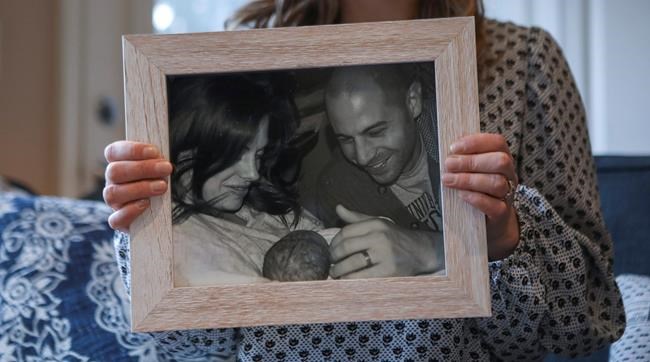
“This is a really seriously understudied area of research,” said Jennita Reefhuis of the U.S. Centers for Disease Control and Prevention. “It’s such a devastating event to happen to a couple. This is something that deserves more attention.”
THEN & NOW
The young mother in Roma is given just a few seconds to hold her lifeless child before a doctor tells her he must take and “prepare” the body. From her hospital bed a few feet away, she watches silently as the infant is wrapped up in a white shroud.
The coldness of that lingering scene is partly dramatic flourish, but it also reflects thinking at the time that stillbirths were almost to be dismissed. Dr. Francisco Ruiloba, an obstetrician from Mexico City, said many hospitals in Mexico, and elsewhere, have since adopted a more humanistic approach. In his practice, Ruiloba said, mothers are given as much time as they need and the body is prepared “with respect and out of the room.”
In 2009 guidance reaffirmed last month, the American College of Obstetricians and Gynecologists says emotional support should be offered to parents of stillborns, including referrals to grief counsellors, support groups or therapists. Parents should have the chance to hold and to name their infants, and to say goodbye, the group advises.
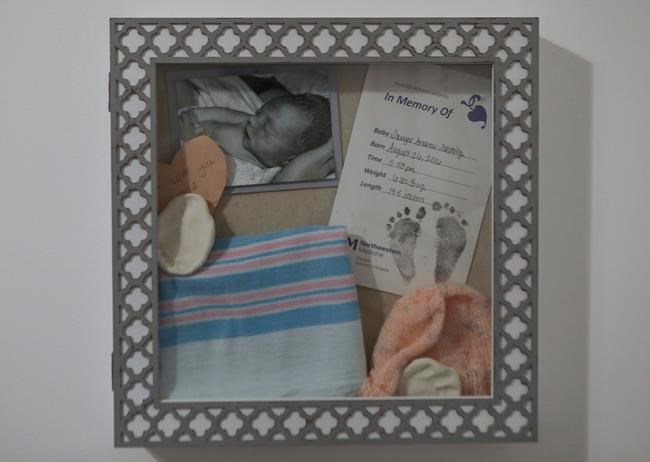
Studies have found that allowing parents to spend time with stillborn infants may reduce mothers’ chances for developing anxiety and depression afterward. Many U.S. hospitals let parents spend hours or even days with them. Some hospitals take memento photographs, footprints and handprints for families; some provide cooling cots to preserve the body while the family grieves.
We stress “how important it is to the patient for us to get comfortable being with them and talking about it and reassuring them that this is a terrible thing but they will get through it,” said Dr. Alan Peaceman, who heads Northwestern Medicine’s maternal-fetal medicine department in Chicago.
Pediatric nurse Lindsey Wimmer, whose son Garrett was stillborn in 2004, says parents “used to be told not to see or name their baby, just to move on and have another one. Now we know that’s not a very practical way to deal with it.
“Their grief just waits for them and they will never forget about these babies,” said Wimmer, executive director of the Star Legacy Foundation, a Minnesota-based group that promotes stillbirth research and education.
Social media has given grieving parents a new outlet. Canadian Rebekah Shirey posted a poignant video for friends of what looks almost like a routine labour and delivery. Surrounded by family and friends in an Ottawa hospital room, with her partner Steve Martin by her side, Shirey pushes, cries and then cradles their stillborn son Elijah. It was July 29, 2017 and Shirey had learned days earlier that Elijah’s heart had stopped beating. Tests showed problems with her placenta.
“The more awareness we have and the more community we have makes it easier to go through these things,” she said.
SCIENCE & ADVOCACY
U.S. doctors define stillbirths as fetal deaths after 20 weeks of pregnancy; it’s 28 weeks or later in many other countries. As in many countries, there is no U.S. national registry and while fetal deaths are reported in every state, the documents often include minimal information
About 1 per cent of U.S. pregnancies end in stillbirths, or nearly 24,000 each year. Obesity, diabetes, smoking and becoming pregnant after age 35 all increase the risk and the rate is two times higher in black women than in whites.
Placenta problems contribute to about 1 in 3 stillbirths in developed countries. As part of the U.S. government’s Human Placenta Project, researchers are seeking better ways to detect placenta problems, including imaging and blood tests.
Recent studies have offered new clues, suggesting stillbirths might be linked with reduced or excessive fetal movement, women sleeping on their backs during late pregnancy, excessive temperatures and air pollution. One study even found that a “gut instinct” that a pregnancy had gone wrong was more common in women with stillbirths than other mothers.
Doctors advise women to pay attention to fetal movement late in pregnancy and to be aware when there’s a change that could indicate fetal distress. Inducing labour is an option if the pregnancy is far enough along, and some studies have suggested kick-counting may reduce stillbirth rates.
Several stillbirth moms in Iowa created a campaign urging women to “count the kicks” that’s been adopted by public health authorities in six states. In Iowa, where it was adopted in 2008, the stillbirth rate has since dropped below 5 per 1,000. Though there’s no proof, Kimberly Piper, a nurse and state health department official, says the campaign may have contributed to the decline.
HEARTBREAKING SCENARIOS
About 1 in 5 U.S. stillbirths occur near the end of a normal, uneventful pregnancy. The scenarios are hauntingly similar: A few days or weeks before the due date, a woman suddenly becomes aware of less kicking or no fetal movement at all. Most women want an immediate cesarean section, but these operations are rarely done for stillbirths because of the risks. Instead, doctors give drugs to induce labour, and the parents wait.
That’s the nightmare Lindsey Schmitz of Chicago endured in 2016 after a “textbook” pregnancy. After 24 hours of difficult labour, nurses gently placed Sawyer Schmitz on his mother’s chest and stepped away as the power of that moment sank in.
“He was warm. He was beautiful and had that baby smell,” Schmitz recalls. “He just looked like he was asleep.”
Grandparents, aunts and uncles joined the distraught parents in the birthing room.
“They commented on his features. Laughed about his chin,” she said. “The nurses took pictures, lots of pictures.”
Schmitz says she’s wracked by the things that in her grief she didn’t think to do — “cut a lock of his hair, read a book to him, we never dressed him. At that moment, you just don’t know that’s what you’re going to want.”
She did want to know the cause, but an autopsy and other tests gave no answers.
Now, Schmitz volunteers as a resource for other women who’ve had stillbirths.
“When you’re in this club, you realize it’s so much more prevalent than anyone talks about,” she said.
___
Follow AP Medical Writer Lindsey Tanner on Twitter at @LindseyTanner.
___
The Associated Press Health & Science Department receives support from the Howard Hughes Medical Institute’s Department of Science Education. The AP is solely responsible for all content.