
Health paradox: New US diabetes cases fall as obesity rises

Advertisement

Advertise with us

NEW YORK - The number of new diabetes cases among U.S. adults keeps falling, even as obesity rates climb, and health officials aren't sure why.

Read this article for free:

or

Already have an account? Log in here »

To continue reading, please subscribe:

Subscribe and receive a limited-edition Free Press branded hat or tote.

Digital Subscription

One year of digital access for only $205*

  • Enjoy unlimited reading on winnipegfreepress.com
  • Read the E-Edition, our digital replica newspaper
  • Access News Break, our award-winning app
  • Play interactive puzzles

*First annual payment billed as $205.00 + GST for one year. This annual subscription will automatically renew at $233.00 + GST every 52 weeks (10% off the regular annual price of $259.35). Offer available to new and qualified returning subscribers only. Cancel any time.

To continue reading, please subscribe:

Add Free Press access to your Brandon Sun subscription for only an additional

$1 for the first 4 weeks*

  • Enjoy unlimited reading on winnipegfreepress.com
  • Read the E-Edition, our digital replica newspaper
  • Access News Break, our award-winning app
  • Play interactive puzzles
Start now

*Your next Brandon Sun subscription payment will increase by $1.00 and you will be charged $17.95 plus GST for four weeks. After four weeks, your payment will increase to $24.95 plus GST every four weeks.

Hey there, time traveller!
This article was published 28/05/2019 (2621 days ago), so information in it may no longer be current.

NEW YORK – The number of new diabetes cases among U.S. adults keeps falling, even as obesity rates climb, and health officials aren’t sure why.

New federal data released Tuesday found the number of new diabetes diagnoses fell to about 1.3 million in 2017, down from 1.7 million in 2009.

Earlier research had spotted a decline, and the new report shows it’s been going on for close to a decade. But health officials are not celebrating.
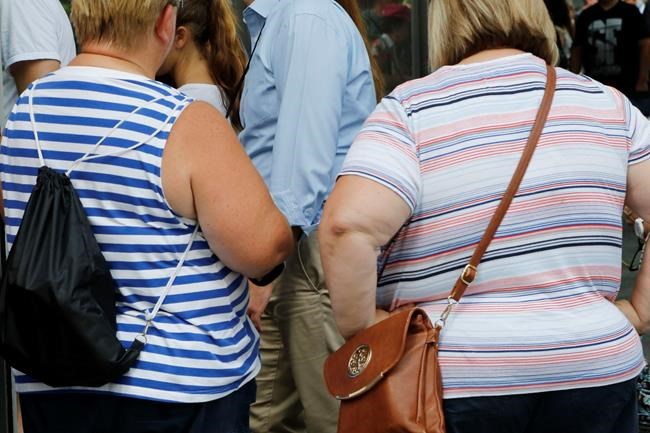
FILE - This Tuesday, Aug. 16, 2016 file photo shows two overweight women in New York. On Tuesday, May 28, 2019, health officials are reporting fewer new cases of diabetes in U.S. adults _ even as obesity rates continue to climb. (AP Photo/Mark Lennihan)

“The bottom line is we don’t know for sure what’s driving these trends,” said the lead author of the new report, Dr. Stephen Benoit of the Centers for Disease Control and Prevention. Among the possibilities: Changes in testing and getting people to improve their health before becoming diabetic.

The report was published by the journal BMJ Open Diabetes Research & Care. The statistics run through 2017. Last year’s numbers are not yet available, Benoit said.

Diabetes is a disease in which sugar builds up in the blood. The most common form is tied to obesity, and the number of diabetics ballooned as U.S. obesity rates increased.

But other factors also might have pushed up annual diabetes diagnoses from 2000 to 2010, and they may partly explain why the numbers have been going down since, some experts said.

First, the diagnostic threshold was lowered in the late 1990s. That caused more people to be counted as diabetics, but the impact of that may have played out.

“We might have mined out a lot of the previously unrecognized cases” and so new diagnoses in the last several years are more likely to be actual new illnesses, said Dr. John Buse, a University of North Carolina diabetes expert.

Meanwhile, doctors have increasingly used a newer blood test to diagnoses diabetes. It’s much easier than tests that required patients to fast for 12 hours or to undergo repeated blood draws over two hours.

The American Diabetes Association recommended the new test, known as the hemoglobin A1C blood test, for routine screening in 2010. Because it’s easier to do, it would be expected to lead to more diagnoses. But some experts say it may miss a large proportion of early cases in which people aren’t showing symptoms. “You may be missing people that would have been diagnosed” with older tests, Benoit said.

Another possibility: Increasingly, more doctors have been diagnosing “prediabetes,” a health condition in which blood sugar levels are high but not high enough to hit the diabetes threshold. Physicians typically push such patients into exercise programs and urge them to change their diet.

“Prediabetes is becoming a more accepted diagnosis” and may be causing an increasing number of patients to improve their health before becoming diabetic, said Dr. Tannaz Moin, a UCLA expert.

The new report is based on a large national survey conducted by the government every year. Participants were asked if they had been diagnosed with diabetes, and also if the diagnosis was made in the previous year.

It found the rate of new diabetes cases fell to 6 per 1,000 U.S. adults in 2017, from 9.2 per 1,000 in 2009. That’s a 35 per cent drop, and marks the longest decline since the government started tracking the statistic nearly 40 years ago, according to the CDC.

The decrease was mainly seen among white adults, the researchers said.

Meanwhile, the overall estimate of how many Americans have diabetes — whether the diagnosis is recent or not — has been holding steady at 80 per 1,000 U.S. adults. That translates to about 21 million Americans.

___

The Associated Press Health and Science Department receives support from the Howard Hughes Medical Institute’s Department of Science Education. The AP is solely responsible for all content.

___

This story has been corrected to show that the new report didn’t find that diabetes has become more common among young adults and people who are black and Hispanic.

Report Error Submit a Tip

More Stories

Puzzles Palace

1 minute read Monday, Jul. 27, 2026

To solve our puzzles, please subscribe with this special offer: |

Smoke taint new reality in wine as world burns

Ben Sigurdson 6 minute read Preview

Smoke taint new reality in wine as world burns

Ben Sigurdson 6 minute read 6:01 PM CDT

Summer seems to come with a familiar smell these days: the pungent aroma of smoke.

The haze of smoke from wildfires in warmer months is now the norm rather than the exception. Breathing gets tougher, particularly for those whose health is compromised, and clothes pick up that unpleasant smoky smell.

But your shirt or sweater isn’t the only thing that absorbs the scent — in wildfire-affected grape-growing regions, winemakers also have to contend with the potential for their wines to develop what is called smoke taint.

Early in the growing season grapes, like most fruit, are small and green with thick skins. The berries get larger until around late July-ish (in the northern hemisphere) the bunches stop growing, the skins get thinner and the fruit begins changing colour in a process called veraison.

Read
6:01 PM CDT

Wanderers centennial transcends the pitch

Ben Little 11 minute read Preview

Wanderers centennial transcends the pitch

Ben Little 11 minute read 5:12 PM CDT

A local rugby club’s influence on Winnipeg’s sports scene impacts thousands of Winnipeggers every day. Their story is one of the city’s best-kept secrets.

This year marks the 100th anniversary of the Winnipeg Wanderers Rugby Football Club. The Kildonan-based Wanderers' storied history reflects the core values of a global community, rooted in camaraderie and fuelled by a burning love for the sport.

The Wanderers’ influence on both rugby and football has built stadiums, shaped families, and pioneered the way for Winnipeg’s beloved professional gridiron football team.

Last month, Manitoba’s oldest rugby club celebrated the milestone with the communities it helped build. The club hosted a weekend of festivities at Maple Grove Rugby Park and was honoured on two separate occasions at Princess Auto Stadium.

Read
5:12 PM CDT

Winnipeg police ticketed a man accused of leaving his dog locked in his vehicle in a grocery store parking lot during the intense heat earlier this week, then attacking bystanders who were concerned about the animal’s welfare.

It’s not uncommon for city police to be contacted about pets left locked in cars during heat waves, but typically those calls don’t escalate to the extent of the incident Wednesday afternoon, said Winnipeg Police Service spokesman Const. Claude Chancy.

“It definitely comes up every time we have heat events in the city, we do get concerned citizens calling about pets being left in vehicles, even for a short period of time,” said Chancy.

“Typically, what will happen is that the owner or the caretaker of the pet will present themselves to police and proper, appropriate advice is given about the care of these animals — this is definitely an extreme case.”

Preserving past, pondering future of 142-year-old downtown church

Chris Kitching 6 minute read Preview

Preserving past, pondering future of 142-year-old downtown church

Chris Kitching 6 minute read Wednesday, Jul. 29, 2026

A 142-year-old church in downtown Winnipeg needs about $7.7 million for upgrades and related costs, while an ongoing heritage renewal project aims to create a blueprint for its future.

Potential options include selling Holy Trinity Anglican Church and leasing it back for a decades-long term, or building an apartment or office tower on an existing surface parking lot to generate revenue, officials said Wednesday.

“I think that is part of the negotiation and ensuring we have the right partners, but it is hard to put down on paper precisely every aspect of the future of a place of worship,” project manager Stephen Borys said of the potential duration of a sale and leaseback agreement to ensure the church still exists generations from now.

Similar agreements with 50- or 100-year leases exist elsewhere in Canada, he said, noting the option has been on the table for Holy Trinity for a year.

Read
Wednesday, Jul. 29, 2026

Drop bravado and cease silly summer spat

Maureen Scurfield 4 minute read Yesterday at 2:01 AM CDT

DEAR MISS LONELYHEARTS: My neighbour mowed the words “dumb ass” into my lawn, which had grown way too long while I was staying at the lake in my new cabin — for four weeks.

I agree my long front lawn got annoying to look at on our residential street. So, I got home and got out of my car, and took pictures of what he did to my lawn — in front of some neighbours for witnesses.

Then I unpacked my stuff, and that night just before bed I finally mowed the lawn with my loud mower. I did it in my own sweet time and went to bed, still mad. I honestly thought my neighbour was mostly just jealous because he doesn’t have a cabin himself!

I’d finally cooled off by noon the next day, so I went out and bought the guy a 12-pack, and left the beer on his back steps, with a card saying, “You can relax now!”