Health officials facing some tough decisions

Vaccine could take months to produce

Advertisement

Advertise with us

OTTAWA -- To vaccinate or not to vaccinate.

Read this article for free:


or

Already have an account? Log in here »

To continue reading, please subscribe:

Subscribe and receive a limited-edition Free Press branded hat or tote.

Digital Subscription

One year of digital access for only $205*

  • Enjoy unlimited reading on winnipegfreepress.com
  • Read the E-Edition, our digital replica newspaper
  • Access News Break, our award-winning app
  • Play interactive puzzles

*First annual payment billed as $205.00 + GST for one year. This annual subscription will automatically renew at $233.00 + GST every 52 weeks (10% off the regular annual price of $259.35). Offer available to new and qualified returning subscribers only. Cancel any time.

To continue reading, please subscribe:

Add Free Press access to your Brandon Sun subscription for only an additional

$1 for the first 4 weeks*

  • Enjoy unlimited reading on winnipegfreepress.com
  • Read the E-Edition, our digital replica newspaper
  • Access News Break, our award-winning app
  • Play interactive puzzles
Start now

*Your next Brandon Sun subscription payment will increase by $1.00 and you will be charged $17.95 plus GST for four weeks. After four weeks, your payment will increase to $24.95 plus GST every four weeks.

Hey there, time traveller!
This article was published 29/04/2009 (6345 days ago), so information in it may no longer be current.

OTTAWA — To vaccinate or not to vaccinate.

That is one of a host of difficult questions Canadian public-health officials will face if the swine-flu outbreak escalates into a full-blown pandemic.

In 1976, then U.S. president Gerald Ford ordered a national vaccination campaign in response to an outbreak of swine flu at a military base in New Jersey. In the end, only one person died from swine flu, while roughly 25 people died from a rare neurological syndrome believed to have been a side-effect of the vaccine. The program, now considered a case study in how not to handle a flu outbreak, cost roughly US$500 million in today’s dollars.

Wong Maye-E / the associated press
Canada has stockpiled two antiviral drugs, Relenza and Tamiflu, which is effective in combating swine flu if the treatment is given early enough.
Wong Maye-E / the associated press Canada has stockpiled two antiviral drugs, Relenza and Tamiflu, which is effective in combating swine flu if the treatment is given early enough.

Working with the World Health Organization, an international network of scientists — including the National Microbiology Laboratory in Winnipeg — is racing to develop a vaccine for the new swine-flu strain.

Canada is one of the few countries in the world that has a drug manufacturer on contract to supply the vaccine once it is developed.

But the Public Health Agency of Canada estimates it will take as long as six months to produce a vaccine, and some experts believe it could take even longer.

"When everybody talks about six months, that’s with no glitches. You start to get glitches, and all of a sudden you’re fighting to solve problems," said Earl Brown, a flu specialist at the University of Ottawa’s faculty of medicine.

Until a vaccine is ready, the primary line of defence will be the government’s national stockpile of antiviral drugs. Unlike a vaccine, antivirals do not immunize patients from a flu strain, but they can relieve the symptoms, and some experts believe they can prevent infection and slow the spread of a pandemic. Canada has stockpiled two antiviral drugs, Tamiflu and Relenza. The stockpile contains roughly 55 million doses, which officials say is enough to treat the Canadians who will require medical treatment during a pandemic. But Canadian officials and medical experts warn the current swine-flu strain could become resistant to such antivirals if the drugs are used on a wide scale too early.

"The good news, so far, is that the antivirals are working," said Dr. Robert Ouellet, president of the Canadian Medical Association. He cautioned that Canadians who haven’t been exposed to the outbreak shouldn’t look to antivirals as a preventive measure.

"Some people will be afraid and will ask to have antivirals right now, even if they don’t have the disease… . This is not something we should do."

Even with the stockpile, federal and provincial officials and health-care workers will have to decide on the fly how to co-ordinate testing for the flu, as well as how to distribute and administer the antivirals.

The logistical challenges would be even more daunting if a mass vaccination program becomes necessary. The Public Health Agency admits there would be many unknowns in the event of a pandemic, including the nature and severity of the flu strain, the availability and safety of a vaccine, and the tone of the public’s reaction.


— Canwest News Service

Report Error Submit a Tip

More Stories

9 to 5:

Tory McNally 8 minute read Preview

9 to 5:

Tory McNally 8 minute read 2:00 AM CDT

I watched the 1980 comedy 9 to 5 for the first time this week.

I know: I’m an HR consultant. I’ve been doing this work for 13 years, I write about workplaces for a living, and somehow I had never actually watched the movie that gave us one of the most recognizable workplace songs of all time.

I knew the premise, of course. I knew American music icon Dolly Parton was in it. I knew there was a terrible boss and three women who eventually decided they had enough.

I expected a funny, somewhat dated movie about three women getting revenge on an awful boss. What I didn’t expect was to spend the next two hours thinking about how much has changed in the workplace since 1980 — and how much really hasn’t.

Read
2:00 AM CDT

Sunday-night auto aficionados work to steer away from unwelcome elements they say aren’t a part of their tradition

Zoe Pierce 12 minute read Preview

Sunday-night auto aficionados work to steer away from unwelcome elements they say aren’t a part of their tradition

Zoe Pierce 12 minute read Yesterday at 1:37 PM CDT

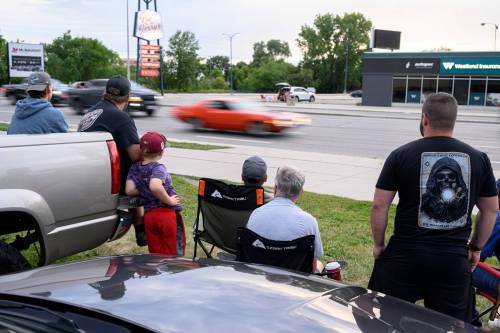
The red 1969 Dodge Coronet Super Bee out for a cruise on Portage Avenue draws admiring eyes from onlookers on a recent Sunday night, many of them seeing a specimen of the now-rare muscle car for the first time on a Winnipeg street. Or any other street, for that matter.

Longtime car enthusiast Bob Sudoma was behind the wheel, participating in the decades-old show-offy summer tradition.

The Sunday night cruise is built around a simple idea: proud car owners take their beloved vehicles for a spin to meet up with others of the same autophile ilk.

Less-fortunate appreciators, or just curious folks, also gather along the route to watch the highly-polished parade. Portage Avenue is one of cruise night’s best-known stretches.

Read
Yesterday at 1:37 PM CDT

Education minister’s reasons for revoking teacher’s licence ‘not good enough,’ judge decides

Maggie Macintosh 5 minute read Preview

Education minister’s reasons for revoking teacher’s licence ‘not good enough,’ judge decides

Maggie Macintosh 5 minute read Updated: Yesterday at 9:14 AM CDT

A Manitoba judge has rejected the education minister’s decision to end a teacher’s career because he repeatedly messaged with a 13-year-old girl on social media.

Read
Updated: Yesterday at 9:14 AM CDT

Former interim police chief to retire

1 minute read Yesterday at 1:19 PM CDT

After nearly five decades with the Winnipeg Police Service, deputy chief Art Stannard is retiring.

WPS Chief Gene Bowers noted the departure during a Winnipeg Police Board meeting Friday.

“If you ever had a question you went to Art … That’s a long period of time (in) his life that he gave to our members and our city,” said Bowers.

Stannard began working for the WPS in 1978 and spent time in almost every division since that point, most recently in support services.

‘We feel lucky — and a bit traumatized’: Tornado confirmed in River Heights Sunday

Malak Abas 6 minute read Preview

‘We feel lucky — and a bit traumatized’: Tornado confirmed in River Heights Sunday

Malak Abas 6 minute read Thursday, Sep. 10, 2026

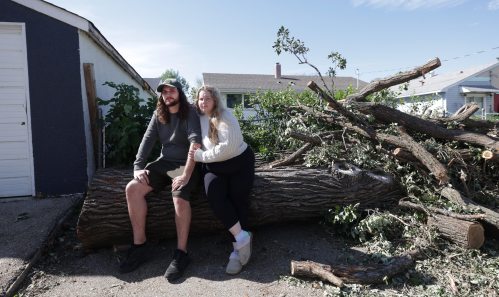
Tanner Lemieux wasn’t surprised to learn the violent winds that tore through River Heights and reached their peak near his home Sunday night have been classified as a tornado.

While driving back to his Lindsay Street home from a shopping trip with his wife Sunday, it became clear they were not in the middle of an ordinary thunderstorm when rain and wind started coming from every direction and hit every side of their truck.

The forceful wind made it impossible for him to open his door after they had parked. He climbed through the window, over the top of his vehicle, and the couple struggled to fight the whipping winds to make it into the house.

“As we were running in, the wind started pulling me backwards out of the door,” he told the Free Press while cleaning debris from his yard Thursday.

Read
Thursday, Sep. 10, 2026

Downtown no place to be after dark, huge majority of Winnipeggers say in survey

Joyanne Pursaga 8 minute read Preview

Downtown no place to be after dark, huge majority of Winnipeggers say in survey

Joyanne Pursaga 8 minute read Updated: Yesterday at 7:22 PM CDT

Most Winnipeggers are afraid to walk alone downtown and believe the city needs more police officers, a new survey finds.

Winnipeg Police Service released its 2026 citizen survey Friday.

Downtown safety appears to remain a major concern, with just 44 per cent saying they feel very or reasonably safe walking alone in the area during the day. The number plummets to eight per cent overall at night, down from nine per cent in 2024, the last time the survey was conducted.

This year, 14 per cent of men felt very or reasonably safe walking alone downtown at night, compared to just three per cent of women.

Read
Updated: Yesterday at 7:22 PM CDT