Manitobans wage war with Lyme disease, skeptical doctors
Advertisement
Read this article for free:
or
Already have an account? Log in here »
To continue reading, please subscribe:

Digital Subscription
One year of digital access for only $205*
- Enjoy unlimited reading on winnipegfreepress.com
- Read the E-Edition, our digital replica newspaper
- Access News Break, our award-winning app
- Play interactive puzzles
*First annual payment billed as $205.00 + GST for one year. This annual subscription will automatically renew at $233.00 + GST every 52 weeks (10% off the regular annual price of $259.35). Offer available to new and qualified returning subscribers only. Cancel any time.
To continue reading, please subscribe:
Add Free Press access to your Brandon Sun subscription for only an additional
$1 for the first 4 weeks*
- Enjoy unlimited reading on winnipegfreepress.com
- Read the E-Edition, our digital replica newspaper
- Access News Break, our award-winning app
- Play interactive puzzles
*Your next Brandon Sun subscription payment will increase by $1.00 and you will be charged $17.95 plus GST for four weeks. After four weeks, your payment will increase to $24.95 plus GST every four weeks.
Read unlimited articles for free today:
or
Already have an account? Log in here »
Hey there, time traveller!
This article was published 10/09/2011 (5484 days ago), so information in it may no longer be current.
ELIZABETH Wood was 37 years old in July 1985 when she was bitten by a tick while visiting her parents’ home along the Red River north of Emerson.
She recalls having difficulty removing the insect, which fastened itself on one of her legs. A few weeks later, she got a rash.
Today, the combination of a tick bite and a rash within 30 days would alert most, if not all, family doctors to the likelihood of Lyme disease. Caught early, it’s easy to treat with antibiotics.
But a quarter-century ago, little was known about Lyme disease in Manitoba. Health officials didn’t believe it was endemic to the province. In fact, the first doctorreported case in Manitoba did not occur until 1999, and the first confirmed case — using a strict federal Health Department definition — wasn’t registered until 2006.
Wood, who now chairs a Manitoba Lyme disease advocacy group, was told by a doctor at a Winnipeg clinic 26 years ago that she had poison ivy. She thought she knew a thing or two about poison ivy and didn’t buy it.
She later developed severe flulike symptoms that doctors now link to Lyme disease: head and muscle aches, joint pain, fatigue.
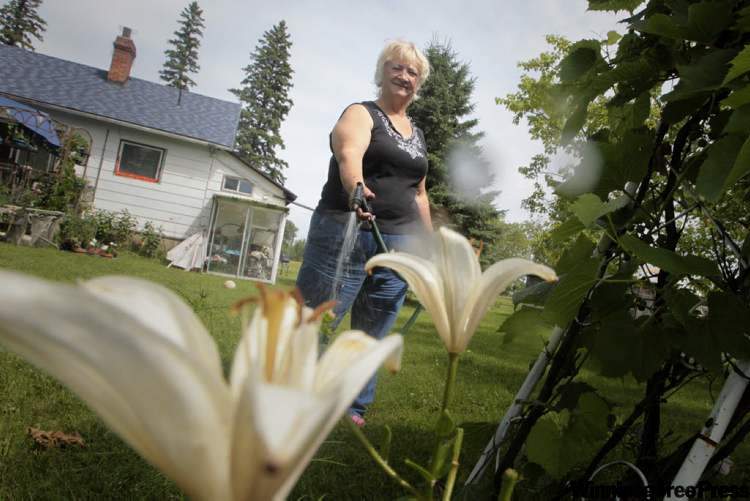
“It was like a nightmare, was what it was,” Wood said in a recent interview at her Emerson home.
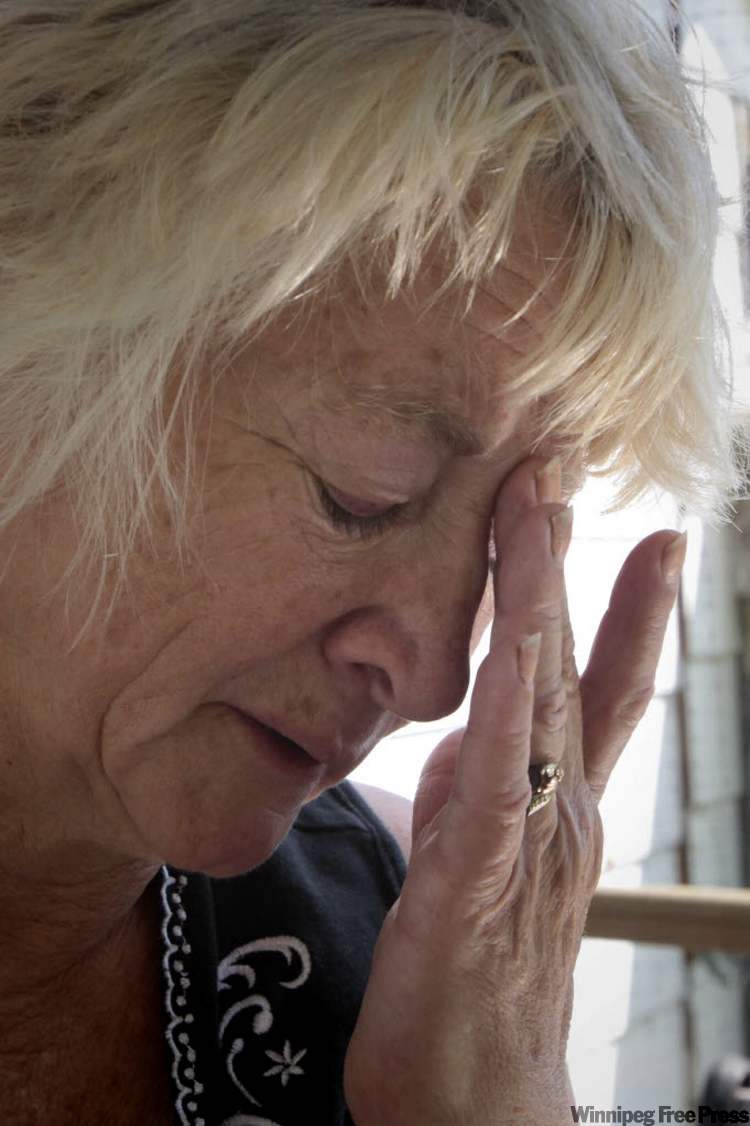
And it still is. More than a quarter-century after that tick bite, Wood’s condition has not greatly improved. She and her husband have spent thousands of dollars of their own money travelling to the United States for diagnosis and treatment for herself and their daughter, whom they believe also has Lyme disease.
Wood is not alone. An untold number of Manitobans with chronic Lyme disease symptoms — including a former deputy minister of health — have gone looking for answers outside the province when doctors here failed to help them.
Ernie Murakami, a former British Columbia doctor who was pressured to stop practising medicine by the B.C. College of Physicians and Surgeons because of his focus on and treatment of Lyme disease patients, said the disease is misunderstood. He says the medical profession is in denial about what he calls a “major epidemic.”
“It’s criminal what’s happening in Canada,” he said in an interview from Hope, B.C., where he was once chief of staff at the Fraser Canyon Hospital.
“People are having to go across the border (to the U.S.) at tremendous expense to get treatment.”
The B.C.-based Canadian Lyme Disease Foundation believes there are thousands of cases such as Wood’s in Canada. Many of those patients are confined to wheelchairs, debilitated by the disease’s symptoms and unable to work.
Jim Wilson, the group’s president, said the blood tests used to detect the disease in Canada are faulty, catching only a fraction of the true cases. That is challenged by infectious disease experts who claim the two-part lab test used here is the gold standard for detecting Lyme disease.
The same experts are also suspicious and dismissive of certain for-profit U.S. labs that are only too ready to return a positive Lyme disease result from ill people who have been unable to find a satisfactory diagnosis for the chronic symptoms that ail them.
Over the past few months, the Free Press has interviewed dozens of Lyme disease advocates, sufferers, experts and government officials. Some of those we contacted asked not to be named because of privacy concerns or the stigma attached to the disease and its advocates. That’s because some in the medical profession consider advocates to be kooks.
AFTER her unsuccessful medical visit shortly after her tick bite a quarter-century ago, Wood did not go to a doctor for about three more years.
By that time her arms and shoulders were so sore, she often had an arm in a sling. In 1988, she went to a clinic on Pembina Highway, where a doctor gave her a cortisone shot, which she said crashed her immune system. A few weeks later, she wound up in the Grace Hospital.
It was the first of several trips to the hospital emergency room. The doctors, unable to diagnose her condition, suggested the pain was all in her head. They suggested she go to a psychiatrist.
In 1989, she gave birth to her daughter, Lizzie. She had spent much of the pregnancy in bed. “It got to the point where I couldn’t brush my own hair. I was so weak,” she said.
A chair had to be placed in the tub so she could take a shower.
Around that time, her sister told her about a sign warning of deer ticks and Lyme disease near Pinawa.
She started doing her own research on the disease and asked to be tested for it in Winnipeg. She was told the results were “borderline positive.” Doctors ruled it out, she said, because they thought it did not occur in Manitoba.
Since then, she’s said she’s been positively diagnosed for the disease in Ontario and New Jersey.
Her health has also deteriorated: She lost her right kidney, she lost most of the sight in her right eye and surgeons removed a chunk of her colon.
With a lot of effort, she has convinced Manitoba doctors to give her periodic intravenous and oral antibiotics and is now seeing a rural GP who has put her on a cocktail of drugs.
She is far from cured. She still has aches and pains and gets tired easily. But she said without the antibiotics she would not be mobile. She would not be able to function.
“I wouldn’t be alive.”
In her Lyme disease advocacy work, she said she’s come across three people in Canada — friends of hers — who have given up hope of ever getting better. They’ve committed suicide. One was a young woman from British Columbia.
“I spoke to her that morning, and she killed herself in the afternoon,” Wood said, her voice catching.
ERNIE Murakami has travelled the country advocating for better diagnosis and more aggressive treatment of Lyme disease. At age 80, he seems to have more energy than men decades younger.
Until three years ago, he was a practising physician in British Columbia and taught medical students. He had developed a specialty for treating Lyme disease patients, but he agreed to give up his licence three years ago after an investigation by the province’s college of physicians, which labelled him a Lyme disease “zealot.” He estimates he’s treated 3,000 Lyme disease patients.
“If you don’t go along with the (medical) establishment, you’re examined and cross-examined and harassed,” he said in an interview.
Fighting the college took a toll on his health, he said, so he gave up treating patients and now simply refers Lyme disease sufferers to doctors and naturopaths (who are allowed in B.C. to prescribe antibiotics) who will treat them.
Murakami thinks Canadian infectious-disease doctors are failing to take Lyme disease seriously and the country’s tests for the disease are too narrow. While just a handful of cases is officially diagnosed in Manitoba each year, across the border in Minnesota the state reports 1,000 or more cases annually.
He also takes issue with infectious-disease doctors who are loath to prescribe more than three or four weeks of antibiotics for patients, claiming long-term Lyme disease sufferers require ongoing treatment with antibiotics.
Murakami has travelled to Manitoba a halfdozen times in recent years to meet Health Department officials. He’s tried to convince officials here of research, he says, that shows Lyme bacteria can remain in the body for long periods of time and multiply — an assertion most infectious-disease experts reject.
He and some local advocates are hoping to convince the province to pass a law that will prevent the Manitoba College of Physicians and Surgeons from harassing doctors who prescribe long-term antibiotics to patients with so-called chronic Lyme disease. Such laws already exist in a halfdozen U.S. states, where the Lyme disease lobby is powerful. But such statutes horrify infectiousdisease doctors and medical officials on both sides of the border. They see it as politicians usurping medical decision-making that rightly belongs to physicians.
DR. Allan Ronald, one of Canada’s foremost infectious-disease doctors, calls Lyme disease “an emerging illness in Manitoba,” like West Nile virus was 10 years ago.
About three years ago, he was part of a committee pulled together by Manitoba Health to diagnose and document Lyme and other tickborne diseases.
“In Manitoba, we can only prove the diagnosis on acute (early-stage) Lyme disease in somewhere between 15 and 25 patients a year,” Ronald said.
In a recent telephone interview from his cottage, he called chronic Lyme disease a “very controversial, difficult issue.”
In the last few years, he said he’s agreed to see more than 30 Manitoba patients who claimed to have chronic or long-term Lyme disease. About half of them were diagnosed by physicians in the United States who prescribed long-term treatment with antibiotics. The same patients wanted Ronald to prescribe those drugs here.
Ronald had them submit a blood sample to test for Lyme disease. Not one of the patients tested positive for the disease, he said.
“In my opinion, they need care,” he said of the patients. “It’s not that they don’t need care, but they need care for a better diagnosis.”
Dr. Frank Plummer, scientific director general of the National Microbiology Laboratory in Winnipeg, said all stages of Lyme disease are treatable with three or four weeks of antibiotics.
“In the very late stages, some of the symptoms can persist after treatment, but the disease is still cured.”
Plummer said there is no scientific evidence that Lyme disease can persist in the body for decades, as some chronic Lyme sufferers and the Canadian Lyme Disease Foundation claim.
Those who claim to have chronic Lyme disease may in fact have some form of chronic fatigue syndrome or fibromyalgia, he said. “They’re treatable symptomatically. They don’t respond to antibiotics.”
Likewise, Ronald said it is possible the patients he saw suffered from a “post-infectious disease fatigue syndrome.”
Ronald, celebrated for his work with HIV/AIDS care and prevention in Africa, warned that there are doctors “who will call everything chronic Lyme disease.” And that makes life difficult for those who stand by the dictates of scientific research.
He said studies have shown no difference in outcomes for chronic Lyme disease sufferers who have been given either long-term antibiotics or a placebo. In one study, a New York state lab sent blood samples from healthy people to a California laboratory known for issuing positive Lyme disease results. Two-thirds came back positive, Ronald said.
But Ronald admits that there is a lot that scientists don’t know about Lyme disease. And he noted that two of his own patients have claimed to have had incredible results from taking antibiotics.
“They’ve gone from being chronic invalids to being well. And you can’t deny people’s subjective experience.”
THERE are whispers that the Manitoba College of Physicians and Surgeons, like the B.C. college, have leaned on doctors who have treated considerable numbers of Lyme disease patients. Two Winnipeg doctors, according to one source, stopped taking new Lyme patients last year.
Dr. Bill Pope, the college’s registrar, said he is prohibited by law from disclosing any complaints or investigations that do not result in the discipline of a physician.
Meanwhile, a rural Manitoba doctor who did not want his name revealed said he now has four chronic Lyme disease patients taking extended periods of antibiotics. The treatments include daily intravenous antibiotics for three months and oral antibiotics for six months. He said he learned of the treatment regime from a Minnesota doctor. “Patients are definitely feeling better, although I must tell you I can’t give any long-term prognosis… because I’ve just started that type of treatment lately,” the doctor said.
Most infectious disease experts believe such long-term use of antibiotics is unwarranted and may be harmful.
“It’s certainly not the standard accepted treatment,” said Plummer. “That’s way more aggressive therapy than is recommended by expert bodies.”
DR. Joel Kettner, Manitoba’s chief public health officer, said the province is still figuring out how prevalent Lyme disease is within its borders — and how to diagnose it more accurately. “We’re very interested to know how big a problem this is, and we’re doing quite a bit to try to find out and to try to be open-minded about how big a problem this is.”
He said it “could be a misconception” that Manitoba physicians are generally only willing to treat Lyme disease in its initial stage.
“We’re seeing evidence of more recognition, more testing, more reports of diagnosis and more positive test results.”
At the urging of disease advocates, Manitoba has stepped up its public-awareness efforts on Lyme and the blacklegged ticks that can carry it.
The province is also hosting a scientific symposium on Lyme disease next spring in Winnipeg.
Researchers from across North America are expected to make presentations at the event. The province is also planning a separate forum for members of the public to talk about their experiences and concerns with the disease, Kettner said.
larry.kusch@freepress.mb.ca


Advertisement Advertise With Us
Advertisement Advertise With Us