Diabetes drug triggers neuron growth, potential to regenerate brain cells: study

Advertisement

Advertise with us

TORONTO - A drug commonly used to control Type 2 diabetes can help trigger stem cells to produce new brain cells, providing hope of a potential means to treat brain injuries and even neurodegenerative diseases like Alzheimer's, researchers say.

Read this article for free:


or

Already have an account? Log in here »

To continue reading, please subscribe:

Subscribe and receive a limited-edition Free Press branded hat or tote.

Digital Subscription

One year of digital access for only $205*

  • Enjoy unlimited reading on winnipegfreepress.com
  • Read the E-Edition, our digital replica newspaper
  • Access News Break, our award-winning app
  • Play interactive puzzles

*First annual payment billed as $205.00 + GST for one year. This annual subscription will automatically renew at $233.00 + GST every 52 weeks (10% off the regular annual price of $259.35). Offer available to new and qualified returning subscribers only. Cancel any time.

To continue reading, please subscribe:

Add Free Press access to your Brandon Sun subscription for only an additional

$1 for the first 4 weeks*

  • Enjoy unlimited reading on winnipegfreepress.com
  • Read the E-Edition, our digital replica newspaper
  • Access News Break, our award-winning app
  • Play interactive puzzles
Start now

*Your next Brandon Sun subscription payment will increase by $1.00 and you will be charged $17.95 plus GST for four weeks. After four weeks, your payment will increase to $24.95 plus GST every four weeks.

Hey there, time traveller!
This article was published 05/07/2012 (5204 days ago), so information in it may no longer be current.

TORONTO – A drug commonly used to control Type 2 diabetes can help trigger stem cells to produce new brain cells, providing hope of a potential means to treat brain injuries and even neurodegenerative diseases like Alzheimer’s, researchers say.

A study by scientists at Toronto’s Hospital for Sick Children found the drug metformin helps activate the mechanism that signals stem cells to generate neurons and other brain cells.

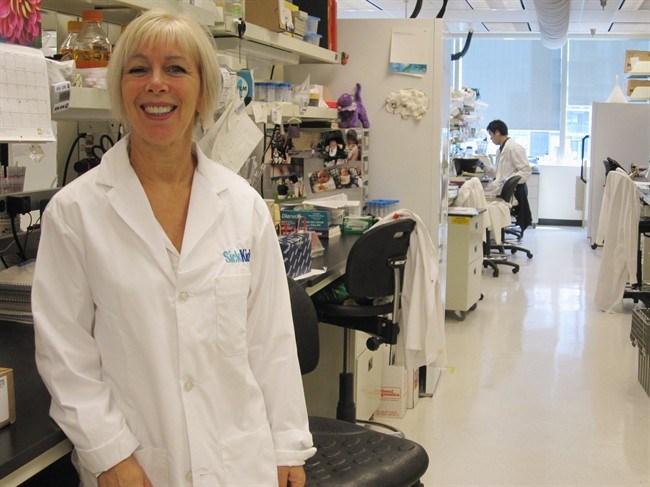
“If you could take stem cells that normally reside in our brains and somehow use drugs to recruit them into becoming appropriate neural cell types, then you may be able to promote repair and recovery in at least some of the many brain disorders and injuries for which we currently have no treatment,” said principal investigator Freda Miller.
Hospital for Sick Children
Principal investigator Dr.Freda Miller.
Hospital for Sick Children Principal investigator Dr.Freda Miller.

“This work is happening against a background of a lot of excitement in the stem cell field about the idea that since we now know that we have stem cells in many of our adult tissues, then perhaps if we could figure out how to pharmacologically tweak those stem cells, then perhaps we could help to promote tissue repair,” added Miller, a senior scientist at SickKids.

The research, published online Thursday in the journal Cell Stem Cell, involved lab-dish experiments using both mouse and human brain stem cells, as well as learning and memory tests performed on live mice given the drug.

Researchers started by adding metformin to stem cells from the brains of mice, then repeated the experiment with human brain stem cells generated in the lab. In both cases, the stem cells gave rise to new brain cells.

They then tested the drug in lab mice and found that those given daily doses of metformin for two or three weeks had increased brain cell growth and outperformed rodents not given the drug in learning and memory tasks.

One standard test involves a water maze in which the mice must swim around until they locate a hidden platform.

“And the remarkable thing is the mice that got the metformin, what they showed was increased flexibility in terms of the way they learned the location of things,” said Miller, explaining that the drug-treated mice had a greater ability to learn and remember.

“If you then, for example, moved the platform some place completely different, the metformin-treated animals were remarkably good at just saying, ‘OK, things have changed’ and learning the new thing and (were) much better than the controls (untreated mice).”

Miller said it was serendipity that led the team to conduct the study. About 18 months ago, they found a pathway known as PKC-CBP that signalled embryonic neural stem cells to make brain cells. At about the same time, some U.S. collaborators at Johns Hopkins University found the same pathway was activated by metformin in liver cells — the means by which the drug controls glucose levels that go awry in diabetes.

Based on those findings, Miller’s team thought metformin might activate the same pathway in neural stem cells.

“I love this story because it’s a classic example of how very basic research into how things work has led to a potential therapeutic endpoint,” she enthused.

One big bonus for researchers is that metformin has been well-tested and long prescribed for a number of diseases, including metabolic disorders in children. The drug also has been shown to have anti-cancer properties.

“The advantage again is that because metformin has been in people from seven until 107, we have lots of safety data on it, we know exactly what kinds of doses, et cetera, et cetera,” she said. “So that’s a really huge plus with moving forward.”

When it comes to progressive neurodegenerative diseases such as Alzheimer’s, Miller said there is a lot of excitement among scientists about finding a drug that could recruit stem cells to produce healthy neurons, “at least to give people just a bit longer healthier cognition, if you will.”

Metformin might be such a drug, but the difficulty is that stem cells age and diminish as people get older, so it’s unclear whether there would be adequate numbers of healthy brain stem cells to produce new neurons that would have a therapeutic benefit.

Still, it’s a possible and worthwhile line of investigation, she said.

Miller’s team is already in discussions with clinical colleagues about launching a pilot study to test metformin in young patients with acquired brain damage, either as result of treating a childhood brain tumour or from a traumatic head injury.

Such a study would try to determine if the drug could increase brain cell mass — using a functional MRI scan, for instance — and measuring any improvement in cognition and behaviour.

If approved, Miller said a pilot study could begin within the next year or so.

———

Online: http://www.youtube.com/watch?v=VHho7SttLzo&list=PL060890238CBB0337&index=8&feature=plpp_video


Report Error Submit a Tip

More Stories

Mayoral candidate Vogiatzakis criticized for living outside Winnipeg

Malak Abas 4 minute read Preview

Mayoral candidate Vogiatzakis criticized for living outside Winnipeg

Malak Abas 4 minute read Friday, Oct. 2, 2026

A mayoral hopeful took heat from other candidates Friday for living outside Winnipeg while running in the civic election.

Mike Vogiatzakis’s primary residence is in the Rural Municipality of St. Andrews, about 25 kilometres north of Winnipeg — a community with its own mayor and councillors.

But the funeral director said he owns a home in Winnipeg where he divides his time, and he would move to the city full-time if elected mayor.

“It doesn’t matter where a person lives. Why are we dividing St. Andrews and Manitoba and Winnipeg? I’ve met the criteria to run for mayor,” Vogiatzakis said Friday morning.

Read
Friday, Oct. 2, 2026

Bombers get ‘whopped’ in Montreal

Taylor Allen 5 minute read Preview

Bombers get ‘whopped’ in Montreal

Taylor Allen 5 minute read Yesterday at 11:32 PM CDT

MONTREAL — It’s hard to fathom that the Winnipeg Blue Bombers smacked these Montreal Alouettes five weeks ago.

The team that pulled off that 44-28 upset at Princess Auto Stadium was nowhere to be found in La Belle Province on Saturday night.

You can, however, now find them in the basement of the West Division at 7-8 after getting completely outmatched and outclassed by the Als in a 37-10 beatdown.

“This was bad,” left tackle Stanley Bryant told the Free Press postgame. “They basically had their way all around. They whopped our ass.”

Read
Yesterday at 11:32 PM CDT

Manitoba’s own Summer Howell takes on biggest role yet as Stephen King’s telekinetic teen Carrie

Randall King 7 minute read Preview

Manitoba’s own Summer Howell takes on biggest role yet as Stephen King’s telekinetic teen Carrie

Randall King 7 minute read Friday, Oct. 2, 2026

From the tender age of eight, actress Summer Howell has made her presence known in a series of horror films shot in her home province of Manitoba.

Her first film was Curse of Chucky (2013), director Don Mancini’s continuation of the venerable killer doll series he started (as a screenwriter) in 1988 with Child’s Play.

“Even then, it was obvious she was very talented, intelligent and delightful,” Mancini said of Howell.

Though she has worked in other genres, Howell gravitated to horror repeatedly, with credits in Shawn Linden’s harrowing Hunter Hunter (2020) and the 2023 possession thriller All Fun and Games. Earlier this year, she shot the horror film Sundown in Winnipeg with director Rebekah McKendry, which premièred last week at Beyond Fest in Los Angeles and is headed for a streaming berth on Shudder.

Read
Friday, Oct. 2, 2026

Moving drama at MTYP gives voice to boy who changed law

Holly Harris 5 minute read Preview

Moving drama at MTYP gives voice to boy who changed law

Holly Harris 5 minute read Yesterday at 2:37 PM CDT

The heroic true tale of Norway House Cree Nation-born Jordan River Anderson came home Friday night, as Manitoba Theatre for Young People presented Yvette Nolan’s Jordan.

The touring production, a collaboration with Geordie Theatre, runs weekends through Oct. 11, with additional stops in Toronto, Vancouver and Ottawa’s National Arts Centre.

Having several of Anderson’s family members witness the local première underscored the evening with poignancy. Elder and Pine Creek First Nation member Barbara Nepinak added her own dignified presence and prayers following MTYP artistic director Pablo Felices-Luna’s welcoming remarks.

The season-opener also marks the Winnipeg-raised playwright’s homecoming; the Algonquin playwright, director, dramaturg, actor and educator was a fixture in our local theatre community for many years before going on to serve as artistic director for Native Earth Performing Arts from 2003 to ‘11, among other contributions.

Read
Yesterday at 2:37 PM CDT

A day on the campaign trail: Winnipeg's mayor, seeking a second term, does double duty

Malak Abas 12 minute read Preview

A day on the campaign trail: Winnipeg's mayor, seeking a second term, does double duty

Malak Abas 12 minute read Friday, Oct. 2, 2026

In the weeks leading up to the civic election, Scott Gillingham has been performing a juggling act: he’s running to be Winnipeg’s 45th mayor, while still serving as its 44th.

“If someone asks me about the campaign, I’m going to answer them. But I think for most people, I’m the mayor of Winnipeg, even if I’m showing up as a candidate,” Gillingham, 58, says. “I try to do all I can to maintain that distinction.”

The Free Press joined Gillingham on a recent rainy September Saturday on the campaign trail, where he served in both roles during an event-laden day. City council’s final meeting before the Oct. 28 election was days earlier.

In Winnipeg, it’s rare for an incumbent to be defeated. But Gillingham knows his win in 2022 wasn’t exactly a landslide — he won with 27.5 per cent of the vote — and he’s been thinking about his second term ever since.

Read
Friday, Oct. 2, 2026

Broadening prediction-market gambling a bad idea

Editorial 4 minute read Preview

Broadening prediction-market gambling a bad idea

Editorial 4 minute read Yesterday at 2:01 AM CDT

Let’s make a prediction: sooner or later, when Canadian governments find a way to take their own cut of the action, prediction-contract gambling on everything from sports to entertainment to political decisions is going to come to Canada.

And that’s a horrible, dangerous, pernicious idea.

Unless you have particular access to information — either inside information or strategic information based on skills or education — you’re not likely to make money at it. In fact, structurally, you’re likely to lose. In prediction markets, you basically pay an amount, plus fees from the company involved, to bet on whether something will or will not happen within a certain time frame. The amount you pay for your contract depends on how other people are also betting.

As Wealthsimple describes it, “You buy whichever side you think is right. Prices move with demand, so if the market leans towards one outcome, the more that side costs. If a lot of people are backing the TSX to finish above 38,000, yes gets more expensive and no gets cheaper.”

Read
Yesterday at 2:01 AM CDT