Specialist moving to Toronto after 23 years at cutting-edge sleep lab
Advertisement
Read this article for free:
or
Already have an account? Log in here »
To continue reading, please subscribe:

Digital Subscription
One year of digital access for only $205*
- Enjoy unlimited reading on winnipegfreepress.com
- Read the E-Edition, our digital replica newspaper
- Access News Break, our award-winning app
- Play interactive puzzles
*First annual payment billed as $205.00 + GST for one year. This annual subscription will automatically renew at $233.00 + GST every 52 weeks (10% off the regular annual price of $259.35). Offer available to new and qualified returning subscribers only. Cancel any time.
To continue reading, please subscribe:
Add Free Press access to your Brandon Sun subscription for only an additional
$1 for the first 4 weeks*
- Enjoy unlimited reading on winnipegfreepress.com
- Read the E-Edition, our digital replica newspaper
- Access News Break, our award-winning app
- Play interactive puzzles
*Your next Brandon Sun subscription payment will increase by $1.00 and you will be charged $17.95 plus GST for four weeks. After four weeks, your payment will increase to $24.95 plus GST every four weeks.
Read unlimited articles for free today:
or
Already have an account? Log in here »
Hey there, time traveller!
This article was published 03/06/2013 (4800 days ago), so information in it may no longer be current.
Winnipeg was only supposed to be a temporary stop for Dr. Sat Sharma when he accepted a job as the city’s second sleep specialist in 1990.
Back then, the mysterious field of sleep medicine was still a fledgling discipline. Sharma, a pulmonary respirologist who had come from Nova Scotia with his family, heard Manitoba’s capital was one of the top locales to work and study his specialty.
“I thought, ‘I’m going to train at the best centre possible.’ Our intention was just to come here for training and return to Halifax or go somewhere else,” says Sharma, who explains that the city’s cutting-edge sleep laboratory at St. Boniface General Hospital, then brand new, was part of what attracted him to the city.
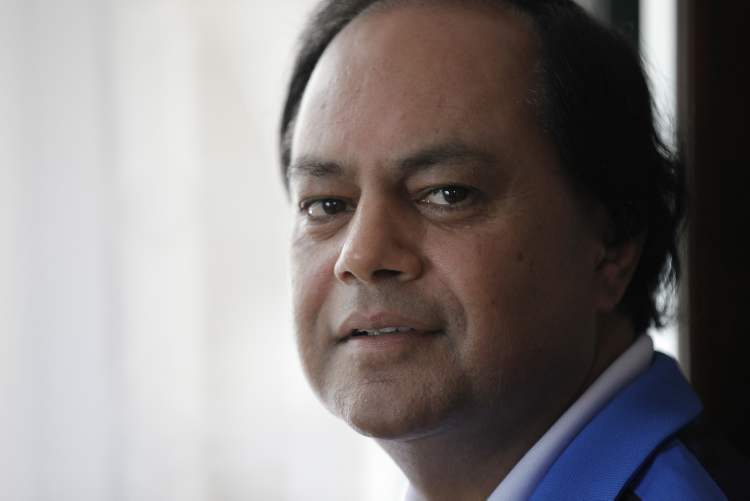
Approximately 100,000 patients and 23 years later, Sharma — the marathon-running lung doctor with the largest patient load in the city — is packing up his practice this summer and moving to Toronto.
He’s also packing up his life. It’s a difficult task for both him and his wife, Anjula, since they consider Winnipeg home.
“We’re leaving with mixed emotions. As I said, it’s been a great place for my career advancement and for personal family life. It’s a wonderful place to live, Sharma says during an interview in his Wellington Crescent home, which is currently for sale.
Sharma’s departure follows respirologist Dr. Meir Kryger’s exit from Winnipeg in 2006 after 30 years here. Kryger, who accepted a position at Yale University, was the first sleep specialist in Winnipeg. He founded the sleep clinic at St. Boniface, which he ran with Sharma. That has since evolved to the Sleep Disorder Clinic at the Misericordia Health Centre.
In Toronto, Sharma has purchased three private sleep clinics and one sleep lab, each fully operational and complete with staff. It was a rare entrepreneurial opportunity, says the father of two, noting that Ontario is no longer granting new licences to open private sleep clinics, but allows doctors to purchase existing licences.
He says the wait time for patients to get into an overnight sleep lab in Ontario is one to two months.
That’s a change of pace from the sleep lab wait time in Manitoba, which experts say can range from several months to a few years.
Sharma notes although there are no private facilities in Manitoba, the province has made “great strides” in allowing patients quicker access to sleep physicians.
He says family was the main reason for his move to Toronto. His son, a university student, will go to school in Toronto. His daughter, also in her 20s, plans to open an optometry practice there, he says.
The University of Manitoba professor of medicine recently stepped down as the institution’s head of respirology after six years in the position. Besides teaching, he also sees patients afflicted with sleep apnea, a serious disorder in which patients stop breathing during sleep.
Sharma also treats severe lung diseases and other sleep disorders that range from insomnia to sleepwalking.
He says not all of his patients — many of whom are attached to him — are taking the news of his departure so well. To make the transition easier, Sharma says he’ll come back to Winnipeg for a weekend every month until the end of the year to tend to patients.
Colleagues confirm they will also be affected by his absence.
“I estimate that it will take three individuals to replace him, so he will be clearly missed,” fellow lung specialist Dr. Steven Mink says by email, noting that Sharma’s “diagnostic acumen is unsurpassed by any of the respirologists that I know.”
Mink notes that although Sharma is perhaps best known in his professional circle for heading OPAL, an innovative web-based curriculum and course-management system for U of M medical students, his claims to fame are his numerous published studies about the physiological effects of running on the heart and lungs.
(One of Sharma’s studies detected a decrease in oxygen levels among marathon runners, though he says more examination is needed to truly understand the effect of running on the body).
The subject matter is close to Sharma’s heart, so to speak. People in River Heights have seen Sharma run around the neighbourhood several times a week.
The slim and fit physician is also an avid marathoner. In the two decades he’s lived in Winnipeg, he’s run 45 marathons, many under pseudonyms. His first was the Manitoba Marathon in 1993. Since then, he’s run many around the world, including in Boston and Nepal.
But his favourite marathons were always the ones in Winnipeg.
‘I loved running in cold and snow, because it’s good. There is soft ground… so I think I enjoyed training for that. And just because it’s your hometown, so you enjoy it, I think,” says Sharma, sitting in an upstairs office of his stately home. He looks out a window overlooking some the sculptures in his front yard — two Leo Mol bronze bears that he will donate to Winnipeg hospitals before he leaves.
He will take one of the sculptures in the front yard, a flying eagle, to Toronto with him.
During the interview, his pager goes off several times and he leaves to tend to calls about patients in the intensive care unit.
He comes back to explain why he loves running.
“You flush your mind of all the stress. After running, you cool down, your brain calms down, your stress is all relieved. It’s some time you spend for yourself,” says Sharma, who is also a fiction writer, with three novels in print, two of them self-published.

Like the marathon races that he runs anonymously, he writes under a pen name.
“There are no rules and no boundaries in fiction. You can use your imagination and just go wild. But everything else you do, you have boundaries and you have rules,” says Sharma.
“You have to live within goals and laws. But in fiction, you can just use your imagination. You can be creative. You don’t like something, you can change it.”
Have an interesting story idea you’d like Shamona to write about? Contact her at shamona.harnett@freepress.mb.ca.