ColonCheck’s screening test could save your life
Advertisement
Read this article for free:
or
Already have an account? Log in here »
To continue reading, please subscribe:

Digital Subscription
One year of digital access for only $205*
- Enjoy unlimited reading on winnipegfreepress.com
- Read the E-Edition, our digital replica newspaper
- Access News Break, our award-winning app
- Play interactive puzzles
*First annual payment billed as $205.00 + GST for one year. This annual subscription will automatically renew at $233.00 + GST every 52 weeks (10% off the regular annual price of $259.35). Offer available to new and qualified returning subscribers only. Cancel any time.
To continue reading, please subscribe:
Add Free Press access to your Brandon Sun subscription for only an additional
$1 for the first 4 weeks*
- Enjoy unlimited reading on winnipegfreepress.com
- Read the E-Edition, our digital replica newspaper
- Access News Break, our award-winning app
- Play interactive puzzles
*Your next Brandon Sun subscription payment will increase by $1.00 and you will be charged $17.95 plus GST for four weeks. After four weeks, your payment will increase to $24.95 plus GST every four weeks.
Read unlimited articles for free today:
or
Already have an account? Log in here »
Hey there, time traveller!
This article was published 25/05/2018 (3045 days ago), so information in it may no longer be current.
Last year, Luis Cabral received an envelope in the mail.
It contained a cardboard test kit with three small flaps, three wooden sticks and instructions on how to complete a home screening test for colon cancer.
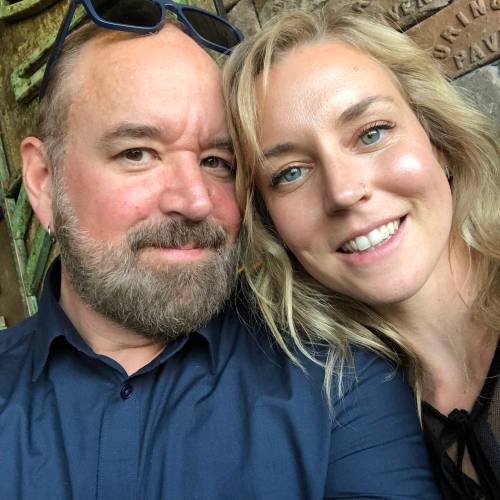
“I brushed it aside,” Cabral said. “I thought: I’m young. It’s not going to happen to me. I’m only 50.”
The envelope sat unused for several months before Cabral’s wife convinced him to do the test.
Launched in 2007, CancerCare Manitoba’s ColonCheck program mails colon cancer screening tests to eligible Manitobans between the ages of 50 and 74.
In ColonCheck’s first year of operation, fewer than 200 Manitobans completed the test.
Last year, the number of people completing ColonCheck screening tests rose to over 25,000. The increase is great news, but there is still room to improve. Only 52 per cent of Manitobans between 50 and 74 years old are up-to-date with colon cancer screening.
Of the 4,000 colon cancer screening test kits sent out by ColonCheck per month, only half are completed and sent to the lab for analysis.
Colon cancer (also called bowel cancer and colorectal cancer) is one of the leading causes of cancer death in the province. This year, 510 men and 360 women will be diagnosed with colon cancer, and 350 Manitobans will die from the disease. But there is something we can do about it.
There is a simple fecal test that can be used to prevent or detect colon cancer early, when it is easier to treat. The test can be done in the privacy of the home and is mailed to eligible Manitobans, regardless of where they live and whether they have a family doctor.
The colon screening test (called a fecal occult blood test or FOBT) looks for tiny drops of blood in stool, which might be a sign of cancer or of early changes in the colon that will eventually turn into cancer.
That is why colon cancer is one of the best diseases to screen for, according to Dr. Ross Stimpson, medical lead for CancerCare Manitoba’s ColonCheck.
“There is a long latent period from the time polyps develop in the colon until the time they turn into cancer,” Stimpson said. “The fecal test allows us to detect pre-malignant lesions and remove them before they even turn into cancer.”
The fecal test works by collecting three small stool samples on a test card, mailing the test card to the lab for analysis, and waiting a few weeks for the result. Cabral did the home screening test, even though he didn’t have any symptoms of colon cancer.
“I’m pretty healthy, I never get sick,” Cabral said. “The last time I saw a family doctor I was a teenager.”
For most people, like Cabral, the test comes back normal. People with normal test results are invited by ColonCheck to repeat the screening test in two years.
“No test is 100 per cent,” Stimpso said. “Repeating the fecal test every two years allows you to pick up early cancers or polyps you may not have caught the first time”
About five per cent of people who do the colon screening test will have an abnormal result, meaning that blood was found in their stool. These individuals are then referred for a colonoscopy to determine the cause of the bleeding. One in ten individuals who has a colonoscopy will have colon cancer.
However, if the disease is detected at an early stage, 90 per cent of colon cancer patients survive at least five years.
“If you can diagnose colon cancer at an early stage, certainly your treatment is simplified,” Stimpson said. “This provides significant benefit to patients and results in fewer deaths from colon cancer overall.”
Reducing deaths from colon cancer is the goal of the ColonCheck screening program, but that goal cannot be achieved unless Manitobans complete the screening test.
ColonCheck mails colon screening tests to Manitobans who have not completed a fecal test in two years and who have not done a colonoscopy or flexible sigmoidoscopy in the last five years. If you are between the ages of 50 and 74, you can find out if you are eligible for colon cancer screening by visiting getcheckedmanitoba.ca/getacolontest or by calling 1-855-95-CHECK. If you are due for screening, a home screening test will be sent to you in the mail.
Kelly Bunzeluk is the director of CancerCare Manitoba’s screening programs — ColonCheck, BreastCheck and CervixCheck.