Canada develops COVID-19 guidelines on when to cancel major events

Advertisement

Advertise with us

OTTAWA - The Public Health Agency of Canada has posted guidelines aimed at helping event planners figure out whether to cancel mass gatherings of people as the federal government works to quell the potential spread of the novel coronavirus.

Read this article for free:


or

Already have an account? Log in here »

To continue reading, please subscribe:

Subscribe and receive a limited-edition Free Press branded hat or tote.

Digital Subscription

One year of digital access for only $205*

  • Enjoy unlimited reading on winnipegfreepress.com
  • Read the E-Edition, our digital replica newspaper
  • Access News Break, our award-winning app
  • Play interactive puzzles

*First annual payment billed as $205.00 + GST for one year. This annual subscription will automatically renew at $233.00 + GST every 52 weeks (10% off the regular annual price of $259.35). Offer available to new and qualified returning subscribers only. Cancel any time.

To continue reading, please subscribe:

Add Free Press access to your Brandon Sun subscription for only an additional

$1 for the first 4 weeks*

  • Enjoy unlimited reading on winnipegfreepress.com
  • Read the E-Edition, our digital replica newspaper
  • Access News Break, our award-winning app
  • Play interactive puzzles
Start now

*Your next Brandon Sun subscription payment will increase by $1.00 and you will be charged $17.95 plus GST for four weeks. After four weeks, your payment will increase to $24.95 plus GST every four weeks.

Hey there, time traveller!
This article was published 10/03/2020 (2358 days ago), so information in it may no longer be current.

OTTAWA – The Public Health Agency of Canada has posted guidelines aimed at helping event planners figure out whether to cancel mass gatherings of people as the federal government works to quell the potential spread of the novel coronavirus.

The next best thing to stopping the virus completely is to slow it down, public health officials have said, and try to delay widespread community transmission as long as possible to ease the burden on the health-care system.

In the United States, where COVID-19 has sickened more than 800 people and killed at least 30, sports teams are playing without crowds, several concerts have been cancelled and some schools and universities are shutting down in an effort to keep the virus from spreading.
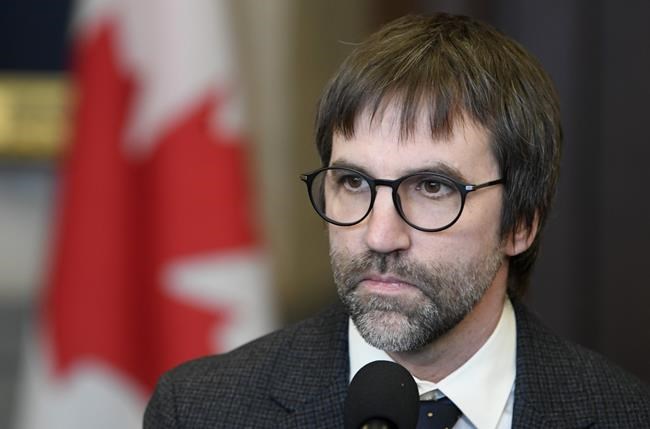
Minister of Canadian Heritage Steven Guilbeault speaks with the media in the Foyer of the House of Commons in Ottawa on February 3, 2020. Canadian Heritage Minister Steven Guilbeault says the government plans to offer guidance to major event planners about when they should consider shutting down large gatherings in light of the looming threat of a possible novel coronavirus outbreak. THE CANADIAN PRESS/Adrian Wyld

Canada, meanwhile, has seen very limited domestic transmission of the virus, and event planners say it’s largely business as usual until that changes.

Still, concert promoters, major sports leagues and festival organizers say they are watching carefully to decide whether they should bring crowds of people together to share the same space.

“We have been told by public health there is no need to cancel events or minimize social gatherings at this point,” said Erin Benjamin, president of the Canadian Live Music Association. “I think that’s going to be public health’s determination, and I hope we don’t get to that.”

The newly released federal guidelines urge organizers to assess risk, highlighting factors like the ages of the attendees, given the virus hits older populations hardest, and whether they are likely to be arriving from regions that have been impacted by COVID-19.

They also offer ways to reduce the risk without cancelling the event altogether, such as by limiting the number of people who attend, staggering arrivals and departures, making more hand-washing stations available, or even live-streaming activities online.

But they don’t dictate whether certain types of events should be shut down, and under what conditions.

Rather, they’re intended to help event planners, municipalities, provinces and territories make informed decisions.

“You may be in a context where you have a very strong healthy system where you can say ‘OK, well we will welcome this event because if there’s a problem we’ll be able to contain it,'” Canadian Heritage Minister Steven Guilbeault said Tuesday in Ottawa.

“On the other hand, you may be in a situation where you feel that you can’t do that.”

Earlier Tuesday, the band Pearl Jam announced it would postpone the first leg of its tour, including several stops in Canada, over concerns about COVID-19. It’s the first major act to cancel a live performance in Canada because of the virus, according to the Canadian Live Music Association.

The Broadbent Institute, a policy think tank, also said Tuesday it would postpone a summit planned for later this month in Vancouver, citing advice from the provincial medical health officer. B.C. has now recorded Canada’s first death linked to COVID-19.

“The Institute prides itself on ensuring that our events are safe and inclusive environments, and we can no longer say with confidence that a summit held in March would be able to meet this standard for all participants,” the think tank said in a statement.

Another policy conference, this one planned by the Manning Centre for later this month in Ottawa, is going ahead, organizers said Tuesday. But they are changing their meal setups to minimize contact between participants, and will be making hand sanitizer available.

Meanwhile, the NHL is monitoring the spread of the virus in Canada and the United States and putting contingency plans together in case large gatherings become unsafe.

As for potential school closures and limiting access to public spaces, chief public health officer Dr. Theresa Tam said that will also be up to local and provincial governments if transmission becomes widespread in their area.

“The measures have to be balanced against what is going on on the ground, and you can’t sort of blanket a whole geographic area without really paying attention to the details on the ground,” Tam said at a briefing Monday.

Each jurisdiction has their own public health laws that govern when they should trigger those kinds of measures, she said.

While the risk is low, Canadians can take personal measures to protect themselves and others against the spread of the virus, federal Health Minister Patty Hajdu said Tuesday. Those include staying home when sick, staying two metres away from others and coughing and sneezing into their elbow.

Foreign Affairs Minister Francois-Philippe Champagne said he’s in contact with his counterparts in Italy, which is currently under lockdown because of a massive spike in the number of cases.

He said he wants to learn from that country’s experience, but doesn’t expect to see massive widespread quarantines in Canada.

This report by The Canadian Press was first published March 10, 2020.

Report Error Submit a Tip

More Stories

Five Things: PM Carney explains why Canada left the U.S. negotiating table

David Baxter, The Canadian Press 5 minute read Preview

Five Things: PM Carney explains why Canada left the U.S. negotiating table

David Baxter, The Canadian Press 5 minute read Saturday, Aug. 22, 2026

OTTAWA - Canada is preparing to hit the U.S. with dollar-for-dollar tariffs in response to new 50 per cent duties on $28 billion worth of Canadian products that took effect when talks between the two nations collapsed as negotiations neared the finish line. 

Prime Minister Mark Carney was quiet publicly during the final days of negotiations, but now has now explained his rationale for telling the Canadian negotiating team, led by Canada-U.S. Trade Minister Dominic LeBlanc and chief negotiator Janice Charette, to leave the table.

Restrictions on further trade deals

"The U.S. Introduced at the last hours, in the last hours, efforts to restrict our ability to have other trade deals. You heard me say a moment ago, what we've accomplished in the past year, 20 new deals, economic and security partnerships, the prospect of doubling our market access because we believe in free trade. We're the partner of choice in many respects for countries around the world and the Americans wanted to restrict that. They had language that what they wanted to restrict that, unacceptable," Carney said during a press conference on Parliament Hill.

Read
Saturday, Aug. 22, 2026

Kinew says Manitoba stands with PM in trade war with U.S.

By Melissa Martin 6 minute read Preview

Kinew says Manitoba stands with PM in trade war with U.S.

By Melissa Martin 6 minute read Saturday, Aug. 22, 2026

The Manitoba government and business leaders are rallying behind Prime Minister Mark Carney’s plan to fight back, after a sudden collapse of trade talks between the U.S. and Canada sparked a new salvo of U.S. tariffs on some Canadian goods.

On Saturday, after Carney vowed to respond with retaliatory tariffs, Manitoba Premier Wab Kinew said his government stood “100 per cent” behind the prime minister’s plan to respond to what Kinew called U.S. President Donald Trump’s “unjustified and immoral” tariffs.

“History will not be kind to Donald Trump, so we should never appease him,” Kinew said. “We should fight back, which is what Canada is doing today.”

Kinew met reporters for a brief news conference at the legislature on Saturday afternoon, about an hour after finishing a call with Carney and the other premiers. There was a “really strong sense of unity” on that call, Kinew said, and emphasized that he backs the federal decision to “walk away from what would have been a bad deal.”

Read
Saturday, Aug. 22, 2026

Puzzles Palace

1 minute read Monday, Jul. 27, 2026

To solve our puzzles, please subscribe with this special offer: |

The trolls inside the Conservative tent

David McLaughlin 5 minute read Preview

The trolls inside the Conservative tent

David McLaughlin 5 minute read Saturday, Aug. 22, 2026

The Conservative Party of Canada has a troll problem. And it’s coming from inside the tent.

Once, trolls existed only in imagination. They were figures of mythical proportion, big and small. They lived solitary lives under bridges, in caves, or forests. They were considered dim-witted and mean. Best avoided.

Today, they are real, unavoidable, and ubiquitous on social media. They are anything but solitary. There are tribes of them out there and tribal is how they think and post. As for dim-witted and mean, others can opine but they are uniformly mean and dismissive.

Mean to anyone who disagrees with their views. Dismissive of any view but their own. They distribute questionable, at best, facts and opinions grounded in hostility towards anything or anyone deemed disagreeable or heretical to their world view.

Read
Saturday, Aug. 22, 2026

Winnipeg team behind national LGBT monument spent six years bringing it to fruition

Nicole Buffie 5 minute read Preview

Winnipeg team behind national LGBT monument spent six years bringing it to fruition

Nicole Buffie 5 minute read Yesterday at 6:05 PM CDT

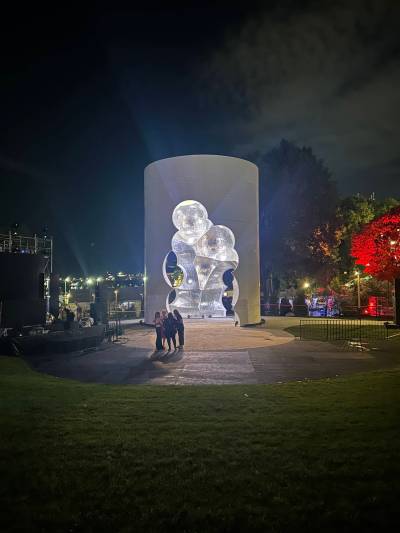
The Winnipeg team behind a national monument recognizing the LGBT Purge were in Ottawa to celebrate its official unveiling Friday.

Thunderhead is the work of local artists Shawna Dempsey and Lorri Millan, Liz Wreford and Peter Sampson of Public City Architecture, and knowledge keeper Albert McLeod, who served as cultural adviser for the project.

The team beat out 31 international submissions for the project, which is permanently located at 201 Wellington St. in Ottawa along the Ottawa River, in view of Parliament.

“We are a beacon internationally around the world of what democracies can do about inclusion, about human rights,” McLeod said.

Read
Yesterday at 6:05 PM CDT

Downtown Rudy’s restaurant announces closure

1 minute read Yesterday at 1:55 PM CDT

A downtown eatery has announced its closure.

Rudy's Eat and Drink, located on the main floor of the Manitoba Hydro building at 375 Graham Ave., posted on social media that the restaurant would be closing after "one last hurrah" on Friday, Aug. 21.

"With heavy hearts it is time to announce that Rudy’s will officially be closing its doors after an incredible 15 years," the post reads.

The post gave no reason for the closure. Rudy's and other restaurants in the building expressed concerns after an assault and resulting lockdown at Hydro Place in late January.