What you need to know about the military’s assistance to long-term care homes

Advertisement

Advertise with us

OTTAWA - Prime Minister Justin Trudeau promised the Canadian Armed Forces will respond to provincial requests for assistance at long-term care facilities hit by COVID-19, but said Thursday the measure is a short-term solution and Canada should not need to have "soldiers taking care of seniors."

Read this article for free:


By clicking the button above, an account will be created and you will begin to receive some of our recommended newsletters. You may opt out of any newsletter by visiting your Email and Communication Preferences page or by clicking "unsubscribe" at the bottom of any email.

or

Already have an account? Log in here »

To continue reading, please subscribe:

Digital Subscription

One year of digital access for only $1.44 a week*

  • Enjoy unlimited reading on winnipegfreepress.com
  • Read the E-Edition, our digital replica newspaper
  • Access News Break, our award-winning app
  • Play interactive puzzles

*Billed as $5.77 plus GST every four weeks. After 52 weeks, price increases to the regular rate of $19.95 plus GST every four weeks. Offer available to new and qualified returning subscribers only. Cancel any time.

To continue reading, please subscribe:

Add Free Press access to your Brandon Sun subscription for only an additional

$1 for the first 4 weeks*

  • Enjoy unlimited reading on winnipegfreepress.com
  • Read the E-Edition, our digital replica newspaper
  • Access News Break, our award-winning app
  • Play interactive puzzles
Start now

*Your next Brandon Sun subscription payment will increase by $1.00 and you will be charged $17.95 plus GST for four weeks. After four weeks, your payment will increase to $24.95 plus GST every four weeks.

Hey there, time traveller!
This article was published 23/04/2020 (2371 days ago), so information in it may no longer be current.

OTTAWA – Prime Minister Justin Trudeau promised the Canadian Armed Forces will respond to provincial requests for assistance at long-term care facilities hit by COVID-19, but said Thursday the measure is a short-term solution and Canada should not need to have “soldiers taking care of seniors.”

Here’s what you need to know about the military’s support in response to COVID-19:

What requests have been made so far?
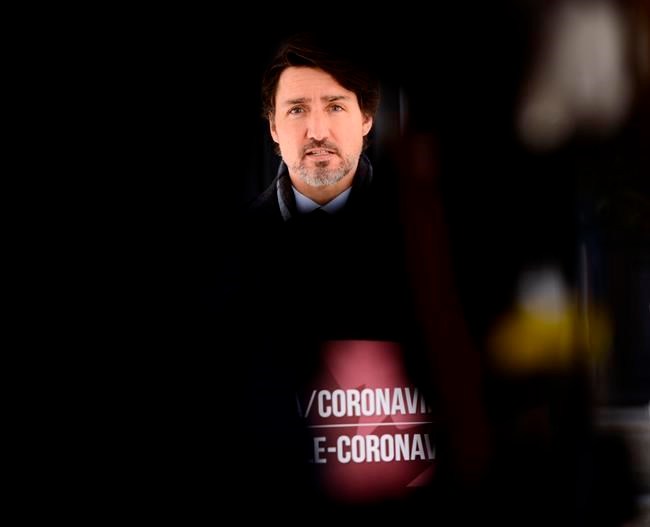
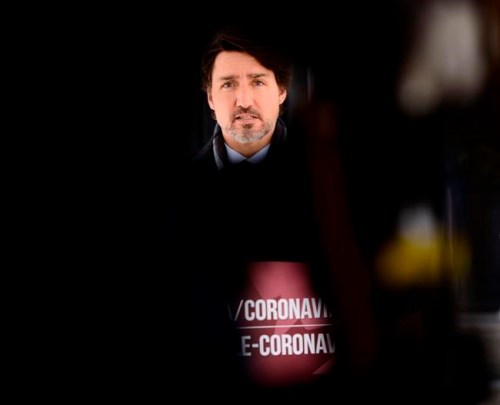
Prime Minister Justin Trudeau addresses Canadians on the COVID-19 pandemic from Rideau Cottage in Ottawa on Thursday, April 23, 2020. THE CANADIAN PRESS/Sean Kilpatrick

The federal government has so far received eight pandemic-related requests for assistance from the provinces that have translated into military action. Three have involved mobilizing Canadian Ranger patrols to help local communities in northern Quebec and one in northern Saskatchewan. The military also used one of its planes to transport a ventilator to Nova Scotia.

Three other requests have dealt specifically with long-term care facilities, including two calls for help from Quebec and one from Ontario.

What support has been offered to long-term care facilities?

The Canadian Armed Forces deployed 130 personnel last week after Quebec asked for assistance at five long-term care facilities battered by COVID-19 in and around Montreal. More than half are medical personnel divided into five teams comprised of two nurses and 12 medical technicians, while the remainder are support personnel. The teams are working alongside health-care staff within the facilities.

The two other requests for assistance at long-term care homes were received from Quebec and Ontario on Wednesday. Military planners are now assessing what type of support those provinces need and what can be provided.

Quebec Premier Francois Legault has publicly asked for 1,000 military personnel while Ontario has suggested it would like five teams of about 50 service members each that include both medical personnel to work alongside staff at five long-term care facilities as well non-medical personnel for general tasks.

What kinds of medical resources does the military have?

The Canadian Armed Forces is mandated by law to provide medical and dental services to its full-time troops at home and while deployed abroad. To meet that requirement, roughly 2,600 of the military’s 68,000 regular-force members are medical professionals. Of those, around 460 are doctors and nurses. The rest are medical technicians, pharmacists, dentists and dental hygienists.

The military’s medical professionals are scattered across different bases and facilities across the country. They have regularly been called upon to assist with emergencies at home and abroad, with 79 deployed to Sierra Leone in 2014-15 to help the African nation deal with an Ebola outbreak. They were also tasked with helping repatriate Canadians in the early days of the COVID-19 crisis.

How will military personnel work in long-term care facilities?

The Armed Forces’ members are intended to reinforce those already working in such facilities, not replace them. They will work shifts during the day and night to provide medical care and handle other tasks depending on their respective roles and qualifications, based on the needs of the centres where they are deployed.

The military members will arrive at the care facilities in their uniforms but change into and wear hospital scrubs provided by the homes while working. They will then change back into their uniforms when they are finished working and leave the scrubs for the facilities to clean.

While wearing scrubs will ensure proper hygiene within the care facilities, Defence Department spokesman Daniel Le Bouthillier says they will also help service members blend in with the facilities’ existing staff “without causing confusion or additional stress to vulnerable patients.”

How long can the military provide such support?

While the government has said it will respond to the requests for assistance at long-term care facilities, some defence officials and experts have noted the military does not have a glut of medical personnel — and those it does have are primarily focused on caring for other troops.

“The capabilities we have in the Canadian Forces are designed for the Canadian Forces, they are not designed for providing significant augmentation to the medical services of the country,” retired lieutenant-general Guy Thibault, who served as the military’s second-in-command and is now chair of the Conference of Defence Associations Institute, said during a recent interview.

“When we supported the Ebola crisis in Africa a couple of years ago … that was really placing a major strain on our Canadian Forces’ capabilities. So it’s a specialized capability we have, but it’s not designed necessarily for the front line.”

This report by The Canadian Press was first published April 23, 2020.

Report Error Submit a Tip

More Stories

Backstreet Boys’ 12-show Toronto run offers millennials a ticket to simpler times

Alex Nino Gheciu, The Canadian Press 5 minute read Preview

Backstreet Boys’ 12-show Toronto run offers millennials a ticket to simpler times

Alex Nino Gheciu, The Canadian Press 5 minute read Saturday, Oct. 17, 2026

When Chelsea Smith heard the Backstreet Boys were coming to Toronto, she had a simple message for the five men who soundtracked her childhood.

“Here's my credit card, take all my money.”

The 35-year-old Vancouver fan wasn’t bluffing. Having already travelled to Las Vegas to see her teenybopper crushes, she's now preparing to fly across the country for two Toronto concerts, spending roughly $600 on tickets alone.

And she's hardly the only millennial willing to pay a tidy sum to party like it’s 1999.

Read
Saturday, Oct. 17, 2026

Officials say catastrophic base fire was known ahead of time, allowed to burn

Jack Farrell and Fakiha Baig, The Canadian Press 5 minute read Preview

Officials say catastrophic base fire was known ahead of time, allowed to burn

Jack Farrell and Fakiha Baig, The Canadian Press 5 minute read Updated: Yesterday at 9:33 PM CDT

Canada's military says a grass fire that killed four soldiers and sent scores more to hospital with bad burns was known well beforehand but not considered a threat.

Maj.-Gen. Wade Rutland, commander of 1st Canadian Division, says the grass fire was a kilometre away and considered sufficiently under control that training exercises were allowed to continue Saturday afternoon at Canadian Forces Base Wainwright in central Alberta.

However, he said conditions — including a violent, sudden windstorm — sent those flames racing over the Prairie landscape at lightning speed, landing right on top of the soldiers.

"This was a very uncommon occurrence," Rutland told a news conference Sunday.

Read
Updated: Yesterday at 9:33 PM CDT

Disgraced ex-dean landed job at German university after fleeing Winnipeg

Maggie Macintosh 8 minute read Preview

Disgraced ex-dean landed job at German university after fleeing Winnipeg

Maggie Macintosh 8 minute read Friday, Oct. 16, 2026

Before he was arrested in a posh Paris suburb, the disgraced dean of Manitoba’s only law school — who fled the country following a 2020 expense scandal — kept a low profile at a German university.

Read
Friday, Oct. 16, 2026

De Havilland calls for national water bomber fleet as it scrambles to meet demand

Christopher Reynolds, The Canadian Press 7 minute read Preview

De Havilland calls for national water bomber fleet as it scrambles to meet demand

Christopher Reynolds, The Canadian Press 7 minute read Updated: Yesterday at 1:49 PM CDT

MONTREAL - On July 13, a pair of Canadair water bombers touched down on the Seine River, skimming along its surface to refill their water tanks as they battled a wildfire south of Paris.

The "super scoopers," with their signature ketchup-red wing tips on a mustard-yellow body, sucked up 6,000-plus litres from France’s most famous waterway in one go as part of a fight against the flames then rampaging across Europe.

The event in north-central France underscored how wildfires are ranging even farther from their traditional grounds and fuelling an urgent need for water bombers to fend off climate disasters.

The iconic Canadair turboprops serve as the only amphibious firefighting aircraft currently in production built from the outset for that purpose, rather than being retrofitted to douse flames.

Read
Updated: Yesterday at 1:49 PM CDT

Yager ready to fly with the Jets

Ken Wiebe 6 minute read Preview

Yager ready to fly with the Jets

Ken Wiebe 6 minute read 6:06 PM CDT

Brayden Yager understood the assignment.

By recording five goals and nine points in six American Hockey League games with the Manitoba Moose to open the season, it was clear Yager brushed aside any lingering disappointment of being the last cut by the Winnipeg Jets following a strong training camp.

Yager, who set up the tying goal and scored the game-winner for the Moose on Sunday against the Texas Stars, was officially recalled by the Jets on Monday morning.

The 14th overall pick in the 2023 NHL Draft was essentially the extra forward during line rushes, but did see some action with the penalty kill and the second power-play unit with the NHL club on Monday, so it’s still unclear whether or not Yager will be in the lineup against the St. Louis Blues.

Read
6:06 PM CDT

How the military can help long-term care homes

Lee Berthiaume, The Canadian Press 4 minute read Preview

How the military can help long-term care homes

Lee Berthiaume, The Canadian Press 4 minute read Thursday, Apr. 23, 2020

OTTAWA - Prime Minister Justin Trudeau promised the Canadian Armed Forces will respond to provincial requests for assistance at long-term care facilities hit by COVID-19, but said Thursday the measure is a short-term solution and Canada should not need to have "soldiers taking care of seniors."

Here's what you need to know about the military's support in response to COVID-19:

What requests have been made so far?

The federal government has so far received eight pandemic-related requests for assistance from the provinces that have translated into military action. Three have involved mobilizing Canadian Ranger patrols to help local communities in northern Quebec and one in northern Saskatchewan. The military also used one of its planes to transport a ventilator to Nova Scotia.

Read
Thursday, Apr. 23, 2020