Learning to live with COVID-19 requires permanent fixes to vulnerable settings

Advertisement

Advertise with us

OTTAWA - Canada's chief public health officer warned Monday there is still a lot we don't know about the virus that causes COVID-19, but said stopping this pandemic or preventing a future one will require more than just physical distancing and handwashing.

Read this article for free:


or

Already have an account? Log in here »

To continue reading, please subscribe:

Subscribe and receive a limited-edition Free Press branded hat or tote.

Digital Subscription

One year of digital access for only $205*

  • Enjoy unlimited reading on winnipegfreepress.com
  • Read the E-Edition, our digital replica newspaper
  • Access News Break, our award-winning app
  • Play interactive puzzles

*First annual payment billed as $205.00 + GST for one year. This annual subscription will automatically renew at $233.00 + GST every 52 weeks (10% off the regular annual price of $259.35). Offer available to new and qualified returning subscribers only. Cancel any time.

To continue reading, please subscribe:

Add Free Press access to your Brandon Sun subscription for only an additional

$1 for the first 4 weeks*

  • Enjoy unlimited reading on winnipegfreepress.com
  • Read the E-Edition, our digital replica newspaper
  • Access News Break, our award-winning app
  • Play interactive puzzles
Start now

*Your next Brandon Sun subscription payment will increase by $1.00 and you will be charged $17.95 plus GST for four weeks. After four weeks, your payment will increase to $24.95 plus GST every four weeks.

Hey there, time traveller!
This article was published 27/04/2020 (2307 days ago), so information in it may no longer be current.

OTTAWA – Canada’s chief public health officer warned Monday there is still a lot we don’t know about the virus that causes COVID-19, but said stopping this pandemic or preventing a future one will require more than just physical distancing and handwashing.

Dr. Theresa Tam said we simply do not know yet whether someone who has had COVID-19 will be immune from getting it again, or how long that immunity will last. The World Health Organization warned last week it is premature to give the all-clear for resuming normal activities to people who have recovered from COVID-19, because there is some evidence that some patients have contracted the novel coronavirus a second time.

Tam said Monday these are critical questions the immunity task force she is part of seek to answer as Canada tries to make critical decisions about how to lift the extreme restrictions on public gatherings without throwing the door wide open for the virus to spread rapidly amongst the population.
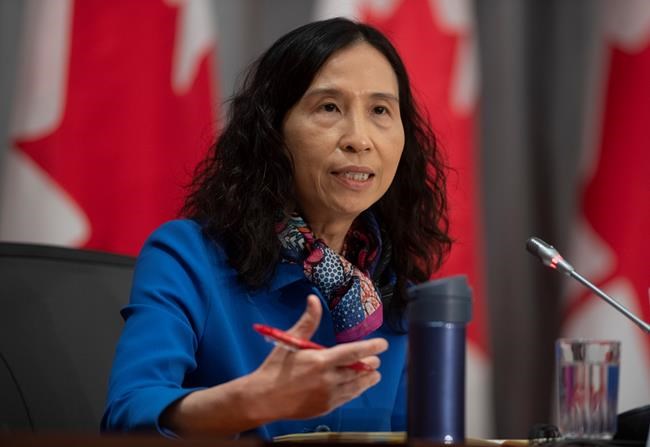
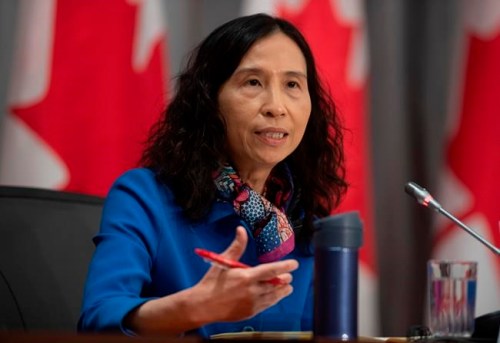
Chief Public Health Officer Theresa Tam responds to a question during a news conference in Ottawa, Monday, April 27, 2020. THE CANADIAN PRESS/Adrian Wyld

But Tam said what she does know is that to stop COVID-19, and to prepare better for the next wave of this or another global virus, Canada has got to do something immediately to address the “social, cultural and economic” conditions she said contributed to allowing COVID-19 to disproportionately affect vulnerable populations and essential workers.

“The bad bugs are not going away so if we are to end the tragedy of increased disease and death rates in vulnerable populations we need to make things right, right now,” Tam said during her regular briefing in Ottawa.

“This is not just someone else’s problem or someone else’s sorrow. Inequities touch us all,” she said. “They affect the health and social well-being of all Canadians just as they diminish our humanity.”

While many communities appear to have community transmission under control, the virus is continuing to wreak tragic consequences in group housing settings, like long-term care homes, homeless shelters and prisons.

At least half the Canadians who have died of this disease so far lived in long-term care homes, and in Ontario and Quebec, more than three in four deaths are linked to the facilities. Both provinces have requested help from the military because it’s not only those living in these homes who were vulnerable, but also those looking after them. Ontario reported on the weekend that 1,181 staff in long-term care homes are sick. Quebec says 4,000 health workers have tested positive, and another 5,500 are in isolation.

Prime Minister Justin Trudeau said last week there will be tough questions to face about how Canada’s seniors were not better protected from the virus, and how it got so bad that we need to send in the military to help.

Wages could be part of the issue in recruiting and maintaining qualified staff — both Ontario and Quebec boosted hourly wages for essential workers this month. Quebec Premier Francois Legault also pointed fingers at private operators, saying last week he was considering making all care homes public. He also said the facilities needed more workers and more space to keep residents apart to prevent the virus from spreading like wildfire.

The Canadian Red Cross was moving some long-term care residents with COVID-19 in one part of Montreal to a local arena for treatment.

Tam said the idea of moving sick patients elsewhere is being discussed in other areas too but she said it is complicated by the high level of care many of those patients require.

Ontario NDP MP Charlie Angus said the changes to come after the COVID-19 crisis has passed must include a full rethink of the pillars of globalization and privatization upon which Canada’s economy has been built.

“What is staggering about this virus is that all the myths about our economy crumbled almost overnight,” said Angus. “Millions of people, within one week, didn’t have enough money to pay the rent.”

Global supply chains for critical medical equipment failed us and our allies were taking equipment we ordered right out from under us, said Angus.

The NDP is kicking off a task force this week to consult with the public and some of Canada’s leading experts on economics and finance, to ask and try and find answers to what went so wrong and how we fix it.

This report by The Canadian Press was first published April 27, 2020.

Report Error Submit a Tip

More Stories

Fatal stabbing of Ukrainian newcomer left family shattered

Erik Pindera 6 minute read Preview

Fatal stabbing of Ukrainian newcomer left family shattered

Erik Pindera 6 minute read Yesterday at 5:47 PM CDT

A man who fatally stabbed a Ukrainian newcomer in “a random, unprovoked, and senseless act of violence” on the street has been sentenced to 10 years behind bars.

Ethan Gladu, 22, was found guilty of manslaughter in February in the December 20, 2023 killing of Ivan Rubanik, a 46-year-old father of two who had fled to Canada for a better life with his family several months before.

Gladu, then 19, randomly stabbed Rubanik shortly before 8 a.m., near Talbot Avenue and Watt Street, as the victim was walking to work that morning. He died of blood loss soon after.

“The people of Winnipeg, or any community, should feel confident that they can go about their business, walk to work, support their family, and carry on with their lives without being attacked,” said Court of King’s Bench Justice Kenneth Champagne on Thursday afternoon as he sentenced the killer.

Read
Yesterday at 5:47 PM CDT

Low-income residents of 114-year-old downtown block staggered by proposed rent hikes

Malak Abas 9 minute read Preview

Low-income residents of 114-year-old downtown block staggered by proposed rent hikes

Malak Abas 9 minute read Updated: Yesterday at 11:27 AM CDT

Marcel Blanchette’s life has not travelled down a smooth road.

In 2014, he was violently assaulted in his home, an unprovoked attack that left him with severe injuries, including permanent brain damage. He underwent months of hospitalization and rehabilitation. During that time, he learned his possessions had been sold off when the Office of The Public Guardian and Trustee took over his affairs.

Twelve years later, he finds himself in another fight. This time, it comes in the form of a proposal from the new owners of the Conway Court apartment block that would nearly double his monthly rent. While he’s been able to live in the Kennedy Street unit with the support of disability income assistance for nearly five years, the sudden spike, he said, could leave him homeless.

“To go through that, and now I’m going through this, it’s another obstacle,” Blanchette told the Free Press. “I fought the Public Guardian and Trustee, and I’ll fight this too, with whatever I have.”

Read
Updated: Yesterday at 11:27 AM CDT

Elders bless, open city’s first urban all-season sweat lodge

Nicole Buffie 3 minute read Preview

Elders bless, open city’s first urban all-season sweat lodge

Nicole Buffie 3 minute read 4:20 PM CDT

Indigenous Winnipeggers now have access to sweat lodge ceremonies all year long.

On Friday Ka Ni Kanichihk unveiled Winnipeg’s first urban, all-seasons sweat lodge. The organization will hold ceremonies throughout the year, giving people who live in the city equitable access to the sacred ritual.

“We’re now going to be able to offer ceremony for relatives that can’t access a sweat ceremony outside the city because of financial restraint or that kind of thing,” said Wally Chartrand, a cultural advisor for Ka Ni Kanichihk.

The sweat lodge itself is enclosed in a cedar-panelled building equipped with washrooms and benches. Outside the building is a fire pit enclosed with a seating area and plants which are used as traditional Indigenous medicine during the ceremonies.

Read
4:20 PM CDT

Mole Mobile on move for your dermatological needs

Sheldon Birnie 3 minute read Preview

Mole Mobile on move for your dermatological needs

Sheldon Birnie 3 minute read Yesterday at 6:00 AM CDT

This weekend, the Mole Mobile will set up shop at three Winnipeg Walmart locations. The mobile clinic will have certified dermatologists on site to screen suspicious-looking moles or lesions for skin cancer.

Read
Yesterday at 6:00 AM CDT

Fragile settings must be fixed now, Tam says

Mia Rabson, The Canadian Press 4 minute read Preview

Fragile settings must be fixed now, Tam says

Mia Rabson, The Canadian Press 4 minute read Monday, Apr. 27, 2020

OTTAWA - Canada's chief public health officer warned Monday there is still a lot we don't know about the virus that causes COVID-19, but said stopping this pandemic or preventing a future one will require more than just physical distancing and handwashing.

Dr. Theresa Tam said we simply do not know yet whether someone who has had COVID-19 will be immune from getting it again, or how long that immunity will last. The World Health Organization warned last week it is premature to give the all-clear for resuming normal activities to people who have recovered from COVID-19, because there is some evidence that some patients have contracted the novel coronavirus a second time.

Tam said Monday these are critical questions the immunity task force she is part of seek to answer as Canada tries to make critical decisions about how to lift the extreme restrictions on public gatherings without throwing the door wide open for the virus to spread rapidly amongst the population.

But Tam said what she does know is that to stop COVID-19, and to prepare better for the next wave of this or another global virus, Canada has got to do something immediately to address the "social, cultural and economic" conditions she said contributed to allowing COVID-19 to disproportionately affect vulnerable populations and essential workers.

Read
Monday, Apr. 27, 2020

Province fogging in West St. Paul due to high counts of West Nile-carrying mosquitoes

Free Press staff 3 minute read Preview

Province fogging in West St. Paul due to high counts of West Nile-carrying mosquitoes

Free Press staff 3 minute read 12:37 PM CDT

Manitoba Health will conduct a third round of fogging in the RM of West St. Paul due to high counts of a West Nile virus-carrying mosquito and a high infection rate in the area.

The province said spraying of the DeltaGard 20EW insecticide is scheduled to happen this weekend, as long as weather conditions are suitable, to reduce the risk of human exposure, which remains high.

The RM of West St. Paul will notify residents when the date is confirmed. The date will be published on the Manitoba Health’s website.

Manitoba has reported one confirmed and three probable human cases of West Nile virus in 2026. The confirmed case was in Prairie Mountain Health region in western Manitoba. Two probable cases were in Interlake-Eastern and one was in Southern Health.

Read
12:37 PM CDT