Canada takes baby steps toward normalcy; Quebec passes 2,000 COVID deaths

Advertisement

Advertise with us

TORONTO - Canada took further baby steps toward post-pandemic normalcy on Friday as Atlantic provinces began easing rigid restrictions imposed to curb the COVID-19 scourge, while Quebec's death toll climbed past 2,000 as it set to ease its measures.

Read this article for free:


or

Already have an account? Log in here »

To continue reading, please subscribe:

Subscribe and receive a limited-edition Free Press branded hat or tote.

Digital Subscription

One year of digital access for only $205*

  • Enjoy unlimited reading on winnipegfreepress.com
  • Read the E-Edition, our digital replica newspaper
  • Access News Break, our award-winning app
  • Play interactive puzzles

*First annual payment billed as $205.00 + GST for one year. This annual subscription will automatically renew at $233.00 + GST every 52 weeks (10% off the regular annual price of $259.35). Offer available to new and qualified returning subscribers only. Cancel any time.

To continue reading, please subscribe:

Add Free Press access to your Brandon Sun subscription for only an additional

$1 for the first 4 weeks*

  • Enjoy unlimited reading on winnipegfreepress.com
  • Read the E-Edition, our digital replica newspaper
  • Access News Break, our award-winning app
  • Play interactive puzzles
Start now

*Your next Brandon Sun subscription payment will increase by $1.00 and you will be charged $17.95 plus GST for four weeks. After four weeks, your payment will increase to $24.95 plus GST every four weeks.

Hey there, time traveller!
This article was published 01/05/2020 (2311 days ago), so information in it may no longer be current.

TORONTO – Canada took further baby steps toward post-pandemic normalcy on Friday as Atlantic provinces began easing rigid restrictions imposed to curb the COVID-19 scourge, while Quebec’s death toll climbed past 2,000 as it set to ease its measures.

Elective surgeries and other non-urgent health-care services, including physiotherapy and optometry, restarted in Prince Edward Island, as did outdoor gatherings of up to five people from different households and non-contact outdoor recreational activities.

Nova Scotia reopened garden centres and nurseries, along with trails and provincial and municipal parks. It also allowed single families to head to their cottages. New Brunswick had already OK’d interactions between two families, a return to school for post-secondary students, as well as golfing, fishing and hunting.
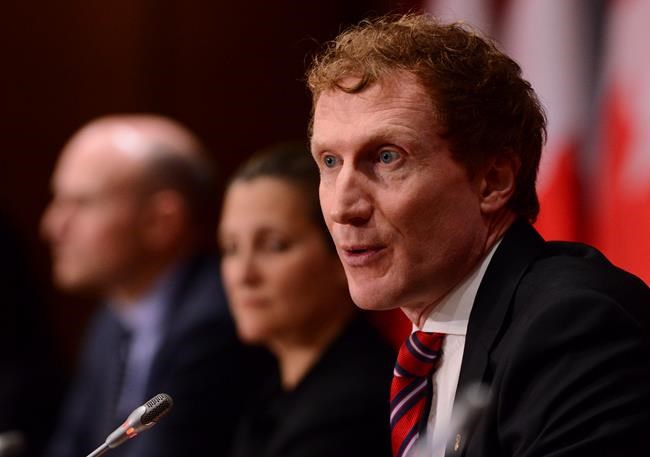
Minister of Indigenous Services Marc Miller joins fellow ministers and Government of Canada officials as they hold a news conference to provide an update on COVID-19 on Parliament Hill in Ottawa on Thursday, April 30, 2020. THE CANADIAN PRESS/Sean Kilpatrick

Quebec, with the largest number of COVID-19 cases and deaths in Canada, was set to reopen retail stores outside Montreal on Monday, despite reporting 163 new COVID fatalities going into the weekend. The province also said it aimed to double testing — to 14,000 a day — by the end of next week.

Ontario, which reported 421 new cases and 39 more deaths, most in long-term care facilities, also said some workplaces and businesses can restart Monday. Those include garden centres with curb-side pickup, lawn-care and landscaping services, and automatic car washes.

“Our patience is paying off,” said Premier Doug Ford, who urged people to maintain physical distancing regardless. “We’re getting closer and closer to opening things up.”

Many non-essential businesses in Manitoba — retail stores and hair salons among them — are also set to open their doors on Monday.

The stiff stay-home restrictions that have idled much of the economy have plunged the country into a recession, according to a new report by the C.D. Howe Institute. Still, federal and provincial governments have called for a gradual and phased approach to a return to normalcy informed by public health concerns.

When it comes to reopening schools and child-care centres, Canada’s top public health officer, Dr. Theresa Tam, said distancing restrictions and strict cleaning were crucial for protecting adults who work in them, even if the virus appears to be less dangerous for the youngsters themselves.

Tam has also warned about the risk coronavirus disease poses to Indigenous communities, which are considered vulnerable due to often overcrowded living conditions and a lack of health-care services. To date, reserves have seen at least 129 cases and Inuit communities 16. Saskatchewan reported a jump of 26 cases, 19 of which were from in and around La Loche, a Dene village 600 kilometres northwest of Saskatoon.

What the government has been doing to prevent COVID-19 from ripping through the communities was the subject of a standing committee on Friday, with members of Parliament putting cabinet ministers on the hot seat. Indigenous Services Minister Marc Miller conceded the $15 million in emergency funding earmarked to help organizations that service Indigenous urban populations was not enough.

The Senate, meanwhile, passed legislation authorizing $9 billion worth of emergency financial support for students who can’t find or are unable to work this summer due to the pandemic. The bill received royal assent shortly thereafter.

Under the new Canada Student Emergency Benefit, eligible students will receive $1,250 per month student benefit from May through August. Those with dependents or permanent disabilities will receive $2,000 per month.

The contagious SARS-CoV-2 virus, which has now killed more than 3,220 people in Canada and 270,000 globally, is believed to have originated in China. U.S. President Donald Trump has suggested Beijing withheld information about its epidemic from the World Health Organization and that the agency tried to cover up the initial outbreak.

Trump supporters have also pushed a conspiracy theory that the pandemic originated in a laboratory in Wuhan, China.

In Ottawa, Beijing’s ambassador praised Canada’s “cool-headed” co-operation in battling the spread of the disease. The United States, according to Ambassador Cong Peiwu, was “smearing” his country.

“To shift the blame, some U.S. politicians try to launch a stigmatization campaign against China,” the envoy said. “Attacking and discrediting other countries will not save the time and lives lost.”

In other developments, Newfoundland and Labrador has released 65 inmates under the public health emergency declared on March 18. So far, the province’s jails have been COVID-free but at least 285 federal prisoners, one of whom has died, and 82 guards have tested positive.

In Chatham-Kent, Ont., police said someone hacked an online meeting for a local charity this week and broadcast child pornography to 200 participants.

-With files from Canadian Press staff across the country.

This report by The Canadian Press was first published May 1, 2020.

Report Error Submit a Tip

More Stories

Hydro announces CEO out after two years

Chris Kitching 7 minute read Preview

Hydro announces CEO out after two years

Chris Kitching 7 minute read Updated: Yesterday at 9:09 PM CDT

Allan Danroth is out as Manitoba Hydro’s president and CEO — a departure that came as a surprise to some observers — just two years after he was hired.

Danroth left for personal reasons, the Crown corporation’s board chair, Jamie Wilson, said Friday, while announcing chief operating officer Hal Turner as interim president and CEO ahead of a national and international search for a replacement.

“Today’s one of those days where you have a lot of mixed emotions,” Turner told reporters at Hydro’s downtown Winnipeg headquarters. “I just want to say on behalf of all the employees in Manitoba Hydro, we very much appreciate Allan’s leadership over the last two years.”

Turner wouldn’t say whether he will apply to be the next permanent CEO.

Read
Updated: Yesterday at 9:09 PM CDT

Motion seeks to remove longtime head of Southern Chiefs’ Organization due to ‘behaviour’ concerns

Carol Sanders 4 minute read Preview

Motion seeks to remove longtime head of Southern Chiefs’ Organization due to ‘behaviour’ concerns

Carol Sanders 4 minute read Wednesday, Aug. 26, 2026

For the second time in a year, the leadership of Southern Chiefs’ Organization Grand Chief Jerry Daniels is being called into question.

A motion obtained by the Free Press calls “immediately” for a special summit of the 33 SCO chiefs to consider removing Daniels, who’s been at the helm since 2017.

The Aug. 17 motion, put forward by Lake Manitoba First Nation Chief Cornell McLean and Bloodvein First Nation Chief Lisa Young, cites concerns about “governance, leadership, accountability, transparency, organizational decision-making and confidence of member Nations in the current leadership of the organization.”

McLean would not provide specific examples Wednesday but said the “behaviour” of Daniels is a concern.

Read
Wednesday, Aug. 26, 2026

Canada taking more baby steps toward normalcy

Colin Perkel, The Canadian Press 5 minute read Preview

Canada taking more baby steps toward normalcy

Colin Perkel, The Canadian Press 5 minute read Friday, May. 1, 2020

TORONTO - Canada took further baby steps toward post-pandemic normalcy on Friday as Atlantic provinces began easing rigid restrictions imposed to curb the COVID-19 scourge, while Quebec's death toll climbed past 2,000 as it set to ease its measures.

Elective surgeries and other non-urgent health-care services, including physiotherapy and optometry, restarted in Prince Edward Island, as did outdoor gatherings of up to five people from different households and non-contact outdoor recreational activities.

Nova Scotia reopened garden centres and nurseries, along with trails and provincial and municipal parks. It also allowed single families to head to their cottages. New Brunswick had already OK'd interactions between two families, a return to school for post-secondary students, as well as golfing, fishing and hunting.

Quebec, with the largest number of COVID-19 cases and deaths in Canada, was set to reopen retail stores outside Montreal on Monday, despite reporting 163 new COVID fatalities going into the weekend. The province also said it aimed to double testing — to 14,000 a day — by the end of next week.

Read
Friday, May. 1, 2020

Carney’s defence of Lake Ontario carries enormous weight

Niigaan Sinclair 5 minute read Preview

Carney’s defence of Lake Ontario carries enormous weight

Niigaan Sinclair 5 minute read Yesterday at 4:28 PM CDT

For centuries on Turtle Island (North America), explorers, map makers, and political leaders have erased Indigenous place names and substituted them — more often than not — with political, ethnocentric, and self-aggrandizing names.

In recent years, a few places on the continent have had Indigenous names re-established, but as of today, few of the original names are “official.”

So, it was no surprise when U.S. President Donald Trump on Thursday signed an executive order directing the U.S. Department of the Interior and Board on Geographic Names to take steps within 30 days to officially rename Lake Ontario as “Lake America.”

The move may have been a result of the Canada-U.S. trade war and Trump’s pettiness and ego, but it also fits in perfectly with his career.

Read
Yesterday at 4:28 PM CDT

At the city’s busiest fire and paramedic hall, first responders face a relentless workload

Scott Billeck 24 minute read Preview

At the city’s busiest fire and paramedic hall, first responders face a relentless workload

Scott Billeck 24 minute read Yesterday at 6:00 AM CDT

As a soft rain begins to fall between the concrete walls of “Hope Alley,” little feels further away than the place’s namesake.

Winnipeg Fire Paramedic Service crews have been called to the narrow downtown passage, named by Al Wiebe, a formerly homeless man turned advocate. People regularly pass through here, moving between the shelters, drop-ins and resource centres clustered around Main Street between Logan and Higgins avenues.

Against a wall, as the sky switches into night mode, a man sits bleeding from his nose, seemingly unaware of how he ended up with blood running down his T-shirt.

His situation has already set Winnipeg’s emergency response network in motion.

Read
Yesterday at 6:00 AM CDT

Romantasy tome to kick off fall literary launches

Ben Sigurdson 4 minute read 2:00 AM CDT

After a quiet summer, book events are heating up again in earnest as fall creeps ever closer.

First up is bestselling local fantasy author Nisha J. Tuli, who launches Storm Caller on Wednesday at 7 p.m. at McNally Robinson Booksellers’ Grant Park location. The book is the follow-up to Tuli’s Storm Breaker in the romantasy series of the same name, described as “Divergent meets The Cruel Prince.”

Tuli will be joined in conversation by Vancouver Island author Demi Winters (The Ashen series).

● ● ●