Mayors push Liberals on plan to buy distressed properties for affordable housing
Advertisement
Read this article for free:
or
Already have an account? Log in here »
To continue reading, please subscribe:

Digital Subscription
One year of digital access for only $205*
- Enjoy unlimited reading on winnipegfreepress.com
- Read the E-Edition, our digital replica newspaper
- Access News Break, our award-winning app
- Play interactive puzzles
*First annual payment billed as $205.00 + GST for one year. This annual subscription will automatically renew at $233.00 + GST every 52 weeks (10% off the regular annual price of $259.35). Offer available to new and qualified returning subscribers only. Cancel any time.
To continue reading, please subscribe:
Add Free Press access to your Brandon Sun subscription for only an additional
$1 for the first 4 weeks*
- Enjoy unlimited reading on winnipegfreepress.com
- Read the E-Edition, our digital replica newspaper
- Access News Break, our award-winning app
- Play interactive puzzles
*Your next Brandon Sun subscription payment will increase by $1.00 and you will be charged $17.95 plus GST for four weeks. After four weeks, your payment will increase to $24.95 plus GST every four weeks.
Read unlimited articles for free today:
or
Already have an account? Log in here »
Hey there, time traveller!
This article was published 12/09/2020 (2213 days ago), so information in it may no longer be current.
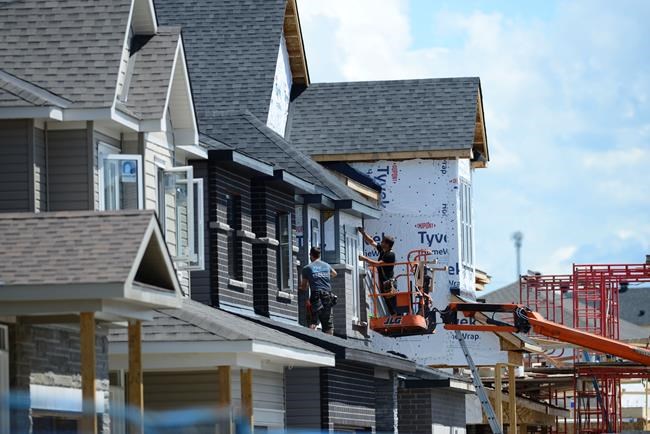
OTTAWA – Federal officials are ironing out the details of a program to help cities buy properties left vacant due to the pandemic so they can quickly create affordable housing.
The government has considered the property acquisition program for months as it looks to keep people from falling into homelessness heading into the winter with temporary shelter measures set to expire.
That could lead to overcrowding in existing emergency shelters, or push more people onto the street and create the conditions for the novel coronavirus to spread among people who are already vulnerable.
Sources who have been part of discussions with federal officials about the scope of a program, who spoke on the condition of anonymity to detail private conversations, say the Liberals are considering whether to announce a program before their throne speech later this month or to wait and include it in the speech.
Mayors of Canada’s biggest cities hope for the former.
The municipal leaders say they could use the money quickly to buy buildings set to be sold soon, rather than have to wait months or years for the construction of new affordable units.
“We think this is a no-brainer,” said Edmonton Mayor Don Iveson.
He added that cities hope the Liberals move this fall to help local groups “secure these properties and get people off the street before they endure another winter and a pandemic, which is just a morally unacceptable option — to leave people out in the cold in a public health emergency.”
The Liberals were first approached with the idea months ago and have expressed a keen interest in conversations with mayors and housing providers over the summer.
Officials from the Canada Mortgage and Housing Corp., which oversees much of the government’s decade-long national housing strategy, held one-on-one consultations in July and August to figure out logistics.
Among the challenges: how to approve a housing provider for funding quickly, in a market where others could swoop in and buy hotels, motels, warehouses or multi-unit residential buildings.
The Federation of Canadian Municipalities this week asked the Liberals for just over $4 billion in new grants to fund purchases of up to 22,000 units.
The proposal is one of many being floated to the government as it seeks ideas for an economic recovery package. Federal departments have been asked for potential spending items, which could become part of an economic update or budget later this fall.
Iveson, who heads FCM’s group of big-city mayors, said the purchasing program could help local housing providers nab distressed properties at reduced prices. He said housing vulnerable populations like the homeless would also reduce health care and policing costs.
“If we’re going to borrow hundreds of billions of dollars to get through this pandemic, wouldn’t it be wonderful if we could end homelessness, reduce the likelihood of an outbreak in this community of vulnerable people, at precisely the time that a second wave is the greatest risk?” he said.
Cities like Edmonton rented hotel rooms early on in the pandemic to make up for public-health restrictions that limited the capacities of emergency shelters. Some of them almost eliminated homelessness for a few weeks.
An over-riding concern from those inside the government is how to quickly get money out the door, particularly in places like Toronto where the cost of renting is very high.
“If I was the government … I would like to be seen as moving now on some of these things while the opportunity is there in the marketplace,” Toronto Mayor John Tory said in an interview.
“And the federal government could say, look, not only did we move at wartime speed during the pandemic to make this money available to the cities, but they produce the housing most importantly at wartime speed.”
Tory said it would cost his city less to acquire buildings to be used for housing homeless people than to rent hotel rooms indefinitely.
City budgets have also been pummelled by COVID-19, with revenues from transit services collapsing and recreation programs having to close. Cities that want to spend more on housing will have to decide where to cut services or capital projects, or whether to raise property taxes.
The Liberals promised aid to cover the shortfall weeks ago, but Vancouver Mayor Kennedy Stewart said his municipality’s coffers have yet to see the money, which is subject to negotiations with the province.
His city’s homeless census in March counted some 2,000 people on streets or in shelters. Stewart estimated the number has grown as people’s incomes have crashed and strained their ability to keep up with rent — a situation he said is playing out in other cities nationwide.
Stewart on Friday called an emergency council meeting to kickstart a process to determine how much it might cost to lease or buy buildings to deal with Vancouver’s homelessness problem. He said in an interview prior to the meeting that he just wants an indication from the federal government of its intentions so his city and others can plan.
“It’s a national problem. COVID is a national emergency, so we need the indication early,” Stewart said.
“I needed the money yesterday.”
This report by The Canadian Press was first published Sept. 12, 2020.