EURO 2020: Virus poses financial, logistical challenges
Advertisement
Read this article for free:
or
Already have an account? Log in here »
To continue reading, please subscribe:
Digital Subscription
One year of digital access for only $1.44 a week*
- Enjoy unlimited reading on winnipegfreepress.com
- Read the E-Edition, our digital replica newspaper
- Access News Break, our award-winning app
- Play interactive puzzles
*Billed as $5.77 plus GST every four weeks. After 52 weeks, price increases to the regular rate of $19.95 plus GST every four weeks. Offer available to new and qualified returning subscribers only. Cancel any time.
To continue reading, please subscribe:
Add Free Press access to your Brandon Sun subscription for only an additional
$1 for the first 4 weeks*
- Enjoy unlimited reading on winnipegfreepress.com
- Read the E-Edition, our digital replica newspaper
- Access News Break, our award-winning app
- Play interactive puzzles
*Your next Brandon Sun subscription payment will increase by $1.00 and you will be charged $17.95 plus GST for four weeks. After four weeks, your payment will increase to $24.95 plus GST every four weeks.
Read unlimited articles for free today:
or
Already have an account? Log in here »
Hey there, time traveller!
This article was published 25/05/2021 (1977 days ago), so information in it may no longer be current.
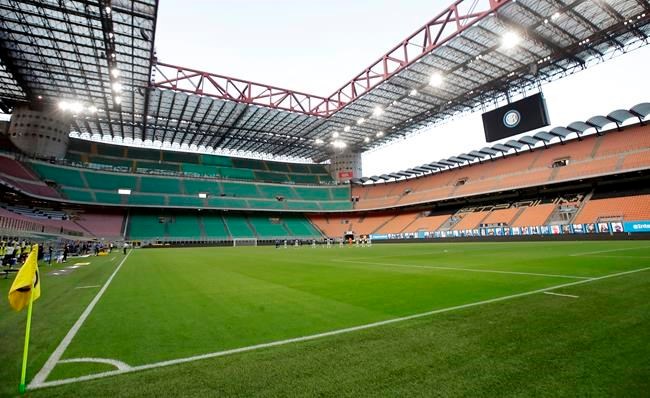
LONDON (AP) — A tournament intended to be a celebration of European soccer will instead reflect many of the uncertainties that have beset the sport during the coronavirus pandemic.
Just completing the European Championship a year later than planned — with teams flying around Europe to play games — will be a triumph on a continent trying to supress new coronavirus variants.
UEFA President Aleksander Ceferin inherited a complex plan from Michel Platini that he has long held reservations about, even before the coronavirus outbreak added to the logistical complexities.
“It’s quite a tough situation, a tough format by itself, and with COVID it’s even tougher,” Ceferin told The Associated Press. “So it’s not easy but now it looks OK and I can’t imagine that this crisis will be worse.”
The risk of coronavirus infections is increased the more travel for the 24 teams there is, as well as adding to the workload on players after a pandemic-congested season.
“It actually makes it harder, because you have more travel, less recovery etc.,” said Jonas Baer-Hoffmann, the general secretary of world players’ union FIFPRO. “We have seen that travel is a substantial risk factor to any of the COVID protocols that professional sports have undertaken.”
At least the number of UEFA member associations staging games was dwindled down from 13 to 11 after Belgium was cut before the pandemic and Dublin lost its games more recently because Ireland isn’t able to guarantee having fans.
The event should still be the first chance for the widespread return of fans to stadiums around Europe since March 2020, assuming new restrictions aren’t imposed. But not all supporters will be able to travel to games, impacting atmosphere and UEFA’s revenue streams.
Ukraine, for instance, will play its group matches in Amsterdam and Bucharest with fans from those countries in attendance.
“This is very sad news but we have what we have,” Ukraine goalkeeper Andriy Pyatov said. “We should be stronger than before and play for our fans. They have cut our ’12th man’ in the Netherlands. We should show them how we are strong.”
Travel conditions could change mid-tournament, however.

Playing the delayed tournament is essential for UEFA’s cash flow, with about 2 billion euros ($2.5 billion) of revenue on the line after already incurring costs of 300 million euros ($367 million) because of the delay. The governing body also released more than 235 million euros ($288 million) to help its 55 member associations cope with the pandemic.
In a hosting plan that has posed so many challenges, selecting London for the climax is looking fortuitous because Britain has delivered the fastest vaccine rollout in Europe. There is still a hope that by the time the semifinals and final are played at Wembley Stadium all 90,000 seats could be filled, helping a sport where billions of dollars have been lost amid the pandemic.
“The whole football ecosystem, at professional, amateur and youth levels, has been heavily disrupted by the pandemic,” Ceferin wrote in UEFA’s recent report assessing the state of European soccer finances. “This requires concerted efforts and a coordinated response throughout the football pyramid. Solidarity, not self-interest, must prevail and will win the day.”
___
More AP soccer: https://apnews.com/hub/soccer and https://twitter.com/AP_Sports
Related Articles
CL final: Man City remodels attack without Sterling, Aguero Holstein Kiel to have 2,500 fans in Bundesliga promotion bid Champions League prize money grows as UEFA sales rise 8%




Advertisement Advertise With Us
Advertisement Advertise With Us