Trudeau pledges to hire more seniors’ personal support workers and raise their pay
Advertisement
Read this article for free:
or
Already have an account? Log in here »
To continue reading, please subscribe:

Digital Subscription
One year of digital access for only $205*
- Enjoy unlimited reading on winnipegfreepress.com
- Read the E-Edition, our digital replica newspaper
- Access News Break, our award-winning app
- Play interactive puzzles
*First annual payment billed as $205.00 + GST for one year. This annual subscription will automatically renew at $233.00 + GST every 52 weeks (10% off the regular annual price of $259.35). Offer available to new and qualified returning subscribers only. Cancel any time.
To continue reading, please subscribe:
Add Free Press access to your Brandon Sun subscription for only an additional
$1 for the first 4 weeks*
- Enjoy unlimited reading on winnipegfreepress.com
- Read the E-Edition, our digital replica newspaper
- Access News Break, our award-winning app
- Play interactive puzzles
*Your next Brandon Sun subscription payment will increase by $1.00 and you will be charged $17.95 plus GST for four weeks. After four weeks, your payment will increase to $24.95 plus GST every four weeks.
Read unlimited articles for free today:
or
Already have an account? Log in here »
Hey there, time traveller!
This article was published 19/08/2021 (1860 days ago), so information in it may no longer be current.
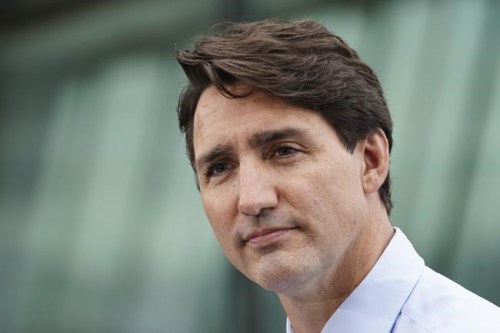
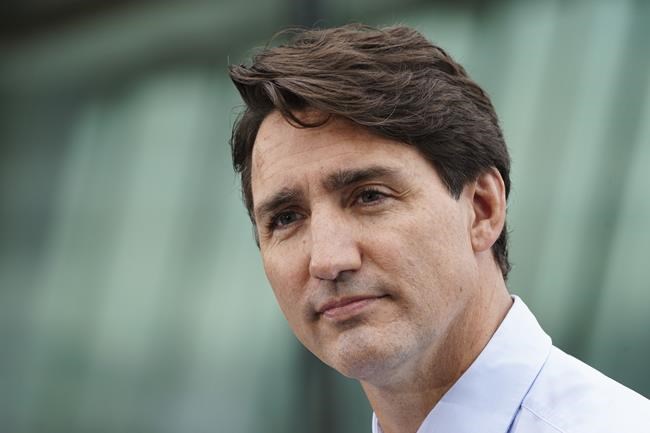
VICTORIA – Liberal Leader Justin Trudeau said a re-elected Liberal government will give provinces up to $9 billion over the next five years to hike wages and train more workers in Canada’s troubled long-term care homes.
“This pandemic laid bare unacceptable and heartbreaking conditions in too many long-term care homes across the country,” Trudeau said, speaking outside the Veterans Memorial Lodge in Victoria Thursday.
“Think about it: we had to send the Armed Forces into retirement homes — in Canada.”
The funding would triple the $3 billion promised in last spring’s budget, and will require Ottawa to reach similar agreements with provincial governments to the child care deals signed in the days leading up to the election call.
Provinces that want the federal money for long-term care will have to agree to hike wages to at least $25 an hour, for instance. There will also be funds to train 50,000 more workers, and money to improve both the quality of care and capacity in care homes.
The Liberals intend to ensure nationwide standards with new legislation called the Safe Long-Term Care Act.
The budget money was to go to provinces which agreed to implement new national standards for long-term care that are being developed currently by the Health Standards Organization and Canadian Standards Association.
Those standards aren’t expected to be ready until late 2022 at the earliest, but the funds Trudeau discussed Thursday could start to flow to provinces before, if agreements can be reached on how the money will be spent.
Trudeau visited with residents at the facility before Thursday’s announcement, and several told him the care they received was fantastic. He said he knew that because his grandmother had lived out her life there before she died in 2012.
“That’s one of the challenges we’re facing where quality of care across the country is uneven, and even from place to place, and we want to make sure that all of our seniors get the kind of care that you guys are getting here.”
The Veterans Memorial Lodge was not among the long-term care homes ravaged by COVID-19. A single staff case confirmed last fall did not spread to any other staff or a single resident, the facility reported in December 2020.
But hundreds of homes across Canada did not fare that well, as ineffective infection control measures, low standards of care, and in many cases, low wages for staff, had devastating consequences. More than 55,000 residents and more than 29,000 long-term care workers have been infected with COVID-19.
The Ryerson University National Institute on Aging has tracked 15,217 COVID-19 deaths among long-term care residents since March 2020, 57 per cent of all deaths from the pandemic in Canada to date.
The Service Employees International Union Healthcare, which represents some long-term care workers in Ontario, welcomed the promise Thursday,
“Leadership at the federal level directly in support of our health care heroes is nothing short of historic for working women in the elder care economy,” said SEIU Healthcare President Sharleen Stewart.
The Canadian Nurses Association said in a statement the promise is a “good start” but that long-term care reform has to be at the top of the next government’s agenda.
Trudeau said he would work with the provinces, not micromanage long-term care, which is a provincial jurisdiction.
But Bloc Québécois Leader Yves-François Blanchet called on Trudeau to give up on the idea of creating national standards for long-term care homes.
“What Quebec needs to improve care for the elderly and support nursing staff is a fair share of federal funding through health transfers,” Blanchet said in a statement in French.
Trudeau said he is open to discussing increasing health-care transfers with the premiers after the election.
NDP Leader Jagmeet Singh was critical of the Liberals for voting against an NDP motion earlier this year to eliminate for-profit facilities from long-term care.
“He voted against getting rid of profit from long-term care, making it clear he would rather protect the interests of the for-profit, billion-dollar corporations that profit off the backs of seniors, rather than putting seniors first,” Singh said.
Liberals’ Seniors Minister Deb Schulte said at the time that because long-term care is a provincial jurisdiction, not covered by the Canada Health Act, Ottawa does not have the ability to do what the NDP was demanding.
The Canadian Institute for Health Information says more than half of the long-term care homes in Canada are privately owned, and one-quarter are private-for-profit facilities.
Jodi Hall, CEO of The Canadian Association for Long Term Care, said they are “extremely pleased” to see the commitment from the Liberal party.

“We have just released our election platform document and we have three key areas of recommendations, one of which is a proposal for a sustainable model for funding and that is the Canada senior care transfer,” she said.
“We have done a 10-year projection, where we believe $23 billion will be required.”
— With files from Maan Alhmidi.
This report by The Canadian Press was first published Aug. 19, 2021.
Note to readers: This is a corrected story. An earlier version reported that the Liberals are promising to hire 25,000 personal support workers. In fact, the number is 50,000.
Related Articles
Liberals win 4th mandate as NDP vote collapses and Singh announces he will resign











Advertisement Advertise With Us
Advertisement Advertise With Us