What we know so far about the Omicron variant, which has been found in Canada
Advertisement
Read this article for free:
or
Already have an account? Log in here »
To continue reading, please subscribe:

Digital Subscription
One year of digital access for only $205*
- Enjoy unlimited reading on winnipegfreepress.com
- Read the E-Edition, our digital replica newspaper
- Access News Break, our award-winning app
- Play interactive puzzles
*First annual payment billed as $205.00 + GST for one year. This annual subscription will automatically renew at $233.00 + GST every 52 weeks (10% off the regular annual price of $259.35). Offer available to new and qualified returning subscribers only. Cancel any time.
To continue reading, please subscribe:
Add Free Press access to your Brandon Sun subscription for only an additional
$1 for the first 4 weeks*
- Enjoy unlimited reading on winnipegfreepress.com
- Read the E-Edition, our digital replica newspaper
- Access News Break, our award-winning app
- Play interactive puzzles
*Your next Brandon Sun subscription payment will increase by $1.00 and you will be charged $17.95 plus GST for four weeks. After four weeks, your payment will increase to $24.95 plus GST every four weeks.
Read unlimited articles for free today:
or
Already have an account? Log in here »
Hey there, time traveller!
This article was published 29/11/2021 (1764 days ago), so information in it may no longer be current.
Canada’s first two cases of the Omicron COVID-19 variant of concern were confirmed Sunday in Ottawa. The variant – which may be more transmissible – was first identified in South Africa, where it coincided with a recent spike in COVID-19 cases, but it’s unclear where it first emerged. Here’s what we know about it so far:
WHAT IS OMICRON?
Omicron is a new variant of COVID-19 that was designated a “variant of concern” by the World Health Organization last week. The UN health agency also gave the variant its name, following a classification system based on the Greek alphabet.
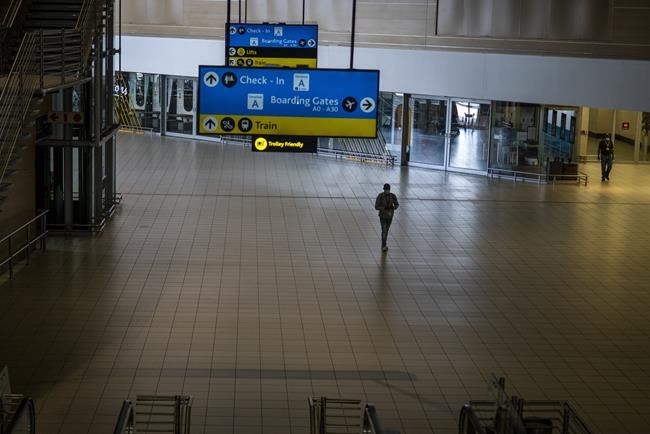
The WHO said the variant has “a large number of mutations, some of which are concerning,” and preliminary evidence suggests it has an increased risk of reinfection.
Canada’s chief public health officer, Dr. Theresa Tam, said Friday that some of the mutations detected show a potential for greater transmissibility, and could reduce natural immunity as well as the immunity offered by vaccines.
___
WHERE HAS IT BEEN FOUND?
Outside South Africa, Omicron cases have been confirmed in a growing number of countries. Canada, the Netherlands, Israel, Australia, Germany, Belgium, the United Kingdom and Hong Kong are among those that have reported cases.
Spain confirmed its first case Monday, in a traveller who arrived from South Africa.
Portuguese health authorities, meanwhile, have identified 13 cases of Omicron in members of a top soccer club, and are investigating possible local transmission of the variant. That would be the first reported instance of local transmission outside of southern Africa.
Dutch health authorities said Tuesday that the Omicron variant was already in the Netherlands when South Africa reported it to the World Health Organization last week. They said the variant was detected in samples dating from Nov. 19 and 23.
Canada’s first two cases, confirmed in Ottawa, are in people who recently returned from Nigeria. Two more cases were confirmed in Ottawa on Monday night, and two more possible cases are being investigated in the Hamilton region. Ontario’s top doctor said Monday it would not be surprising to see more cases, adding the province is performing genome sequencing on all eligible positive COVID-19 tests in order to help detect the variant.
Quebec confirmed its first Omicron case on Monday. Alberta and British Columbia each announced their first cases on Tuesday.
___
WHAT IS CANADA DOING?
On Tuesday afternoon, the federal government announced that all air travellers entering Canada, except for those coming from the United States, will need to be tested for COVID-19 upon arrival and isolate until they get their results, even if fully vaccinated.
The government said it would consult with provinces and territories Tuesday evening, before bringing in similar measures for travellers coming from the U.S.
Canada is also expanding its border closures to foreign nationals who have recently travelled through Egypt, Malawi and Nigeria. That’s in addition to a ban announced last week on foreign nationals entering Canada from South Africa, Mozambique, Botswana, Zimbabwe, Lesotho, Namibia and Eswatini.
Canadians and permanent residents who recently travelled through the 10 countries will be subject to mandatory quarantine.
The federal government has also requested guidance from the National Advisory Committee on Immunization on whether to bring in new standards on the use of COVID-19 vaccine booster doses in the face of the new variant.
___
WHAT ARE OTHER COUNTRIES DOING?
Several other countries have also enacted travel bans focused on southern Africa, as well as stronger screening measures.
The U.S. has banned travel from South Africa and several other countries in the region starting Monday. Others, including New Zealand, Israel and the European Union, have also restricted or banned travel from the region.
Japan announced Monday it is suspending entry of all foreign visitors.
Travellers arriving from Canada and several other countries will need to show a negative COVID-19 test and quarantine for 10 days if they go to Switzerland – new measures slated to take effect Wednesday in response to Omicron cases in those countries. The Swiss government had already imposed such requirements on travellers from Belgium, Hong Kong and Israel, and banned all flights from southern Africa.
The World Health Organization, however, has urged countries to avoid using travel restrictions, saying they “place a heavy burden on lives and livelihoods.”
___

HOW EFFECTIVE ARE COVID-19 VACCINES AGAINST OMICRON
That isn’t yet clear, but vaccine manufacturers are looking into it.
___
– with files from The Associated Press
This report by The Canadian Press was published Nov. 30, 2021.
Related Articles
Canadians are finished with COVID-19, but Omicron is just getting started






Advertisement Advertise With Us
Advertisement Advertise With Us