Workplace vaccine mandates being upheld as challenges largely tossed out, experts say
Advertisement
Read this article for free:
or
Already have an account? Log in here »
To continue reading, please subscribe:

Digital Subscription
One year of digital access for only $205*
- Enjoy unlimited reading on winnipegfreepress.com
- Read the E-Edition, our digital replica newspaper
- Access News Break, our award-winning app
- Play interactive puzzles
*First annual payment billed as $205.00 + GST for one year. This annual subscription will automatically renew at $233.00 + GST every 52 weeks (10% off the regular annual price of $259.35). Offer available to new and qualified returning subscribers only. Cancel any time.
To continue reading, please subscribe:
Add Free Press access to your Brandon Sun subscription for only an additional
$1 for the first 4 weeks*
- Enjoy unlimited reading on winnipegfreepress.com
- Read the E-Edition, our digital replica newspaper
- Access News Break, our award-winning app
- Play interactive puzzles
*Your next Brandon Sun subscription payment will increase by $1.00 and you will be charged $17.95 plus GST for four weeks. After four weeks, your payment will increase to $24.95 plus GST every four weeks.
Read unlimited articles for free today:
or
Already have an account? Log in here »
Hey there, time traveller!
This article was published 06/02/2022 (1692 days ago), so information in it may no longer be current.
Legal challenges of employer vaccine mandates and health measures are being tossed out as arbitrators in Canada largely side with the need to maintain safe workplaces during a pandemic, legal experts say.
Most of the cases with rulings so far involve employee grievances in unionized workplaces, which have an expedited decision-making process compared with the courts, they say.
A scan of decisions issued in recent weeks shows arbitrators are largely erring on the side of caution and minimizing health risks to employees and the public, experts say.
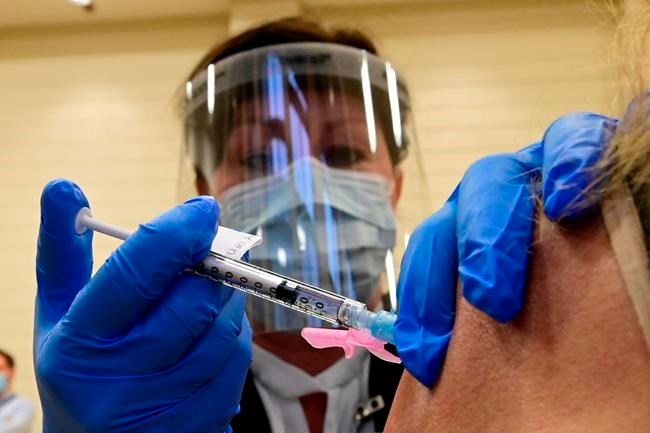
“The first decisions have clearly set the tone in favour of employers and their obligation to maintain a safe workplace,” said Adam Savaglio, an employment lawyer and partner with Scarfone Hawkins LLP in Hamilton, Ont.
“We have a significant number of arbitration decisions in unionized environments that are showing that vaccine mandates and restrictions are being upheld.”
A recent arbitration decision between Hydro One Inc. and the Power Workers’ Union dismissed the grievances of multiple workers placed on unpaid leave for failing to comply with the utility’s COVID-19 vaccination policy.
The policy required unvaccinated workers — and those who declined to reveal their vaccination status — to take regular rapid tests.
In his decision, chief arbitrator John Stout said the policy is reasonable and necessary to address the ongoing health and safety issues arising from the pandemic.
“Prohibiting employees from attending work if they do not provide proof of vaccination or a negative COVID-19 (rapid antigen test) is fair and reasonable in the circumstances of this pandemic,” he said in his decision.
“Hydro One is complying with their obligations under the Occupational Health & Safety Act to take reasonable precautions to protect the health and safety of their employees and the public that they serve.”
The arbitrator also dismissed the union’s position that the workers should have been able to work from home. Stout said most of the impacted employees could not perform their work remotely and a reasonable alternative to vaccines through testing had already been provided.
In another case, an arbitrator dismissed a grievance filed by Teamsters Local 847 against Maple Leaf Sports and Entertainment.
The grievance was filed on behalf of a worker who helped convert the Scotiabank Arena in Toronto between events such as sports games and concerts. The union alleged the company violated the collective agreement after placing the worker on unpaid leave due to an “undisclosed vaccination status.”
Arbitrator Norm Jesin said the “weight of authority” supports vaccine mandates in the workplace to reduce the spread of COVID-19, particularly where employees work in close proximity.
It’s the “duty of employers to take any necessary measures for the protection of workers” as set out in the Occupational Health and Safety Act, he added.
Meanwhile, Jesin said Maple Leaf Sports and Entertainment had already taken steps to protect the confidentiality of the information.
“The employer has established that being vaccinated for COVID-19 is a necessary qualification for the performance of work within the bargaining unit,” he said. “Such a determination is reasonable given the pandemic that presently exists.”
In yet another case, UFCW Canada Local 175 argued that Bunge Canada’svaccine policy is “an unreasonable exercise of management rights” by requiring employees to disclose their personal health information.
In dismissing the grievance, arbitrator Robert J. Herman said the food processing company’s vaccine policy is a “reasonable exercise of management’s right to issue workplace policies.”
Experts say these cases underscore the current widespread support for workplace vaccine mandates and health measures.
But they say the balance between protecting public health and safeguarding the rights and freedoms of Canadians may gradually shift as infections wane and vaccination rates rise.
“Ultimately, given the charter limitations, these restrictions are by their nature temporary, not permanent,” said Wayne MacKay, professor emeritus at the Dalhousie Schulich School of Law. “People are starting to chafe under the ongoing nature of them.”

MacKay said while pandemic fatigue may be taking a toll, “it’s still too early to throw out all the restrictions.”
“We can’t let the pendulum swing too fast in the other direction. That’s one of the real dangers we face right now is moving too quickly.”
He added that while individual rights are important “you don’t have the right to put others at risk.”
“You don’t have the individual right to harm or put others in jeopardy.”
This report by The Canadian Press was first published Feb. 6, 2022.