WHO considers declaring monkeypox a global health emergency

Advertisement

Advertise with us

LONDON (AP) — The World Health Organization convenes its emergency committee Thursday to consider if the spiraling outbreak of monkeypox warrants being declared a global emergency. But some experts say the WHO’s decision to act only after the disease spilled into the West could entrench the grotesque inequities that arose between rich and poor countries during the coronavirus pandemic.

Read this article for free:


or

Already have an account? Log in here »

To continue reading, please subscribe:

Subscribe and receive a limited-edition Free Press branded hat or tote.

Digital Subscription

One year of digital access for only $205*

  • Enjoy unlimited reading on winnipegfreepress.com
  • Read the E-Edition, our digital replica newspaper
  • Access News Break, our award-winning app
  • Play interactive puzzles

*First annual payment billed as $205.00 + GST for one year. This annual subscription will automatically renew at $233.00 + GST every 52 weeks (10% off the regular annual price of $259.35). Offer available to new and qualified returning subscribers only. Cancel any time.

To continue reading, please subscribe:

Add Free Press access to your Brandon Sun subscription for only an additional

$1 for the first 4 weeks*

  • Enjoy unlimited reading on winnipegfreepress.com
  • Read the E-Edition, our digital replica newspaper
  • Access News Break, our award-winning app
  • Play interactive puzzles
Start now

*Your next Brandon Sun subscription payment will increase by $1.00 and you will be charged $17.95 plus GST for four weeks. After four weeks, your payment will increase to $24.95 plus GST every four weeks.

Hey there, time traveller!
This article was published 23/06/2022 (1559 days ago), so information in it may no longer be current.

LONDON (AP) — The World Health Organization convenes its emergency committee Thursday to consider if the spiraling outbreak of monkeypox warrants being declared a global emergency. But some experts say the WHO’s decision to act only after the disease spilled into the West could entrench the grotesque inequities that arose between rich and poor countries during the coronavirus pandemic.

Declaring monkeypox to be a global emergency would mean the U.N. health agency considers the outbreak to be an “extraordinary event” and that the disease is at risk of spreading across even more borders, possibly requiring a global response. It would also give monkeypox the same distinction as the COVID-19 pandemic and the ongoing effort to eradicate polio.

The WHO said it did not expect to announce any decisions made by its emergency committee before Friday.
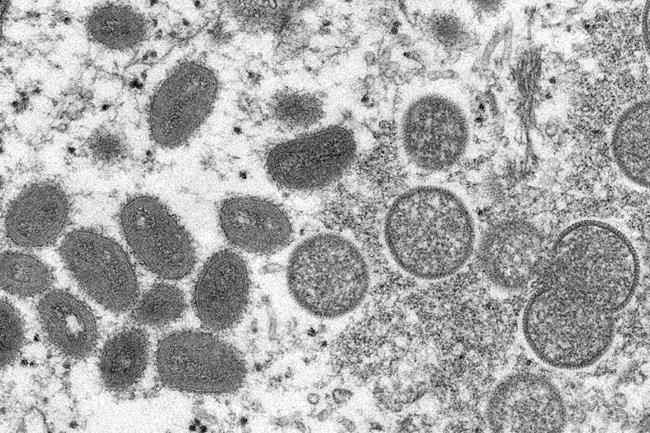
FILE - This 2003 electron microscope image made available by the Centers for Disease Control and Prevention shows mature, oval-shaped monkeypox virions, left, and spherical immature virions, right, obtained from a sample of human skin associated with the 2003 prairie dog outbreak. British health officials said Monday, June 13, 2022 they have detected another 104 cases of monkeypox in England, in what has become the biggest outbreak beyond Africa of the normally rare disease.  (Cynthia S. Goldsmith, Russell Regner/CDC via AP, file)
FILE - This 2003 electron microscope image made available by the Centers for Disease Control and Prevention shows mature, oval-shaped monkeypox virions, left, and spherical immature virions, right, obtained from a sample of human skin associated with the 2003 prairie dog outbreak. British health officials said Monday, June 13, 2022 they have detected another 104 cases of monkeypox in England, in what has become the biggest outbreak beyond Africa of the normally rare disease. (Cynthia S. Goldsmith, Russell Regner/CDC via AP, file)

Many scientists doubt any such declaration would help to curb the epidemic, since the developed countries recording the most recent cases are already moving quickly to shut it down.

Last week, WHO Director-General Tedros Adhanom Ghebreyesus described the recent monkeypox epidemic identified in more than 40 countries, mostly in Europe, as “unusual and concerning.” Monkeypox has sickened people for decades in central and west Africa, where one version of the disease kills up to 10% of people infected. The version of the disease seen in Europe and elsewhere usually has a fatality rate of less than 1% and no deaths beyond Africa have so far been reported.

“If WHO was really worried about monkeypox spread, they could have convened their emergency committee years ago when it reemerged in Nigeria in 2017 and no one knew why we suddenly had hundreds of cases,” said Oyewale Tomori, a Nigerian virologist who sits on several WHO advisory groups. “It is a bit curious that WHO only called their experts when the disease showed up in white countries,” he said.

Until last month, monkeypox had not caused sizeable outbreaks beyond Africa. Scientists haven’t found any mutations in the virus that suggest it’s more transmissible, and a leading adviser to the WHO said last month the surge of cases in Europe was likely tied to sexual activity among gay and bisexual men at two raves in Spain and Belgium.

To date, the U.S. Centers for Disease Control and Prevention has confirmed more than 3,300 cases of monkeypox in 42 countries where the virus hasn’t been typically seen. More than 80% of cases are in Europe. Meanwhile, Africa has already seen more than 1,400 cases this year, including 62 deaths.

David Fidler, a senior fellow in global health at the Council on Foreign Relations, said the WHO’s newfound attention to monkeypox amid its spread beyond Africa could inadvertently worsen the divide between rich and poor countries seen during COVID-19.

“There may be legitimate reasons why WHO only raised the alarm when monkeypox spread to rich countries, but to poor countries, that looks like a double standard,” Fidler said. He said the global community was still struggling to ensure the world’s poor were vaccinated against the coronavirus and that it was unclear if Africans even wanted monkeypox vaccines, given competing priorities like malaria and HIV.

“Unless African governments specifically ask for vaccines, it might be a bit patronizing to send them because it’s in the West’s interest to stop monkeypox from being exported,” Fidler said.

The WHO has also proposed creating a vaccine-sharing mechanism to help affected countries, which could see doses go to rich countries like Britain, which has the biggest monkeypox outbreak beyond Africa — and recently widened its use of vaccines.

To date, the vast majority of cases in Europe have been in men who are gay or bisexual, or other men who have sex with men, but scientists warn anyone in close contact with an infected person or their clothing or bedsheets is at risk of infection, regardless of their sexual orientation. People with monkeypox often experience symptoms like fever, body aches and a rash; most recover within weeks without medical care.
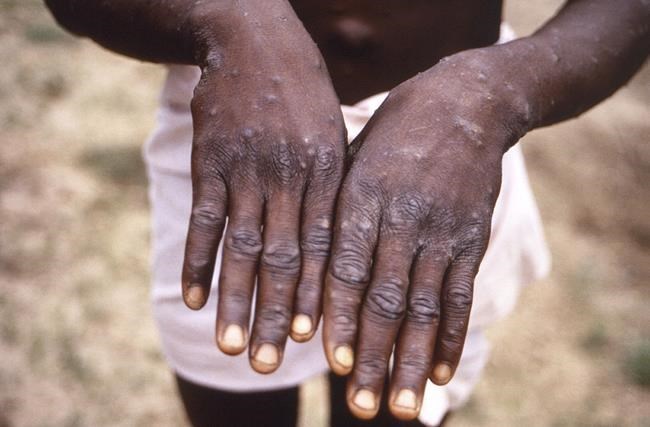
FILE - This 1997 image provided by the CDC during an investigation into an outbreak of monkeypox, which took place in the Democratic Republic of the Congo (DRC), formerly Zaire, and depicts the dorsal surfaces of the hands of a monkeypox case patient, who was displaying the appearance of the characteristic rash during its recuperative stage. The World Health Organization is creating a new vaccine-sharing mechanism to stop the spiraling outbreak of monkeypox in more than 30 countries beyond Africa. (CDC via AP, File)

Even if the WHO announces monkeypox is a global emergency, it’s unclear what impact that might have.

In January 2020, the WHO declared COVID-19 an international emergency. But few countries took notice until March, when the organization described it as a pandemic, weeks after many other authorities did so. The WHO was later slammed for its multiple missteps throughout the pandemic, which some experts said might be prompting a quicker monkeypox response.

“After COVID, WHO does not want to be the last to declare monkeypox an emergency,” said Amanda Glassman, executive vice president at the Center for Global Development. “This may not rise to the level of a COVID-like emergency, but it is still a public health emergency that needs to be addressed.”

Salim Abdool Karim, an epidemiologist and vice chancellor at the University of KwaZulu-Natal in South Africa, said the WHO and others should be doing more to stop monkeypox in Africa and elsewhere, but wasn’t convinced that a global emergency declaration would help.

“There is this misplaced idea that Africa is this poor, helpless continent, when in fact, we do know how to deal with epidemics,” said Abdool Karim. He said that stopping the outbreak ultimately depends on things like surveillance, isolating patients and public education.

“Maybe they need vaccines in Europe to stop monkeypox, but here, we have been able to control it with very simple measures,” he said.

Report Error Submit a Tip

More Stories

WHO considers declaring monkeypox a global health emergency

Maria Cheng, The Associated Press 6 minute read Preview

WHO considers declaring monkeypox a global health emergency

Maria Cheng, The Associated Press 6 minute read Thursday, Jun. 23, 2022

LONDON (AP) — The World Health Organization convenes its emergency committee Thursday to consider if the spiraling outbreak of monkeypox warrants being declared a global emergency. But some experts say the WHO’s decision to act only after the disease spilled into the West could entrench the grotesque inequities that arose between rich and poor countries during the coronavirus pandemic.

Declaring monkeypox to be a global emergency would mean the U.N. health agency considers the outbreak to be an “extraordinary event” and that the disease is at risk of spreading across even more borders, possibly requiring a global response. It would also give monkeypox the same distinction as the COVID-19 pandemic and the ongoing effort to eradicate polio.

The WHO said it did not expect to announce any decisions made by its emergency committee before Friday.

Many scientists doubt any such declaration would help to curb the epidemic, since the developed countries recording the most recent cases are already moving quickly to shut it down.

Read
Thursday, Jun. 23, 2022

Jets pick up netminder as relatively new 23-man roster announced

Mike McIntyre 7 minute read Preview

Jets pick up netminder as relatively new 23-man roster announced

Mike McIntyre 7 minute read Updated: Yesterday at 9:25 PM CDT

Let’s get the caveats out of the way: Nothing is set in stone, nor written in permanent ink, and what you see right now could change in the blink of an eye.

With that being said, allow us to introduce you to the 2026-27 Winnipeg Jets — where change is very much in the air.

The 23-man roster submitted to the NHL offices by Monday’s 4 p.m. deadline includes seven players who were not on the team at this time last year. In fact, there could be as many as 10 new faces in the opening-night lineup on Friday against Boston when you factor in three regulars didn’t start the 2025-26 campaign due to injury.

That’s a lot of turnover, which isn’t surprising for a team that finished 26th overall in the standings and was — to most fans and pundits — too old and too slow.

Read
Updated: Yesterday at 9:25 PM CDT

Retiree sues neighbour over alleged dog attack

Scott Billeck 2 minute read 2:00 AM CDT

A Winnipeg man is suing his neighbour over an alleged dog attack he says occurred while he was helping him with a lawnmower.

Arthur Cabel, a retiree who lives on Selkirk Avenue, is seeking unspecified damages from neighbour Saisamone Saegone, according to a statement of claim filed in the Manitoba Court of King’s Bench last week.

Cabel claims he went to Saegone’s home in the afternoon on Sept. 23, 2024, to help him with his lawnmower.

According to the lawsuit, Saegone’s large dog, initially in a fenced backyard, escaped, approaching Cabel and “mauling, attacking and biting him.”

Kinew adds cabinet portfolio to focus on first responders

Carol Sanders and Nicole Buffie 5 minute read Preview

Kinew adds cabinet portfolio to focus on first responders

Carol Sanders and Nicole Buffie 5 minute read Updated: Yesterday at 6:40 PM CDT

Premier Wab Kinew shuffled his cabinet Monday and created a new ministerial position that will oversee first responders in the province.

Kinew appointed David Pankratz, the MLA for Waverley, as minister responsible for first responder initiatives.

Tuxedo MLA Carla Compton was appointed minister responsible for accessibility, taking over the role from Families Minister Nahanni Fontaine.

The new ministers were sworn in at a ceremony at the legislature Monday afternoon.

Read
Updated: Yesterday at 6:40 PM CDT

Chalk surprise gift up to lust, not love

Maureen Scurfield 4 minute read 2:00 AM CDT

DEAR MISS LONELYHEARTS: I just got a funny birthday card and a single pink rose delivered to me at work from a boyfriend who broke up with me last spring because I’d gotten too serious (in his opinion). I cried for days back then. He ignored his phone.

I don’t know how to respond to him now. Do you think he’s really had a change of heart, or has he just not gotten lucky for a long time and thought I might be open to hooking up on my birthday?

— Suspicious Ex, Downtown

Dear Suspicious Ex: You just received a birthday card, a single pink rose and no voice contact? He wasn’t taking any chances on being shot down face-to-face, but he definitely is taking a stab at possibly getting some action.

Dealing now with increasing judicial dangers

Ben Wickstrom 5 minute read 2:00 AM CDT

For years, the Manitoba Association of Crown Attorneys (“MACA”) has been engaged in a dispute with the Manitoba government over the workload of its lawyers. That dispute is expected to come to a head at the end of November, when two weeks of grievance hearings are scheduled.

We remain hopeful that we can reach an agreement with our employer. But if we cannot, our union’s lawyers are prepared to make our case. As those hearings approach, we want to explain how we got here, what is at stake, and why this dispute matters beyond the working conditions of our members.

These problems are longstanding and predate the election of Manitoba’s current government. Our concern with the current government is not that it created these problems, but that it is now responsible for addressing them.

Despite the evidence before it, the government has not meaningfully addressed the workload concerns we have raised throughout its time in office.