As Ottawa plans to hike health funding, families say system doesn’t learn from errors
Advertisement
Read this article for free:
or
Already have an account? Log in here »
To continue reading, please subscribe:

Digital Subscription
One year of digital access for only $205*
- Enjoy unlimited reading on winnipegfreepress.com
- Read the E-Edition, our digital replica newspaper
- Access News Break, our award-winning app
- Play interactive puzzles
*First annual payment billed as $205.00 + GST for one year. This annual subscription will automatically renew at $233.00 + GST every 52 weeks (10% off the regular annual price of $259.35). Offer available to new and qualified returning subscribers only. Cancel any time.
To continue reading, please subscribe:
Add Free Press access to your Brandon Sun subscription for only an additional
$1 for the first 4 weeks*
- Enjoy unlimited reading on winnipegfreepress.com
- Read the E-Edition, our digital replica newspaper
- Access News Break, our award-winning app
- Play interactive puzzles
*Your next Brandon Sun subscription payment will increase by $1.00 and you will be charged $17.95 plus GST for four weeks. After four weeks, your payment will increase to $24.95 plus GST every four weeks.
Read unlimited articles for free today:
or
Already have an account? Log in here »
Hey there, time traveller!
This article was published 09/02/2023 (1331 days ago), so information in it may no longer be current.
HALIFAX – When Diane Breen died unexpectedly following her visit to a Nova Scotia emergency room, her family was left grieving — both over her loss and their sense that lessons weren’t learned from the tragedy.
Kim and Jennifer DeWolfesaytheir 74-year-old mother spent eight hours waiting on Feb. 28 last year at the Aberdeen Hospital in New Glasgow, N.S., before being briefly seen by a doctor about a urinary tract infection.
Her charts said Breen — a runner without health conditions — told medical staff about a week of chills and cold sweats, but she was nonetheless discharged to her home with an antibiotic prescription.
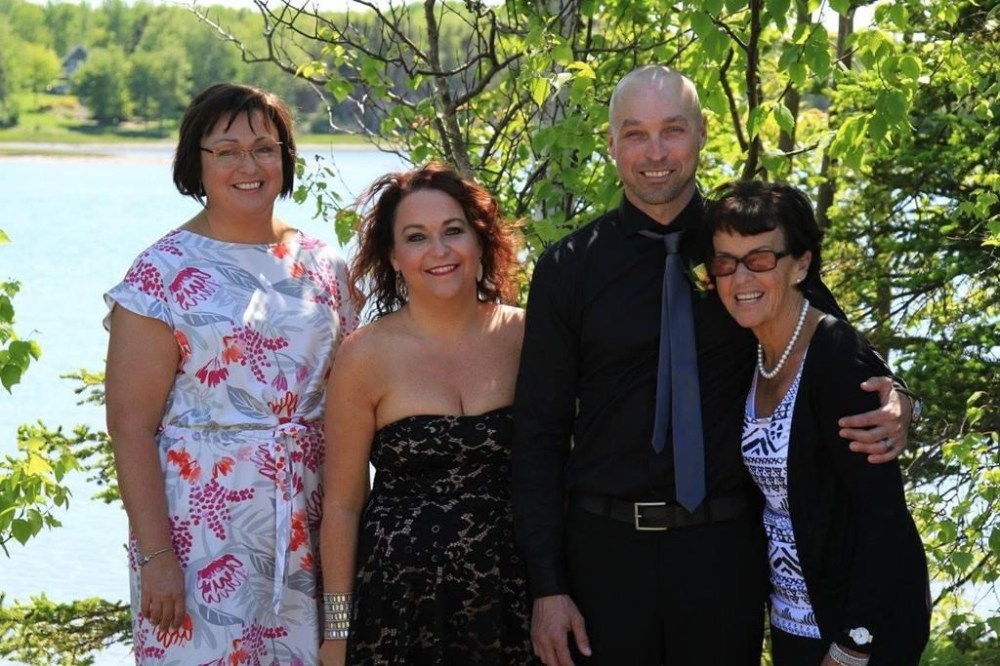
Within hours, she was dead due to sepsis — the body’s extreme reaction to infection.
Her daughters applied for a quality review of her care, but instead of learning what happened, they were launched into an opaque process that experts say is typical of the frustrating experiences shared by families across Canada.
“What perhaps could have saved my mother was a doctor who saw her at intake, or a nurse who authorized blood work, or being screened for sepsis,” Jennifer DeWolfe, 49, said in a recent interview.
“I’m pretty sure none of the needed steps are going to be made to change how things work.”
Earlier this week, the federal government announced it would add $46 billion in new spending over ten years for the country’s health-care systems. But families like the DeWolfes — along with some patient safety teachers and advocates — say Canada’s patchwork of quality-reviews systems need deep reforms to ensure that money is well spent.
Dr. Rob Robson, a primary care physician and patient safety advocate, said in a recent interview, “almost always, you will find multiple factors came together for the patient to be injured or die.”
A 2019 report from the Canadian Patient Safety Institute said patient deaths from avoidable causes — ranging from long wait times to wrong diagnoses — are the third leading cause of mortality in Canada, following cancer and heart disease.
However, Robson said internal reviews usually exclude patients and their families, adding that they are too secretive and contribute to declining public trust in the health system.
Robson said that in Nova Scotia, for instance, the law allows authorities to prevent detailed information about patient deaths from being released to families. The opaqueness of the quality-review process creates a “straitjacket where whatever was discussed in the review committees isn’t shared,” he said.
Nova Scotia Health spokesman Brendan Elliott said in a recent email that quality reviews are kept confidential to so that “everyone is free to discuss and share information. That confidentiality, he said, ensures the “frank and forthright participation” of those involved.
Kim DeWolfe said that after two meetings with the committee reviewing the care her mother received, “we still knew nothing more about how my mother died that night.”
“This is nonsense,” Robson said. “Explain to me how it makes sense that we spend time, effort and money to find out what happened, why it happened and how, and we’re not going to tell you?”
The DeWolfe’s frustration is shared by Cathy Pitre, whose says her 53-year-old husband Luc Pitre could have been diagnosed more quickly for a stroke that’s left him partially blind and on a feeding tube at the Campbellton, N.B., hospital.
She says her partner was “wobbly” and had abnormal blood pressure and high blood sugar as he waited six hours at the hospital’s ER on Jan. 4. Pitre received X-rays and was sent home with a request to return the next day for a CT scan. He returned on Jan. 5, and the CT scan was carried out. However, Pitre said the diagnosis of his stroke only occurred on Jan. 6, during an MRI.
The 49-year-old sought a quality review, but after five weeks she says neither she nor her husband have been asked to participate in the process or have been told what’s been learned.
“We put our lives in these competent peoples’ hands and we’re to trust them, but when something goes wrong we’re not allowed to know what happens,” she said.
New Brunswick’s Vitalité Health Network said it couldn’t comment on Luc Pitre’s case. The network said it would “make any necessary improvements, if needed,” adding that Cathy Pitre would be informed when “the analysis process is complete.”
However, Carolyn Canfield, who instructs medical and nursing students on patient safety at UBC, said in a recent interview that by keeping families out of the quality review process, key facts may be omitted — harming everyone involved.
“Health-care professionals who don’t have a chance to learn from family and survivors … are cut off from their commitment to their patient, leading to burnout and isolation,” said the 73-year-old educator and advocate, whose husband’s post-surgical death was caused by a series of breakdowns in basic care.
She said maintaining the status quo will hinder Canada’s progress toward health-care reform.
“All of this poor care that exists in our system is waste …. It doesn’t provide the outcomes that make care valuable and erodes the quality of learning,” she said.
Canfield said that while hospitals fear that families will use more disclosure to launch costly legal actions, evidence suggests precisely the opposite. She cited a University of Michigan study indicating medical malpractice lawsuits at its health facilities between 1995 and 2007 fell from seven claims per 100,000 patients to about 4.5 claims per 100,000 patients after its hospitals brought in methods to fully disclose to families what had gone wrong.
The DeWolfe sisters both said they would happily sign away their rights to sue in exchange for the truth.
Meanwhile, without accountability, money alone won’t solve the crises, Jen DeWolfe said.
“My mother didn’t die because of a doctor shortage, in my opinion,” she said. “It’s because operationally, they’re not learning from mistakes.”
This report by The Canadian Press was first published Feb. 9, 2023.

Advertisement Advertise With Us
Advertisement Advertise With Us