Abortion bans raise fears inside GOP about backlash in 2024
Advertisement
Read this article for free:
or
Already have an account? Log in here »
To continue reading, please subscribe:

Digital Subscription
One year of digital access for only $205*
- Enjoy unlimited reading on winnipegfreepress.com
- Read the E-Edition, our digital replica newspaper
- Access News Break, our award-winning app
- Play interactive puzzles
*First annual payment billed as $205.00 + GST for one year. This annual subscription will automatically renew at $233.00 + GST every 52 weeks (10% off the regular annual price of $259.35). Offer available to new and qualified returning subscribers only. Cancel any time.
To continue reading, please subscribe:
Add Free Press access to your Brandon Sun subscription for only an additional
$1 for the first 4 weeks*
- Enjoy unlimited reading on winnipegfreepress.com
- Read the E-Edition, our digital replica newspaper
- Access News Break, our award-winning app
- Play interactive puzzles
*Your next Brandon Sun subscription payment will increase by $1.00 and you will be charged $17.95 plus GST for four weeks. After four weeks, your payment will increase to $24.95 plus GST every four weeks.
Read unlimited articles for free today:
or
Already have an account? Log in here »
Hey there, time traveller!
This article was published 14/04/2023 (1281 days ago), so information in it may no longer be current.
TALLAHASSEE, Fla. (AP) — As a new election season begins, the Republican Party is struggling to navigate the politics of abortion.
Allies for leading presidential candidates concede that their hardline anti-abortion policies may be popular with the conservatives who decide primary elections, but they could ultimately alienate the broader set of voters they need to win the presidency.
The conflict is unfolding across America this week, but nowhere more than Florida, where Republican Gov. Ron DeSantis signed into law one of the nation’s toughest abortion bans late Thursday. If the courts ultimately allow the new measure to take effect, it will soon be illegal for Florida women to obtain an abortion after six weeks of pregnancy, which is before most realize they’re pregnant.
Even before he signed the law, DeSantis’ team was eager to highlight his willingness to fight for, and enact, aggressive abortion restrictions. The Florida governor’s position stands in sharp contrast, they say, with some Republican White House hopefuls — most notably former President Donald Trump — who are downplaying their support for anti-abortion policies for fear they may ultimately alienate women or other swing voters in the 2024 general election.
“Unlike Trump, Gov. DeSantis doesn’t back down from defending the lives of innocent unborn babies,” said Erin Perrine, a spokesperson for DeSantis’ super PAC, when asked about Florida’s six-week ban.
DeSantis’ latest policy victory in the nation’s third most populous state offers a new window into the Republican Party’s sustained political challenges on the explosive social issue. In recent days alone, Republican leaders across Iowa, New Hampshire and Washington have struggled to answer nagging questions about their opposition to the controversial medical procedure as GOP-controlled state legislatures rush to enact a wave of new abortion restrictions.
Recent electoral results suggest that voters aren’t pleased.
Republicans have suffered painful losses in recent weeks and months across Michigan, New Hampshire, Nevada and even deep-red Kansas in elections that focused, at least in part, on abortion. Last week in Wisconsin, an anti-abortion candidate for the state Supreme Court was trounced by 11 points in a state President Joe Biden carried by less than 1 point.
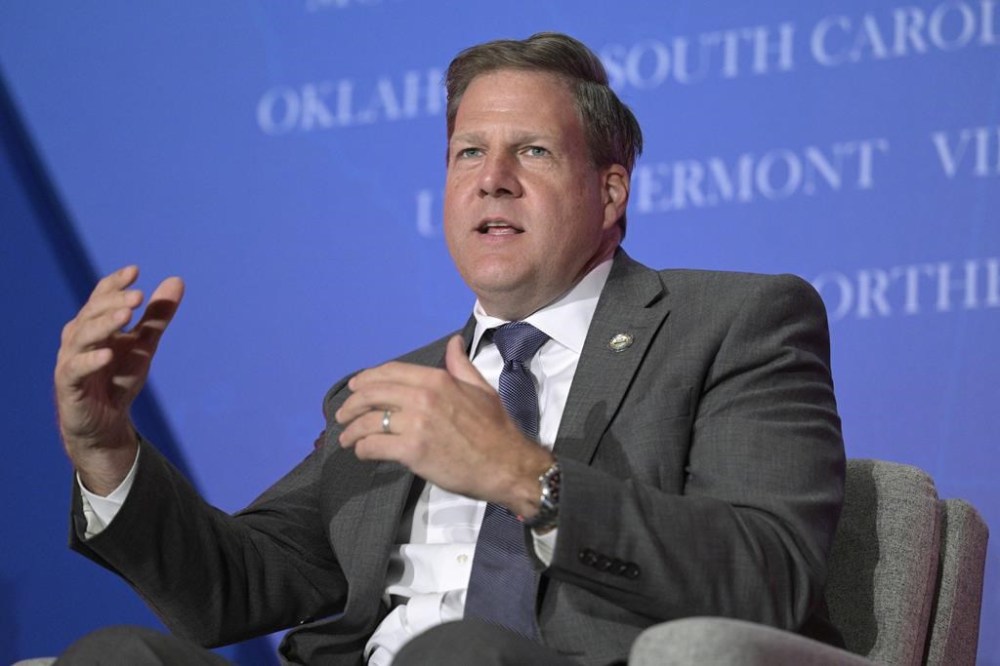
“Any conversation about banning abortion or limiting it nationwide is an electoral disaster for the Republicans,” said New Hampshire Gov. Chris Sununu, a Republican who describes himself as “pro-choice” but also signed a law banning abortions in the state after 24 weeks.
“The Republican Party has an inability to move off this issue in a way that doesn’t scare the heck out the average voter, the independent voter, the younger generation of voters,” Sununu continued. “These guys keep pushing themselves deeper and deeper into an ultra-right base that really does not define the bulk of the Republican Party.”
Privately, at least, strategists involved with Republican presidential campaigns concede that the GOP is on the wrong side of the debate as it currently stands. While popular with Republican primary voters, public polling consistently shows that the broader collection of voters who decide general elections believe abortion should be legal in all or most cases.
There are no easy answers as leading Republicans like DeSantis and even Trump, who appointed the Supreme Court justices responsible for overturning Roe v. Wade last June, face tremendous political pressure from the left and the right.
Anti-abortion activists have been particularly vocal in warning Republican presidential candidates that the party’s base will not tolerate any weakness on abortion given that GOP leaders have been vowing for decades to ban abortion rights if given the chance.
Before this week, Kristan Hawkins, the president of the anti-abortion group, Students for Life of America, was unwilling to describe DeSantis as a leader in the abortion fight.
“This is his opportunity to show himself as a leader on this issue. That’s what’s exciting about this moment,” Hawkins said of DeSantis’ six-week ban. “He has done a lot, but we really needed to see action at the legislative level. I think this ‘heartbeat law’ fully cements his pro-life street cred.”
Katie Daniel, of the anti-abortion Susan B. Anthony Pro-Life America, described Florida’s new law as “a huge step forward.” But she said it was only the beginning of what anti-abortion activists expect from leading 2024 candidates, including their ultimate support for a national abortion ban.
“The issue of abortion is not going away,” Daniel said. “It’s not about saying you passed the law, check the box, you’re done.”
Such pressure ensures that the issue will remain central to the 2024 campaign as Republican presidential prospects begin to fan out across America to court primary voters. At the very same time, an escalating court battle over access to an FDA-approved abortion pill is forcing GOP leaders to answer more questions.
Former Vice President Mike Pence, long a vocal abortion opponent, condemned the abortion pill during an interview this week with Newsmax while vowing to “champion the right to life.”
“We’re going to continue to champion the interests of women born and unborn and pushing back against the abortion pill,” Pence declared.
Former United Nations Ambassador Nikki Haley told Iowa voters this week that abortion is “a personal issue” that should be left to the states, although she left open the possibility of a federal ban without getting into specifics.
And in New Hampshire, just a day after launching a presidential exploratory committee, South Carolina Sen. Tim Scott outlined his support for a federal law that would ban abortions nationwide after 20 weeks of pregnancy.
“We should certainly always side with a culture that preserves and appreciates and respects life,” Scott told reporters. “How do we do that? I certainly think that the 20-week threshold is not a question in my mind at all.”
He tried repeatedly to refocus the conversation on Democrats “radical position” on the issue because they generally oppose any abortion restrictions whatsoever.

Sununu, the New Hampshire governor, said he counts Scott as a friend, but was surprised that he would openly discuss his support for a federal abortion ban in New Hampshire, a state long known for supporting abortion rights.
“Of all places to talk about a federal ban of abortion, New Hampshire ain’t it,” Sununu said in an interview. “He’s a good candidate and does a great job in the Senate. But know your audience here, man.”
Republican officials in Washington are still looking for answers as well.
Republican National Committee Chair Ronna McDaniel declined to comment for this article. Her team pointed to a 7-month-old memo from her office suggesting that Republicans should highlight Democratic officials’ opposition to abortion restrictions of any kind, which the memo described as “an extreme stance.”
After the GOP’s midterm disappointment last fall, however, Republicans are increasingly concerned that such messaging isn’t enough to help blunt the Democrats’ advantage — especially as Republicans in key states continue to enact strict abortion restrictions.
Republican strategist Alice Stewart said Republicans must find a way to keep the focus on the failings of the Biden administration, the economy, crime and education in the 2024 campaign.
“Abortion poses a challenge for Republicans. There’s no denying it,” said Stewart, who initially cheered the Supreme Court’s Roe reversal. “Politically, it has become problematic.”
Campaigning in Iowa this week, former Arkansas Gov. Asa Hutchinson, tried to sidestep questions about his support for aggressive abortion restrictions. Before leaving office earlier in the year, he signed into law a measure banning abortion after six weeks of pregnancy; the law had an exception for the life of the mother, but not for rape or incest.
Hutchinson said that voters are more concerned with national defense, curbing domestic federal spending and accelerating U.S. energy production than abortion.
“I don’t see that as an issue that’s going to hurt us long-term,” Hutchinson said, referring to strict abortion bans. He stopped short of saying whether he would sign a federal six- or 15-week ban were it to come to his desk as president. “I’ve always signed pro-life bills that have come to me, but obviously I would want to look at the bill.”
And even in DeSantis’ Florida, there are signs that the ambitious Republican governor is approaching the issue with some level of caution.
Almost exactly a year ago, a smiling DeSantis signed a new 15-week abortion ban into law during a raucous public ceremony flanked by Republican lawmakers with dozens of cheering supporters in the audience.
This week, he signed the 6-week ban into law in private. His office issued a press release shortly before midnight to mark the achievement.
And he ignored the landmark achievement altogether on Friday when delivering a speech to the religious conservative Liberty University. He did the same Friday night in New Hampshire as he cast himself and Florida as leading the nation on a slew of “major issues,” but did not mention abortion or the law he had signed the night before.
Christian Ziegler, chairman of the Florida GOP, dismissed any political concerns by pointing to DeSantis’ overwhelming reelection last fall.
“I think it’s very difficult for anyone to say the governor executing a conservative agenda is going to hurt him,” Ziegler said.
___
Associated Press writers Thomas Beaumont in Des Moines, Iowa and Holly Ramer in Concord, New Hampshire, contributed to this report.