75 years strong: Manitoba-based health study continues to inform patient care

Advertisement
Read this article for free:
or
Already have an account? Log in here »
To continue reading, please subscribe:

Digital Subscription
One year of digital access for only $205*
- Enjoy unlimited reading on winnipegfreepress.com
- Read the E-Edition, our digital replica newspaper
- Access News Break, our award-winning app
- Play interactive puzzles
*First annual payment billed as $205.00 + GST for one year. This annual subscription will automatically renew at $233.00 + GST every 52 weeks (10% off the regular annual price of $259.35). Offer available to new and qualified returning subscribers only. Cancel any time.
To continue reading, please subscribe:
Add Free Press access to your Brandon Sun subscription for only an additional
$1 for the first 4 weeks*
- Enjoy unlimited reading on winnipegfreepress.com
- Read the E-Edition, our digital replica newspaper
- Access News Break, our award-winning app
- Play interactive puzzles
*Your next Brandon Sun subscription payment will increase by $1.00 and you will be charged $17.95 plus GST for four weeks. After four weeks, your payment will increase to $24.95 plus GST every four weeks.
Read unlimited articles for free today:
or
Already have an account? Log in here »
Hey there, time traveller!
This article was published 12/07/2023 (1182 days ago), so information in it may no longer be current.
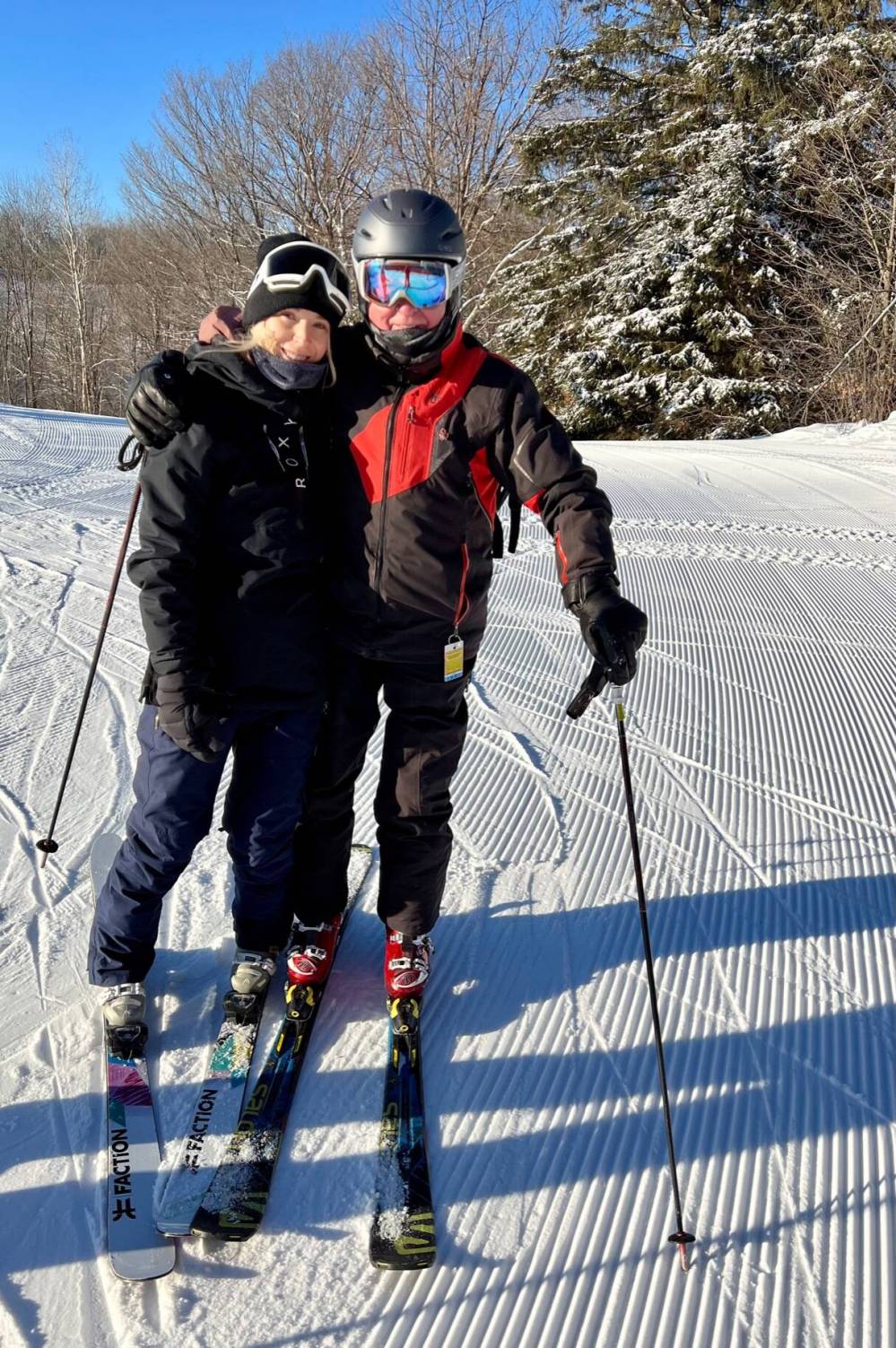
Kenneth Raven had to recently give up golf because of a shoulder injury, but still went downhill skiing this year.
This is remarkable because Raven is 99, and, except for a pace maker implanted when he was 95, is the picture of good health.
For 75 of those years, a Manitoba medical study has followed and recorded Raven’s health and that of thousands of others.
SUPPLIED
Kenneth Raven loves downhill skiing so much, he helped teach his granddaughter, Dara Howell, the sport. Howell won Olympic gold in ski slopestyle in 2014.
In 1948, Raven was one of 3,983 young men who agreed to be part of a longitudinal cardiovascular disease study created by a Winnipeg doctor.
The program, celebrating its 75th anniversary this year, is officially known as the Manitoba Follow-Up Study. It was created by Dr. Francis Mathewson, a cardiologist who was the Royal Canadian Air Force director of medical services in the Second World War (1940-45).
In that role, Mathewson was responsible for the physical examination of more than 7,000 military recruits. Those examinations became the foundation of the study in 1948.
Mathewson received the military’s blessing to store the medical records at the University of Manitoba’s medical school, and to reach out to the veterans who survived the war to see if they would be interested in continuing.
Almost 4,000 agreed.
Every year since, they have received a letter in the mail with a questionnaire and instructions to give to their doctors to obtain other information needed.
It has become the longest longitudinal study.
Raven, who turns 100 in November, is one of only 19 participants believed to be still alive. (Two Manitobans interviewed in 2016 for a Free Press story on the study — Gordon Herd and Richard Sellen — have since died.)
“I’m a lucky guy,” Raven said Wednesday from his home in Huntsville, Ont. “I’m hoping this study helps somebody.”
Raven’s wife, Sandy, chimed in: “He always looks forward to getting (the study’s questionnaire) in the mail and doing them. He always enjoys saying, ‘I am in wonderful health.’”
Robert Tate, the study’s current director, said information will be gathered until the last participant dies. “Our goal is to see this right through to the end.”
When Tate speaks to various medical conferences about the study, he uses himself as an example for how long it has been gathering information.
“I tell them: I’m a 70-year-old man and the study started before I was born,” he said.
Of the remaining study participants. the youngest is 94 or 95; the oldest is 104.
“We certainly have learned a lot from this study. It has helped inform patient care,” said Dr. Philip St. John, head of geriatric medicine at the U of M.
SUPPLIED
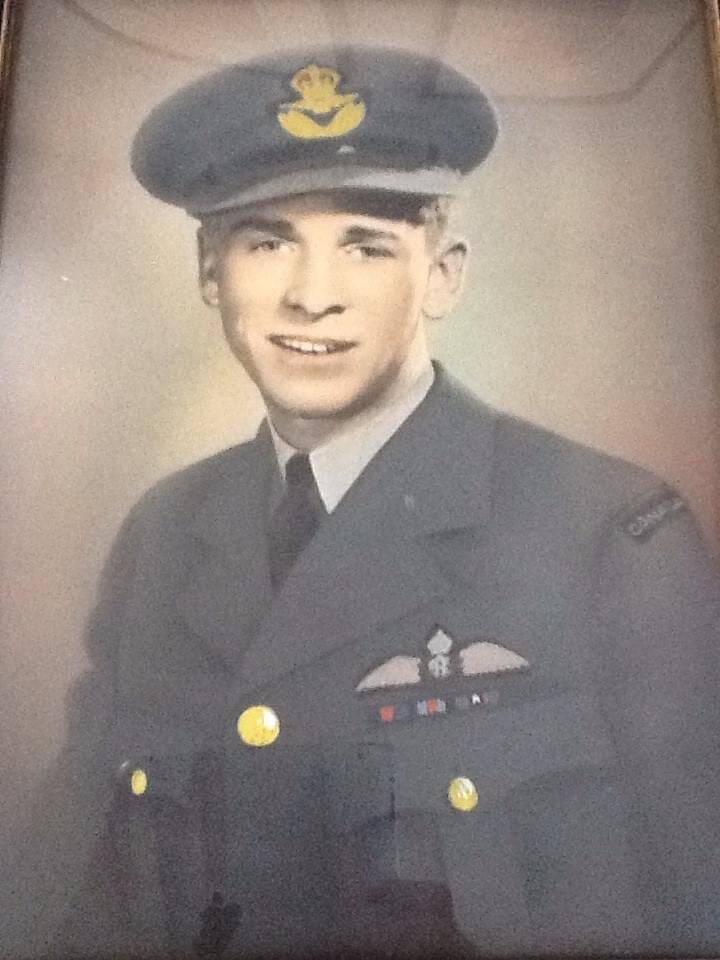
Kenneth Raven served in the air force, getting to England too late to participate in D-Day, but later being part of aerial photo reconnaissance of enemy actions.
It is through such studies doctors have learned the more you look after your health in your younger years, the healthier you will be as you age, Tate said.
“We know high blood pressure relates to heart attacks and smoking is bad for you. How do we know that? Because of studies like this. The only way you find out about it is to do research.”
Raven served in the air force, getting to England too late to participate in D-Day, but later being part of aerial photo reconnaissance of enemy actions.
After returning from the war, Raven worked at his dad’s plumbing company, before creating another one with his brother in Toronto. He retired at 65.
Raven has three daughters and has been married to his second wife for almost 40 years. His first wife died of cancer. “I’ve been lucky twice,” he said.
Because he is in such good health, Raven finds many of the questions the study sends him almost laughable.
“Can you tie up your shoes? Can you walk up stairs,” he said. “But I guess many people can’t do that at my age.”

Sandy said she thinks she knows why her husband is so healthy: “Ken has always been very active and very social. That’s part of it. He just enjoys every day.”
Raven loves downhill skiing so much, he helped teach his granddaughter the sport. Dara Howell won Olympic gold in ski slopestyle in 2014.
Raven said he will continue to be part of the study as long as he can.
“I’m healthy and I want to help,” he said. “I will continue to do it faithfully.”
kevin.rollason@freepress.mb.ca
Kevin Rollason
Reporter
Kevin Rollason was a general assignment reporter at the Free Press.
Our newsroom depends on a growing audience of readers to power our journalism. If you are not a paid reader, please consider becoming a subscriber.
Our newsroom depends on its audience of readers to power our journalism. Thank you for your support.
Kevin Rollason
Reporter
Kevin Rollason was a general assignment reporter at the Free Press.
Our newsroom depends on a growing audience of readers to power our journalism. If you are not a paid reader, please consider becoming a subscriber.
Our newsroom depends on its audience of readers to power our journalism. Thank you for your support.
Advertisement Advertise With Us
Advertisement Advertise With Us