Medicines360’s long and winding, $82 million road to create and distribute $50 birth control
Advertisement
Read this article for free:
or
Already have an account? Log in here »
To continue reading, please subscribe:

Digital Subscription
One year of digital access for only $205*
- Enjoy unlimited reading on winnipegfreepress.com
- Read the E-Edition, our digital replica newspaper
- Access News Break, our award-winning app
- Play interactive puzzles
*First annual payment billed as $205.00 + GST for one year. This annual subscription will automatically renew at $233.00 + GST every 52 weeks (10% off the regular annual price of $259.35). Offer available to new and qualified returning subscribers only. Cancel any time.
To continue reading, please subscribe:
Add Free Press access to your Brandon Sun subscription for only an additional
$1 for the first 4 weeks*
- Enjoy unlimited reading on winnipegfreepress.com
- Read the E-Edition, our digital replica newspaper
- Access News Break, our award-winning app
- Play interactive puzzles
*Your next Brandon Sun subscription payment will increase by $1.00 and you will be charged $17.95 plus GST for four weeks. After four weeks, your payment will increase to $24.95 plus GST every four weeks.
Read unlimited articles for free today:
or
Already have an account? Log in here »
Hey there, time traveller!
This article was published 01/09/2023 (1131 days ago), so information in it may no longer be current.
Drugs and medical devices rarely come from the nonprofit world. There are more than 2,600 for-profit pharmaceutical companies in the United States, but only three nonprofits have products on the American market.
One of them is Medicines360, which in 2015 became the first nonprofit to introduce a medical device — an IUD. The genesis of the device came from an anonymous foundation that saw one of the most effective and reversible birth-control methods, the hormonal IUD, was too expensive for most women. Even insured women could be billed copays of up to $1,000.
In 2008, the foundation (which Bloomberg reported was the Susan Thompson Buffett Foundation) partnered with pharmaceutical scientist and MacArthur fellow Victoria Hale and decided to make a six-year, $82.2 million investment to develop a low-cost hormonal IUD through a nonprofit company.
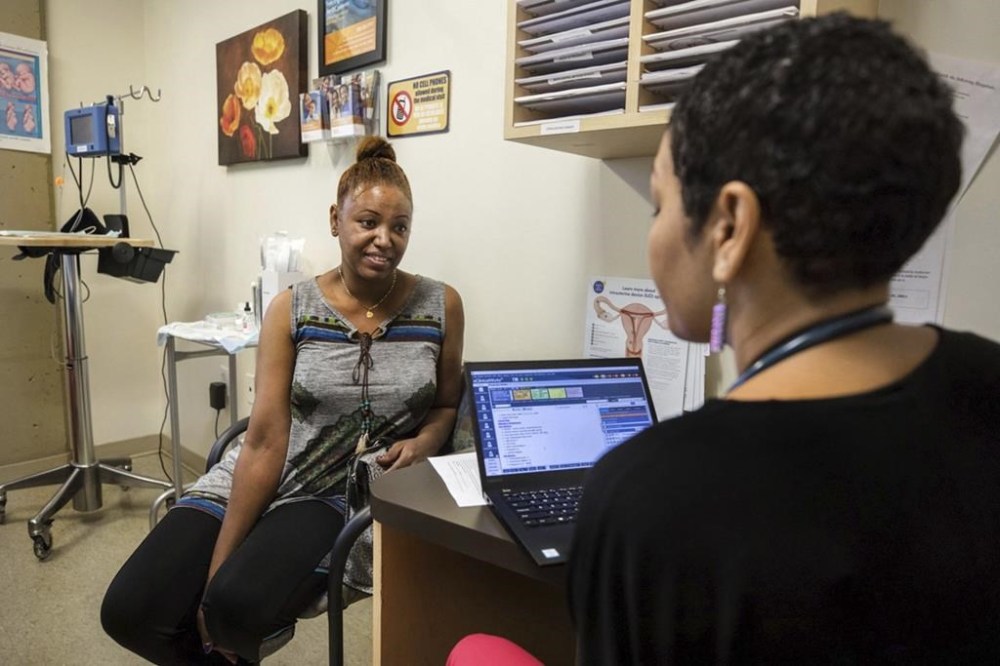
“The real goal of the donor and of Medicines360 was to provide this product to safety net clinics at a very, very affordable price,” said Medicines360’s Autumn Ehnow, referring to health care sites that serve uninsured patients.
Medicines360 recently issued a report summing up what did and did not work in the seven years since it distributed devices for $50 apiece. The organization recounts meeting its goals: It expanded access to the device and introduced competition to the market and thus lowered prices.
However, it also faced unanticipated roadblocks, including the discovery that a low-cost product did not necessarily guarantee market adoption. Substantial challenges included a tax code and Food and Drug Administration regulations unfavorable to nonprofit pharmacies, a lack of access to investment, middlemen who benefit from distributing drugs that are high-priced, and even Medicare and Medicaid programs whose policies do not necessarily favor low-cost drugs.
The expensive road to market
When Medicines360 launched in 2009, there was one hormonal and one copper IUD on the market in the United States, and patents had expired some time ago. These normally would make for ripe conditions for a generic product. However, for-profit pharmacies were not interested.
IUDs were saddled with a bad reputation in the United States due to a defective device, the Dalkon Shield, marketed in the 1970s, which caused severe infections and even deaths. Though other IUDs did not carry the risks of the Dalkon Shield, negative views of IUDs persisted for decades in the American market, and other manufacturers withdrew their products for fear of litigation and because of low demand and a strict approval process.
So although there was already an existing product, and patents for the product had expired, Medicines360 still had to conduct a large and expensive phase-three clinical trial to test the device’s safety and efficacy and win Food and Drug Administration approval.
“We went through the same process that a pharmaceutical company would go through to bring a new product,” said Tina Raine-Bennett, who became CEO after Hale.
The nonprofit began by acquiring a hormonal IUD already in development, conducting tests for FDA approval, and creating a commercial partnership with a traditional pharmaceutical company. It made sure to retain ownership of the product to protect the product’s public-health mission. It was a complex, yearslong journey, which explains the project’s $82 million cost.
“The barrier to U.S. market entry was not IP,” said Ehnow. “It was just purely no one had been interested or able to raise those kinds of funds.”
“What was shocking to me about this is seeing the whole price tag,” said Alina Salganicoff, senior vice president and director of women’s health policy at Kaiser Family Foundation. The cost demonstrates “what it takes to go through an FDA approval process.”
After the product, Liletta, launched in 2015, Medicines360 continued to broaden its approved usage. Today, it is approved for all women of reproductive age, not just those who had born children, and last fall the FDA extended its use for pregnancy prevention for up to eight years.
“It’s a really big deal that now they’re hopefully going to be made available to much larger proportions of the population,” said Rebecca Callahan, director of research and operations at FHI 360, an international health nonprofit in North Carolina, of hormonal IUDs.
‘If we build it, they will come’
A 2011 study showed that women confronted with an out-of-pocket expense of more than $50 were less likely to choose an IUD. The study greatly influenced Medicines360’s decisions on price. Yet the nonprofit’s hypothesis that “if we build it, they will come,” as Ehnow put it, turned out to be not quite accurate.
Though the nonprofit predicted it would sell 100,000 devices to safety-net clinics and hospitals in its first year, its actual sales were less than half of that.
Obamacare was a complicating factor. Because of the Affordable Care Act, clinics and hospitals knew they would be reimbursed so they had less incentive to keep purchasing prices low.
What’s more, from the time the device leaves the manufacturer to the time it enters a clinic, it passes through many supply-chain intermediaries. Wholesalers, for example, charge a fee typically based on the list price of a drug and prefer higher-cost drugs because they make more money. However, for clinics that have a high proportion of uninsured patients, Liletta’s low cost is still attractive.
And that’s where Ehnow sees the nonprofit’s greatest victory: its service to the poorest women, who have been able to get the device at low cost. More than 435,000 units have been sold at a low price in the United States, saving the health care system $100 million.
State and federal policies
Medicines360 has been working with lawmakers such as Sen. Jacky Rosen, Democrat of Nevada, and Sen. Mitt Romney, Republican of Utah, on legislation whose goal is to increase Americans’ access to affordable medicines.
It is expecting two reports from the U.S. Department of Health and Human Services on nonprofit pharma, due within the year, as well as one from the Government Accountability Office, due at the end of 2024.
One of the biggest issues the nonprofit hopes to address is the tax status of nonprofit pharma. To accomplish its public-health mission, Ehnow argues, it needs to have a steady revenue stream. Being allowed to sell its own products would provide that. But under current tax law, a nonprofit selling drugs, even at a low cost to public clinics and hospitals, would jeopardize its nonprofit status. Pending legislation introduced by Senator Rosen attempts to change this situation.
Another barrier the nonprofit faces is its limited ability to raise funds. It doesn’t have funds that shareholders would bring, and traditional venture capitalists, focused on profits, are uninterested.
Medicines360 recommends that Congress enable federal funds for nonprofits that develop products with targeted public-health goals, including grants for conducting clinical trials in diverse populations.
‘We didn’t see Dobbs coming’
On the national stage, Medicines360 has been cheered in recent months by the introduction of a low-cost insulin product by Civica Rx, a fellow nonprofit pharmaceutical company, which has forced for-profit pharma to drastically lower its prices.
A third product, an over-the-counter naloxone nasal spray to reverse opioid overdose, from the nonprofit Harm Reduction Therapeutics was approved by the FDA in July.
At the same time, the group is wary of political headwinds that swept in after the Supreme Court’s Dobbs decision.
“We didn’t see Dobbs coming last year, and we got comfortable,” Raine-Bennett said. The decision to overrule Roe v. Wade served to “underscore how our focus on women’s health is important.”
In January, the group launched its second product: an emergency contraceptive pill. It is sold under the auspices of a for-profit subsidiary of Medicines360, Curae Pharma360, founded in 2021. The group made the decision to commercialize the pill in the aftermath of the Dobbs ruling and subsequent shortage of emergency contraception. Curae’s infrastructure provided the fastest time to market for the product compared with the nonprofit Medicines360.

“We now have the ability to do sales and distribution of our own products,” says Ehnow, who, in addition to her role at Medicines360, became the chief operating officer of Curae.
Ehnow feels that Medicines360 should serve as a model on how to address gaps in access to medicine and medical devices. A helpful step now, she says, would be to address the inequities in the market that exist for nonprofit pharma.
“I spend a significant amount of thinking with my team on how we really change the ways these products are covered and provide access points to them,” Ehnow said.
_____
This article was provided to The Associated Press by the Chronicle of Philanthropy. Sono Motoyama is a senior writer at the Chronicle. Email: sono.motoyama@philanthropy.com. Associated Press coverage of philanthropy and nonprofits receives support through the AP’s collaboration with the Chronicle and The Conversation US, with funding from Lilly Endowment Inc. The AP and the Chronicle are solely responsible for this content. For all of AP’s philanthropy coverage, visit https://apnews.com/hub/philanthropy.