We carry DNA from extinct cousins like Neanderthals. Science is now revealing their genetic legacy
Advertisement
Read this article for free:
or
Already have an account? Log in here »
To continue reading, please subscribe:

Digital Subscription
One year of digital access for only $205*
- Enjoy unlimited reading on winnipegfreepress.com
- Read the E-Edition, our digital replica newspaper
- Access News Break, our award-winning app
- Play interactive puzzles
*First annual payment billed as $205.00 + GST for one year. This annual subscription will automatically renew at $233.00 + GST every 52 weeks (10% off the regular annual price of $259.35). Offer available to new and qualified returning subscribers only. Cancel any time.
To continue reading, please subscribe:
Add Free Press access to your Brandon Sun subscription for only an additional
$1 for the first 4 weeks*
- Enjoy unlimited reading on winnipegfreepress.com
- Read the E-Edition, our digital replica newspaper
- Access News Break, our award-winning app
- Play interactive puzzles
*Your next Brandon Sun subscription payment will increase by $1.00 and you will be charged $17.95 plus GST for four weeks. After four weeks, your payment will increase to $24.95 plus GST every four weeks.
Read unlimited articles for free today:
or
Already have an account? Log in here »
Hey there, time traveller!
This article was published 25/09/2023 (1106 days ago), so information in it may no longer be current.
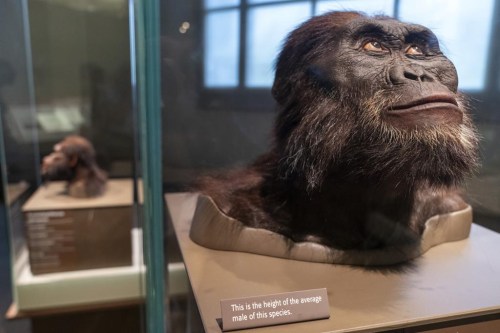
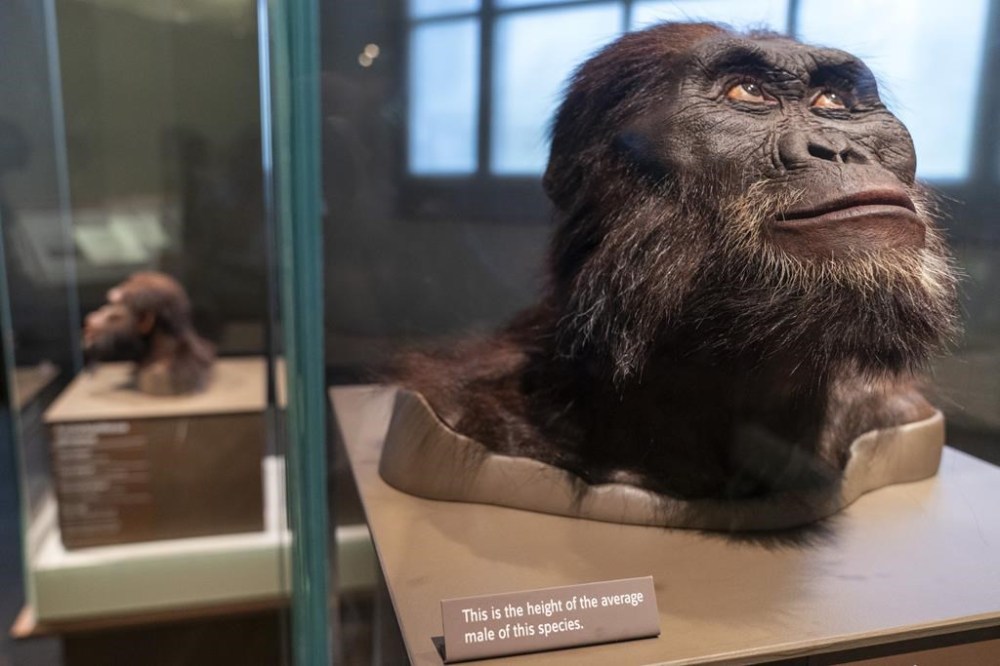
Neanderthals live on within us.
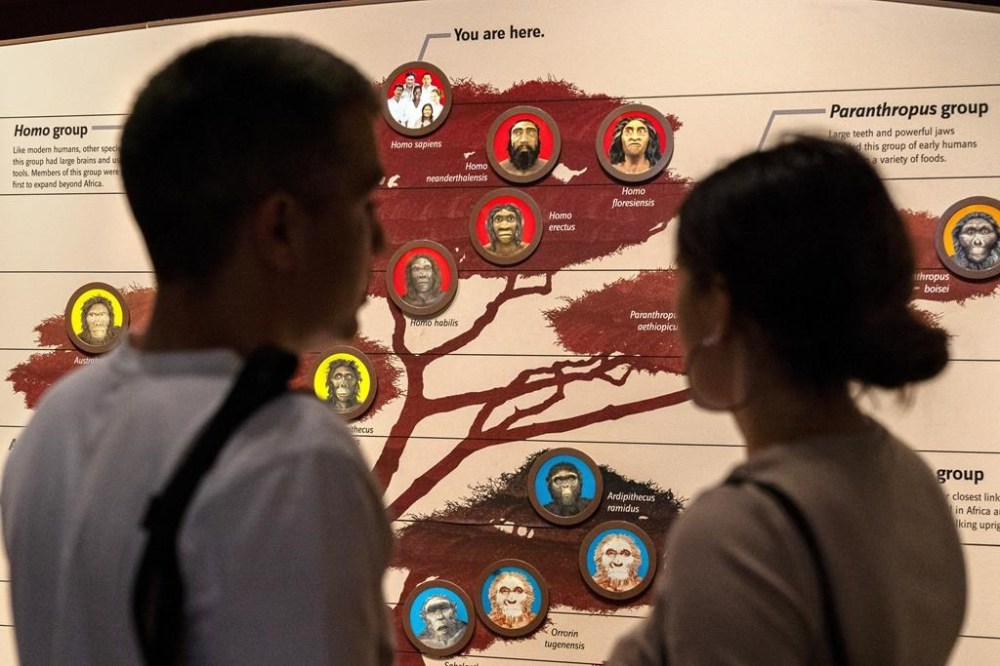
These ancient human cousins, and others called Denisovans, once lived alongside our early Homo sapiens ancestors. They mingled and had children. So some of who they were never went away — it’s in our genes. And science is starting to reveal just how much that shapes us.
Using the new and rapidly improving ability to piece together fragments of ancient DNA, scientists are finding that traits inherited from our ancient cousins are still with us now, affecting our fertility, our immune systems, even how our bodies handled the COVID-19 virus.
“We’re now carrying the genetic legacies and learning about what that means for our bodies and our health,” said Mary Prendergast, a Rice University archeologist.
In the past few months alone, researchers have linked Neanderthal DNA to a serious hand disease, the shape of people’s noses and various other human traits. They even inserted a gene carried by Neanderthals and Denisovans into mice to investigate its effects on biology, and found it gave them larger heads and an extra rib.
Much of the human journey remains a mystery. But Dr. Hugo Zeberg of the Karolinska Insitute in Sweden said new technologies, research and collaborations are helping scientists begin to answer the basic but cosmic questions: “Who are we? Where did we come from?”
And the answers point to a profound reality: We have far more in common with our extinct cousins than we ever thought.
NEANDERTHALS WITHIN US
Until recently, the genetic legacy from ancient humans was invisible because scientists were limited to what they could glean from the shape and size of bones. But there has been a steady stream of discoveries from ancient DNA, an area of study pioneered by Nobel Prize winner Svante Paabo who first pieced together a Neanderthal genome.
Advances in finding and interpreting ancient DNA have allowed them to see things like genetic changes over time to better adapt to environments or through random chance.
It’s even possible to figure out how much genetic material people from different regions carry from the ancient relatives our predecessors encountered.
Research shows some African populations have almost no Neanderthal DNA, while those from European or Asian backgrounds have 1% to 2%. Denisovan DNA is barely detectable in most parts of the world but makes up 4% to 6% of the DNA of people in Melanesia, which extends from New Guinea to the Fiji Islands.
That may not sound like much, but it adds up. “Half of the Neanderthal genome is still around, in small pieces scattered around modern humans,” said Zeberg, who collaborates closely with Paabo.
It’s also enough to affect us in very real ways. Scientists don’t yet know the full extent, but they’re learning it can be both helpful and harmful.
For example, Neanderthal DNA has been linked to auto-immune diseases like Graves’ disease and rheumatoid arthritis. When Homo sapiens came out of Africa, they had no immunity to diseases in Europe and Asia, but Neanderthals and Denisovans already living there did.
“By interbreeding with them, we got a quick fix to our immune systems, which was good news 50,000 years ago,” said Chris Stringer, a human evolution researcher at the Natural History Museum in London. “The result today is, for some people, that our immune systems are oversensitive, and sometimes they turn on themselves.”
Similarly, a gene associated with blood clotting believed to be passed down from Neanderthals in Eurasia may have been helpful in the “rough and tumble world of the Pleistocene,” said Rick Potts, director of the human origins program at the Smithsonian Institution. But today it can raise the risk of stroke for older adults. “For every benefit,” he said, “there are costs in evolution.”
In 2020, research by Zeberg and Paabo found that a major genetic risk factor for severe COVID-19 is inherited from Neanderthals. “We compared it to the Neanderthal genome and it was a perfect match,” Zeberg said. “I kind of fell off my chair.”
The next year, they found a set of DNA variants along a single chromosome inherited from Neanderthals had the opposite effect: protecting people from severe COVID.
The list goes on: Research has linked Neanderthal genetic variants to skin and hair color, behavioral traits, skull shape and Type 2 diabetes. One study found that people who report feeling more pain than others are likely to carry a Neanderthal pain receptor. Another found that a third of women in Europe inherited a Neanderthal receptor for the hormone progesterone, which is associated with increased fertility and fewer miscarriages.
Much less is known about our genetic legacy from Denisovans – although some research has linked genes from them to fat metabolism and better adaptation to high altitudes. Maanasa Raghavan, a human genetics expert at the University of Chicago, said a stretch of Denisovan DNA has been found in Tibetans, who continue to live and thrive in low-oxygen environments today.
Scientists have even found evidence of “ghost populations” — groups whose fossils have yet to be discovered — within modern humans’ genetic code.
SO WHY DID WE SURVIVE?
In the past, the tale of modern humans’ survival “was always told as some success story, almost like a hero’s story,” in which Homo sapiens rose above the rest of the natural world and overcame the “insufficiencies” of their cousins, Potts said.
“Well, that simply is just not the correct story.”
Neanderthals and Denisovans had already existed for thousands of years by the time Homo sapiens left Africa. Scientists used to think we won out because we had more complex behavior and superior technology. But recent research shows that Neanderthals talked, cooked with fire, made art objects, had sophisticated tools and hunting behavior, and even wore makeup and jewelry.
Several theories now tie our survival to our ability to travel far and wide.
“We spread all over the world, much more than these other forms did,” Zeberg said.
While Neanderthals were specially adapted to cold climates, Potts said, Homo sapiens were able to disperse to all different kinds of climates after emerging in tropical Africa. “We are so adaptable, culturally adaptable, to so many places in the world,” he said.
Meanwhile, Neanderthals and Denisovans faced harsh conditions in the north, like repeated ice ages and ice sheets that likely trapped them in small areas, said Eleanor Scerri, an archeologist at Germany’s Max Planck Institute for Geoanthropology. They lived in smaller populations with a greater risk of genetic collapse.
Plus, we had nimble, efficient bodies, Prendergast said. It takes a lot more calories to feed stocky Neanderthals than comparatively skinny Homo sapiens, so Neanderthals had more trouble getting by, and moving around, especially when food got scarce.
Janet Young, curator of physical anthropology at the Canadian Museum of History, pointed to another intriguing hypothesis – which anthropologist Pat Shipman shared in one of her books –- that dogs played a big part in our survival. Researchers found the skulls of domesticated dogs in Homo sapiens sites much further back in time than anyone had found before. Scientists believe dogs made hunting easier.
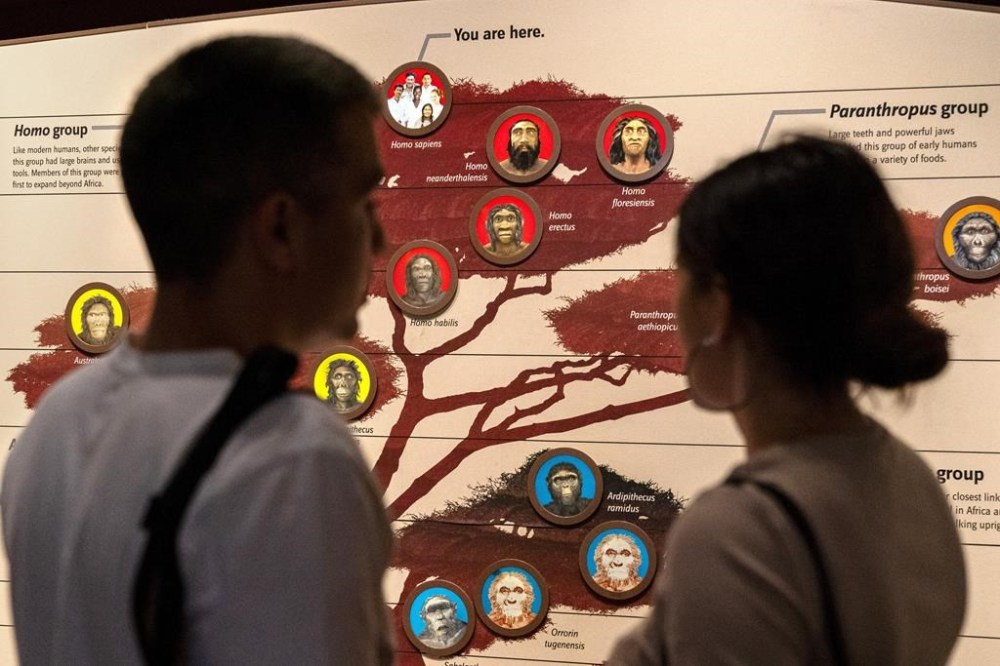
By around 30,000 years ago, all the other kinds of hominins on Earth had died off, leaving Homo sapiens as the last humans standing.
‘INTERACTION AND MIXTURE’
Still, every new scientific revelation points to how much we owe our ancient cousins.
Human evolution was not about “survival of the fittest and extinction,” said John Hawks, a paleoanthropologist at the University of Wisconsin-Madison. It’s about “interaction and mixture.”
Researchers expect to learn more as science continues to advance, allowing them to extract information from ever-tinier traces of ancient lives. Even when fossils aren’t available, scientists today can capture DNA from soil and sediment where archaic humans once lived.
And there are less-explored places in the world where they hope to learn more. Zeberg said “biobanks” that collect biological samples will likely be established in more countries.
As they delve deeper into humanity’s genetic legacy, scientists expect to find even more evidence of how much we mixed with our ancient cousins and all they left us.

“Perhaps,” Zeberg said, “we should not see them as so different.”
___
This story was first published on Sept. 25, 2023. It was updated on Sept. 27, 2023 to remove the estimated number of Neanderthals that ever lived, which was erroneously reported to be 100,000. Most scientists believe it was far more than 100,000.
___
The Associated Press Health and Science Department receives support from the Howard Hughes Medical Institute’s Science and Educational Media Group. The AP is solely responsible for all content.