What is artificial turf? Synthetic grass has come a long way since the days of AstroTurf
Advertisement
Read this article for free:
or
Already have an account? Log in here »
To continue reading, please subscribe:

Digital Subscription
One year of digital access for only $205*
- Enjoy unlimited reading on winnipegfreepress.com
- Read the E-Edition, our digital replica newspaper
- Access News Break, our award-winning app
- Play interactive puzzles
*First annual payment billed as $205.00 + GST for one year. This annual subscription will automatically renew at $233.00 + GST every 52 weeks (10% off the regular annual price of $259.35). Offer available to new and qualified returning subscribers only. Cancel any time.
To continue reading, please subscribe:
Add Free Press access to your Brandon Sun subscription for only an additional
$1 for the first 4 weeks*
- Enjoy unlimited reading on winnipegfreepress.com
- Read the E-Edition, our digital replica newspaper
- Access News Break, our award-winning app
- Play interactive puzzles
*Your next Brandon Sun subscription payment will increase by $1.00 and you will be charged $17.95 plus GST for four weeks. After four weeks, your payment will increase to $24.95 plus GST every four weeks.
Read unlimited articles for free today:
or
Already have an account? Log in here »
Hey there, time traveller!
This article was published 09/10/2023 (1093 days ago), so information in it may no longer be current.
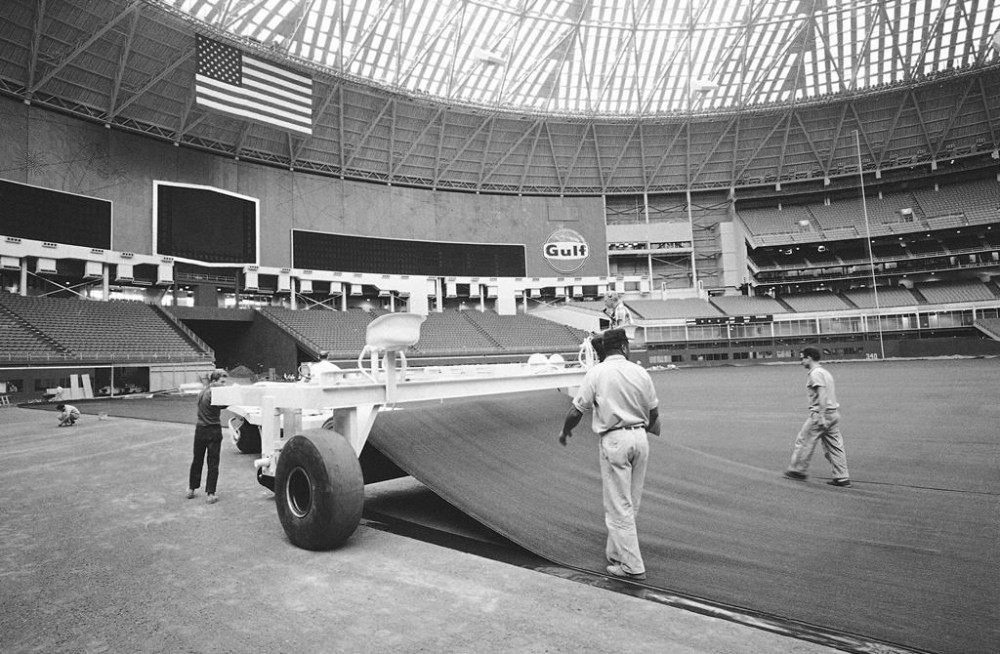
Artificial turf has come a long way since since it was introduced on a grand stage to the sports world in 1966 at the Astrodome in Houston.
Playing on ChemGrass, which became known as AstroTurf, was a lot like playing on low-pile carpet laid atop concrete.
These days, the soft plastic grass surfaces often look and feel like the real thing. The quality has advanced so much that many stadiums used by professional and college football teams have decided it is the better option.
“I think that the consistency of the field is maintained all the time from the beginning of the season to the end of the season,” said Mike Penner, associate athletic director at Ohio State.
There are more than 10,000 turf fields in use across the U.S., according to industry officials, and they are used everywhere from the NFL to recreational fields for youth sports.
WHAT IS ARTIFICIAL TURF?
Simply put, it’s fake grass atop fake soil. But it is a highly complex product — make no mistake, this is a multimillion-dollar industry — and the advances made since the early days of the mid-1960s are impressive.
There are several manufacturers of artificial turf fields, including AstroTurf, ProGrass and PowerBlade. The most commonly used in major college football is FieldTurf, a product by the Canadian company of the same name that is used in at least 50 stadiums, including at Ohio State, Texas, Oregon and Notre Dame.
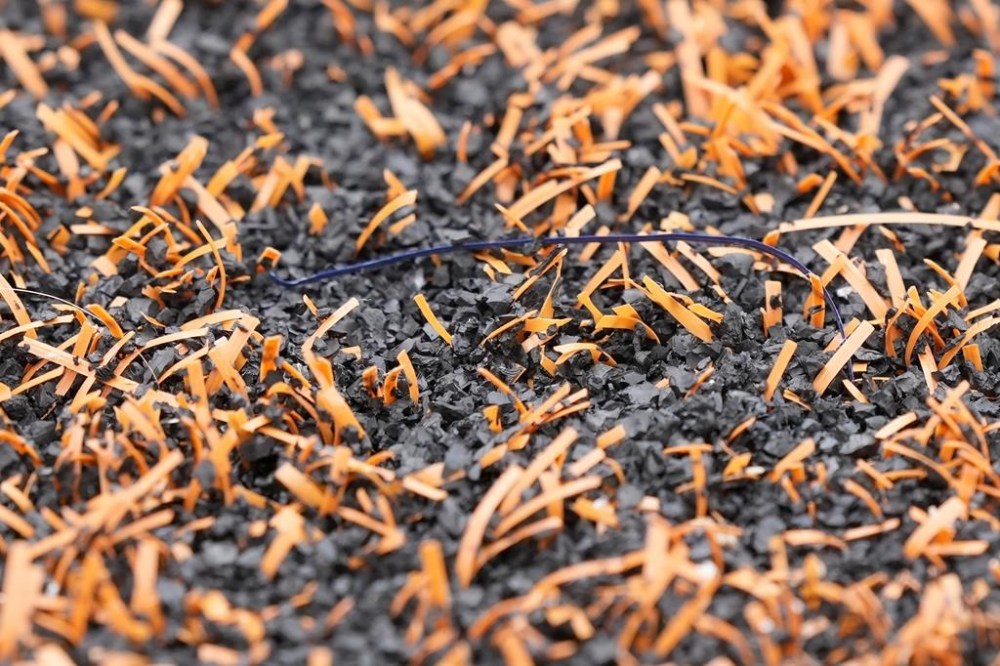
FieldTurf has two components; the soft plastic blades of “grass” that come in large sections with a plastic backing made for drainage and the infill, a mixture of rubber pellets and sand that can be made from cork, coconut or plastic.
Other artificial surfaces have shock-absorbing padding underneath the turf.
WHY USE IT?
Upkeep and maintenance are often cited as the reasons why schools and stadium operators move away from natural grass.
Mowing, watering, seeding and painting logos and yard markers takes time and money.
“With artificial turf you’re not really having to do any of that,” Penner said. “You’re more just grooming it, you know, trying to loosen up that infill, allow the fibers of the actual turf to stand up more. And that’s about it.”
Penner said Ohio State decided to switch the surface at Ohio State Stadium back to artificial turf after the 2006 season. The decision was tied to the expansion of the stadium a few years earlier, when the upper decks were extended up. As the stadium grew taller, Penner said, the grass field lost about two hours of sunlight per day.
“The grass just kind of failed on us,” Penner said.
The field needed to be re-sodded multiple times during 2006 season, including a little more than two weeks before the Buckeyes played Michigan in a No. 1 vs. 2 matchup to decide the Big Ten and a spot in the national championship game.
All that sod work cost the university more than a half-million dollars and then-Buckeyes coach Jim Tressel advocated for artificial turf after players complained the new sod was slippery and dislodged in chunks.
ARE THERE DOWNSIDES?
There are studies that suggest turf is riskier when it comes to lower-body injuries, though the topic is unsettled, and turf has carried the reputation of being far hotter under a blazing sun than a grass field. There are also plenty of players, coaches and fans who simply prefer playing on grass.
Derek Grice, who oversaw the construction of Snapdragon Stadium during his time as associate athletic director at San Diego State University, said if conditions allow he ideally would prefer grass playing surfaces, but myriad factors need to be considered, including the local climate and overall stadium usage.

“As technology advances,” Grice said, “turf fields are going to get better.”
___
Follow Ralph D. Russo at https://twitter.com/ralphDrussoAP and listen at http://www.appodcasts.com
___
AP college football: https://apnews.com/hub/college-football and https://apnews.com/hub/ap-top-25-college-football-poll