Parks Canada says whirling disease could ‘decimate’ fish, urges B.C. closure respect
Advertisement
Read this article for free:
or
Already have an account? Log in here »
To continue reading, please subscribe:

Digital Subscription
One year of digital access for only $205*
- Enjoy unlimited reading on winnipegfreepress.com
- Read the E-Edition, our digital replica newspaper
- Access News Break, our award-winning app
- Play interactive puzzles
*First annual payment billed as $205.00 + GST for one year. This annual subscription will automatically renew at $233.00 + GST every 52 weeks (10% off the regular annual price of $259.35). Offer available to new and qualified returning subscribers only. Cancel any time.
To continue reading, please subscribe:
Add Free Press access to your Brandon Sun subscription for only an additional
$1 for the first 4 weeks*
- Enjoy unlimited reading on winnipegfreepress.com
- Read the E-Edition, our digital replica newspaper
- Access News Break, our award-winning app
- Play interactive puzzles
*Your next Brandon Sun subscription payment will increase by $1.00 and you will be charged $17.95 plus GST for four weeks. After four weeks, your payment will increase to $24.95 plus GST every four weeks.
Read unlimited articles for free today:
or
Already have an account? Log in here »
Hey there, time traveller!
This article was published 27/10/2023 (1066 days ago), so information in it may no longer be current.
VANCOUVER – Parks Canada officials said they’re closely watching lakes and rivers in Kootenay and Yoho national parks for a parasite that could “decimate” as much as 90 per cent of young trout and salmon.
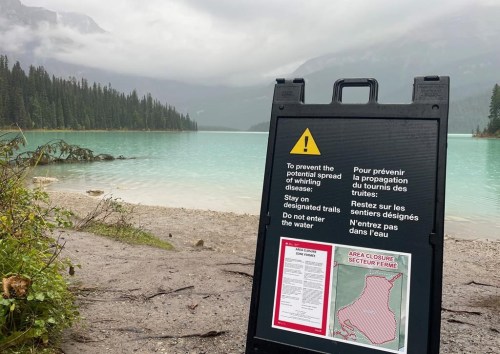
The first suspected case of whirling disease in British Columbia was found in September in Emerald Lake, in Yoho National Park, prompting the closure of the lake and other nearby waterways.
Francois Masse, Parks Canada’s field unit superintendent for Lake Louise, Yoho and Kootenay national parks, said they later found “additional suspected cases” of the disease in the Kicking Horse River, Wapta Lake, Finn Creek, and Monarch Creek.
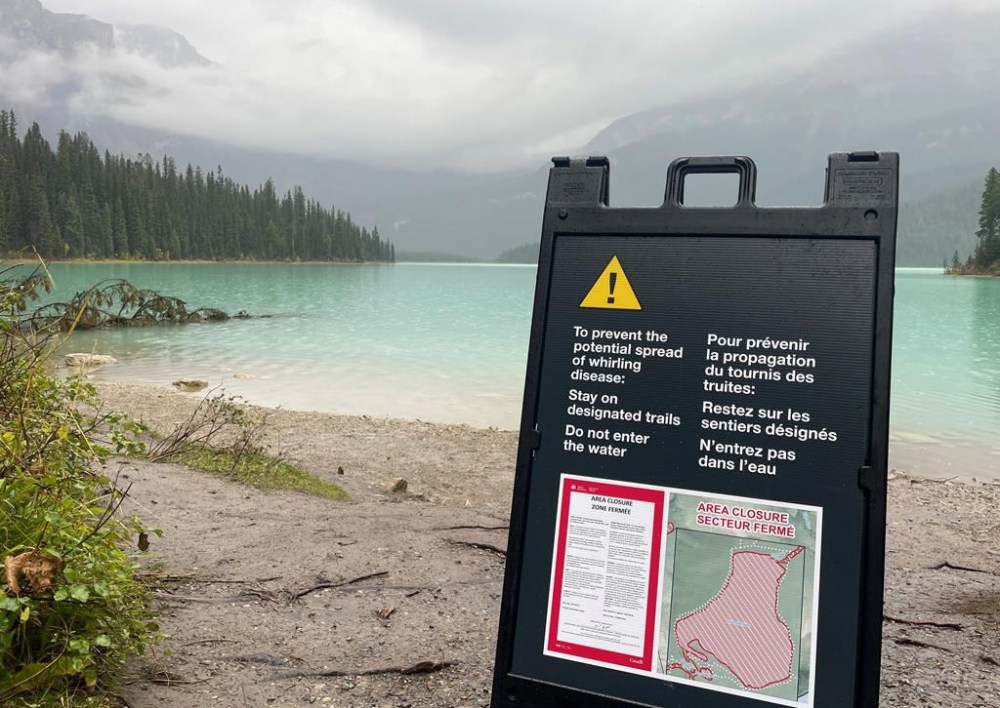
Parks Canada has closed all waterbodies in Yoho and Kootenay national parks until the end of March next year.
Whirling disease doesn’t pose a risk to humans, but can be deadly for trout, salmon and whitefish, causing spinal deformities and making fish swim in erratic circles.
Masse said at a news conference on Friday that the high mortality rate among infected fish necessitated the closures in the parks, where at-risk species include westslope cutthroat trout and Kokanee salmon.
“Aquatic invasive species, such as the parasite responsible for whirling disease, threaten freshwater ecosystems and native trout populations, harm infrastructure and reduce aquatic recreational opportunities,” Masse said.
“Once established, aquatic invasive species may never go away.”
Parks Canada spokeswoman Megan Goudie said recreational activities in the waterbodies were likely to blame for the disease being spread to Yoho and Kootenay parks.
Goudie said the parasite not only lives in fish but can also can thrive in water and mud.

“So, if you’re transporting those things on a paddleboard or canoe, angling equipment or gear, that is a very high risk,” said Goudie.
She said the disease is incredibly difficult to eradicate once spread in a watershed.
Parks Canada said it will work with other jurisdictions experienced in dealing with whirling disease to determine the next steps.
Masse said it’s still too early to say what specific measures might be needed, but the public should respect all closures.
This report by The Canadian Press was first published Oct. 27, 2023.