Small businesses still hoping for CEBA loan forgiveness extension as time runs out
Advertisement
Read this article for free:
or
Already have an account? Log in here »
To continue reading, please subscribe:

Digital Subscription
One year of digital access for only $205*
- Enjoy unlimited reading on winnipegfreepress.com
- Read the E-Edition, our digital replica newspaper
- Access News Break, our award-winning app
- Play interactive puzzles
*First annual payment billed as $205.00 + GST for one year. This annual subscription will automatically renew at $233.00 + GST every 52 weeks (10% off the regular annual price of $259.35). Offer available to new and qualified returning subscribers only. Cancel any time.
To continue reading, please subscribe:
Add Free Press access to your Brandon Sun subscription for only an additional
$1 for the first 4 weeks*
- Enjoy unlimited reading on winnipegfreepress.com
- Read the E-Edition, our digital replica newspaper
- Access News Break, our award-winning app
- Play interactive puzzles
*Your next Brandon Sun subscription payment will increase by $1.00 and you will be charged $17.95 plus GST for four weeks. After four weeks, your payment will increase to $24.95 plus GST every four weeks.
Read unlimited articles for free today:
or
Already have an account? Log in here »
Hey there, time traveller!
This article was published 07/11/2023 (1065 days ago), so information in it may no longer be current.
OTTAWA – As the deadline to repay pandemic loans and receive partial forgiveness approaches, small businesses are still hoping the federal government will reverse course and extend it for another year.
Nearly 900,000 organizations applied for and received a Canada Emergency Business Account loan during the COVID-19 pandemic. The federal program offered up to $60,000 in interest-free loans to help businesses and non-profits survive related shutdowns and slowdowns.
A total of $49.2 billion was disbursed through the program.
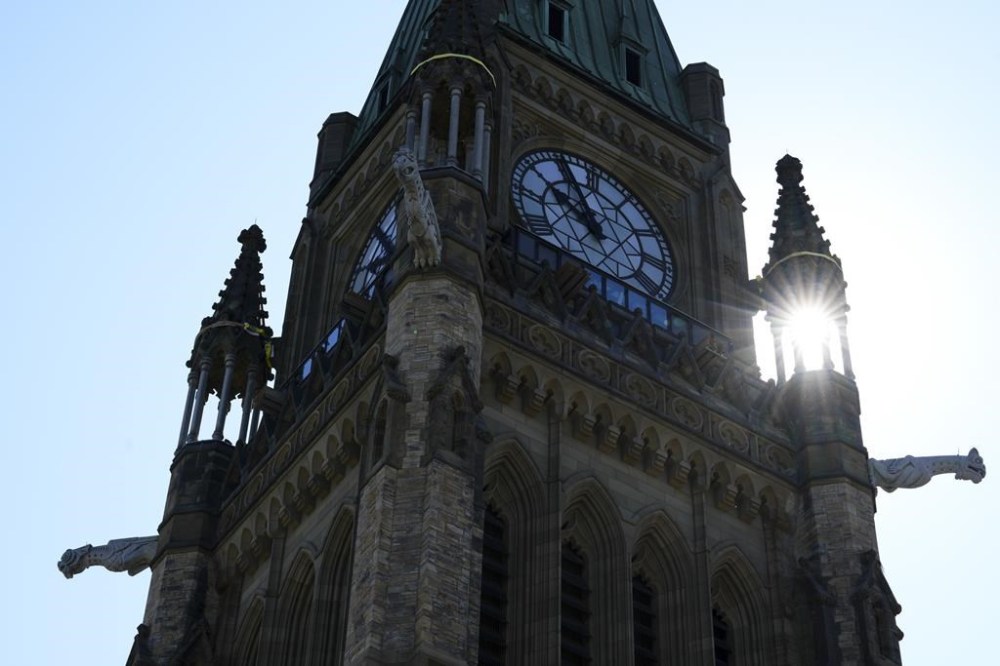
Up to one third of the loans can be forgiven if businesses pay back the outstanding amount by Jan. 18, 2024.
Those that miss that deadline would lose out on the forgivable portion and see their debts converted to a three-year loan with interest of five per cent annually.
Businesses were offered the chance to refinance their loans with a financial institution instead. Those that did were given until March 28, 2024, to get that in order and still be eligible for the forgivable portion of the loan.
Business groups have been calling for more time to pay back the loans, pointing to ongoing challenges facing small businesses after the pandemic.
But with just over two months until the deadline, the chances of another extension are dwindling.
“Federal support has been instrumental during the COVID-19 pandemic, yet many businesses are still grappling with rising costs, labour shortages and persistent operational issues,” Kate Fenske, chair of the International Downtown Association of Canada, said Monday at a news conference on Parliament Hill.
“Hence our immediate call is for an additional extension for the repayment of CEBA loans,” she said.
The federal government has already made several changes to the CEBA program in order to provide businesses recovering from the pandemic more flexibility.
Last year, it extended the deadline to repay the loans for an additional year to Dec. 31, 2023.
Then in September, Prime Minister Justin Trudeau announced the deadline to be eligible for CEBA loan forgiveness would be pushed another few weeks to alleviate pressure during the holiday season.
The government also extended the deadline to pay the loans back, without forgiveness, an additional year to the end of 2026.
The federal government made these extensions despite being warned by Export Development Canada of the administrative burden involved.
The Canadian Press obtained a letter through an access-to-information request that shows Mairead Lavery, the CEO and president of the federal agency, warned top public servants of these challenges earlier this year.
“CEBA is a unique offering, structured as a repayable loan program. As such, it is a complicated process to build and implement forgiveness extensions,” Lavery wrote March 29 to Michael Sabia, who was then deputy finance minister, and Rob Stewart, deputy minister of international trade.
A spokeswoman for Finance Minister Chrystia Freeland stressed that the federal government has been flexible.
“The bottom line is that, if you are a small business and do not currently have the funds to repay your CEBA loan, you now have three years to repay it in full,” her press secretary, Katherine Cuplinskas, wrote in an email.
“The additional flexibility that we announced is significant support for small businesses who might still be struggling to make ends meet.”
Cuplinskas said about one-fifth of businesses have already paid back their loans.
The Canadian Federation of Independent Business, which represents around 100,000 businesses across the country, has been a vocal group on the issue of CEBA loans.
Its president, Dan Kelly, said the consequences of not giving another extension could be dire for the survival of some small businesses.
“I really worry that if government pushes too hard and keeps to its current CEBA deadline, there will be many businesses, we estimate up to 250,000 small businesses that will fail, if they lose out on the forgivable portion of this loan,” Kelly said.
Mark Zelmer, a senior fellow at the C.D. Howe Institute, said it’s understandable that some businesses may still be facing challenges, particularly as the Canadian economy slows.
“But now, I think the environment is not so much pandemic-related per se, but subsequent issues that have popped up that are creating challenges for everybody,” Zelmer said. “Some of them are holdovers from the pandemic, but other events have taken place since then.”
The calls for an extension have garnered political support from all 13 premiers as well as the federal NDP, Bloc Québécois and Greens.
Last month, the premiers wrote a joint letter to Trudeau asking the federal government to give small businesses more time.
“We are urging your government to provide additional time to allow businesses to take advantage of the loan forgiveness option in addition to extending repayment of CEBA loans for another year. More time is needed to allow the hardest-hit small businesses to continue their recovery from not only the pandemic, but the cost shocks that came after,” the premiers wrote.
The federal Conservatives have not laid out a position on the CEBA loans and the calls for an extension, which Kelly called “deeply disappointing.”

While time is running out for action, Kelly said he’s hopeful that there’s still a chance the federal government might reverse course.
He pointed to the temporary, three-year pause from the carbon price for people who use home heating oil. Liberals in Atlantic Canada, where a disproportionate number of households still use home heating oil amid soaring costs, had been among those pushing for such a move.
“I wouldn’t have thought the government would have caved on the carbon tax on the home heating oil the way that they did, but they did,” said Kelly.
“But I do believe the fall economic statement would be one of the final windows in which government could announce further policy change.”
This report by The Canadian Press was first published Nov. 7, 2023.
Related Articles
Small businesses face ‘massive fallout’ as CEBA loan deadline looms


Advertisement Advertise With Us
Advertisement Advertise With Us
History
Updated on Tuesday, November 7, 2023 6:17 AM CST: Changes tile photo, adds photo