‘No backup plan’: Funding for HIV self-testing kits ending in March
Advertisement
Read this article for free:
or
Already have an account? Log in here »
To continue reading, please subscribe:

Digital Subscription
One year of digital access for only $205*
- Enjoy unlimited reading on winnipegfreepress.com
- Read the E-Edition, our digital replica newspaper
- Access News Break, our award-winning app
- Play interactive puzzles
*First annual payment billed as $205.00 + GST for one year. This annual subscription will automatically renew at $233.00 + GST every 52 weeks (10% off the regular annual price of $259.35). Offer available to new and qualified returning subscribers only. Cancel any time.
To continue reading, please subscribe:
Add Free Press access to your Brandon Sun subscription for only an additional
$1 for the first 4 weeks*
- Enjoy unlimited reading on winnipegfreepress.com
- Read the E-Edition, our digital replica newspaper
- Access News Break, our award-winning app
- Play interactive puzzles
*Your next Brandon Sun subscription payment will increase by $1.00 and you will be charged $17.95 plus GST for four weeks. After four weeks, your payment will increase to $24.95 plus GST every four weeks.
Read unlimited articles for free today:
or
Already have an account? Log in here »
Hey there, time traveller!
This article was published 19/02/2024 (941 days ago), so information in it may no longer be current.
Prossy Luzige often gets calls from people looking for HIV tests that they can do in the privacy of their own homes.
The program co-ordinator at CAYR Community Connections in Ontario says the take-home tests are crucial to connecting with people as Canada’s HIV infections climb.
But the groundbreaking initiative to provide the kits across Canada is in peril, as funding runs out at the end of March.
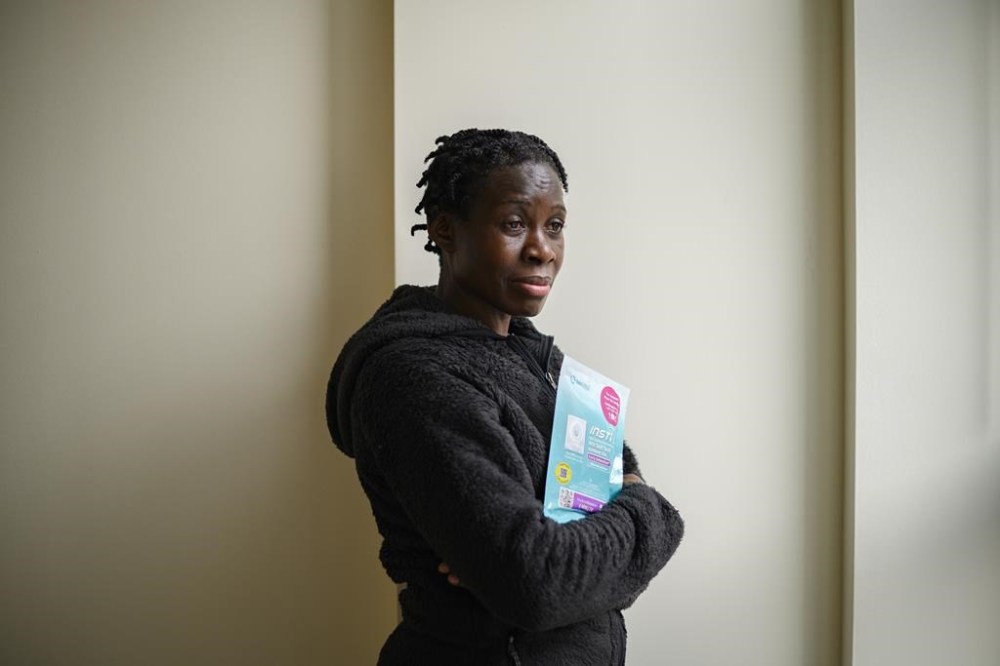
“What will happen after the funding ends?” Luzige asked. “What kind of answer are we going to give such community members?”
The federal government indicated it is looking to sunset the self-test program, said Sean Rourke, a scientist who was a principal investigator in a study that helped get the tests approved in Canada.
“There is no backup plan here,” he said.
Rourke is also a director with REACH Nexus at Canadian Institutes for Health Research and a scientist at St. Michael’s Hospital in Toronto. The hospital facilitates purchasing and distribution of most of the tests.
“This program has worked,” he said. “There’s no question.”
The test, called INSTI, uses a drop of blood to deliver results in about a minute. The program was to expand to include a test for both HIV and syphilis, which was approved by Health Canada last year.
Many front-line workers say the tests are game-changers in stopping the spike in new HIV diagnoses.
There were 1,833 new diagnoses in Canada in 2022,marking a nearly 25 per cent increase from the year before.
Montreal public health officials recorded 310 in 2022, a 120 per cent increase from the previous year, marking the highest number of new reported cases in a decade.
Thousands of other people across the country are estimated to be undiagnosed.
The first self-test was approved in Canada in 2020. Rourke was part of the program to provide the tests on a large scale beginning in November 2022. The initiative was lauded with Carolyn Bennett, the federal minister of mental health and addictions at the time, saying it would “reduce barriers that come with conventional testing methods.”
“Ensuring that everyone in Canada has access to testing and treatment options for infectious diseases like HIV is a top priority for the Government of Canada,” Bennett said in a 2022 news release, announcing a one-time investment of $8 million to purchase and distribute the tests.
An extra $8.6 million was provided to extend the program until the end of next month. No additional funds have been pledged.
“PHAC is continuing to explore options to make HIV self-test kits available to community-based organizations after March 31, 2024,” the Public Health Agency of Canada said in an emailed statement.
Rourke said it doesn’t make sense not to extend funding.
If somebody knows their status, they can live a normal life and won’t infect others, Rourke said. Testing is a key component to stopping the spread, but HIV is still marred by accessibility and stigma.
The self-testing kits can bridge that gap, he said, adding data shows they work.
More than 215,000 kits have been distributed to nearly 400 organizations across the country. There are also websites and information pamphlets for people to get support and health-care information.
Many people who have picked up the tests fill out an anonymous survey, which gives researchers important real-time insight, Rourke said.
Forty-five per cent of respondents said they were testing for the first time. The tests also reached Indigenous and other racialized people, as well as those who work in the sex industry or inject drugs.
One test costs about $35 online.Rourke said through a negotiated purchasing arrangement, it costs the program $10.
“Cost isn’t an issue. This program works. We have data showing that it’s effective. We have engagement,” Rourke said.
“Why not keep on funding it, right? There’s just no good reason not to.”
Concerned front-line workers from across the country have reached out to Rourke and his colleagues about the future of the program.
A girl who was too worried to be tested for HIV in a clinic returned later after learning about the self-testing option, wrote Ontario support worker Ana Kovacevic in an email to REACH.
Tieryn Steele with the Manitoba Harm Reduction Network said there are major issues around stigma and access to HIV testing in Flin Flon, a northern mining city on the boundary with Saskatchewan.
“People walked into my office, who would have never gone to the hospital to get tested, specifically for these kits,” Steel wrote to REACH.
Manitoba and Saskatchewan have the highest rates of new HIV diagnoses. Saskatchewan’s rate is more than four times higher than the national average.
Shiny Mary Varghese, executive director of AIDS Programs of South Saskatchewan, said the tests are especially useful for newcomers who may come from cultures where topics around sex and HIV are taboo.

Varghese said it’s critical that federal funding continues so people know they have HIV, get access to treatment and stop further transmission.
“It’s not a death sentence,” she said.
“As long as they are on treatment, they can have an optimal life.”
This report by The Canadian Press was first published Feb. 19, 2024.
Note to readers: This is a corrected story. A previous version said REACH Nexus at Canadian Institutes for Health Research facilitates purchasing and distribution of most of the tests.