Georgia teachers and state employees will get pay raises as state budget passes
Advertisement
Read this article for free:
or
Already have an account? Log in here »
To continue reading, please subscribe:

Digital Subscription
One year of digital access for only $205*
- Enjoy unlimited reading on winnipegfreepress.com
- Read the E-Edition, our digital replica newspaper
- Access News Break, our award-winning app
- Play interactive puzzles
*First annual payment billed as $205.00 + GST for one year. This annual subscription will automatically renew at $233.00 + GST every 52 weeks (10% off the regular annual price of $259.35). Offer available to new and qualified returning subscribers only. Cancel any time.
To continue reading, please subscribe:
Add Free Press access to your Brandon Sun subscription for only an additional
$1 for the first 4 weeks*
- Enjoy unlimited reading on winnipegfreepress.com
- Read the E-Edition, our digital replica newspaper
- Access News Break, our award-winning app
- Play interactive puzzles
*Your next Brandon Sun subscription payment will increase by $1.00 and you will be charged $17.95 plus GST for four weeks. After four weeks, your payment will increase to $24.95 plus GST every four weeks.
Read unlimited articles for free today:
or
Already have an account? Log in here »
Hey there, time traveller!
This article was published 28/03/2024 (920 days ago), so information in it may no longer be current.
ATLANTA (AP) — Pay raises for Georgia’s public school teachers and state employees were never in doubt politically from the moment Gov. Brian Kemp proposed them, but lawmakers finally clinched the deal on Thursday, passing a budget that also boosts spending on education, health care and mental health.
Senators and represenatives worked out their differences on House Bill 916, with it passing the House 175-1 and the Senate 54-1. The budget spends $36.1 billion in state money and $66.8 billion overall in the year beginning July 1.
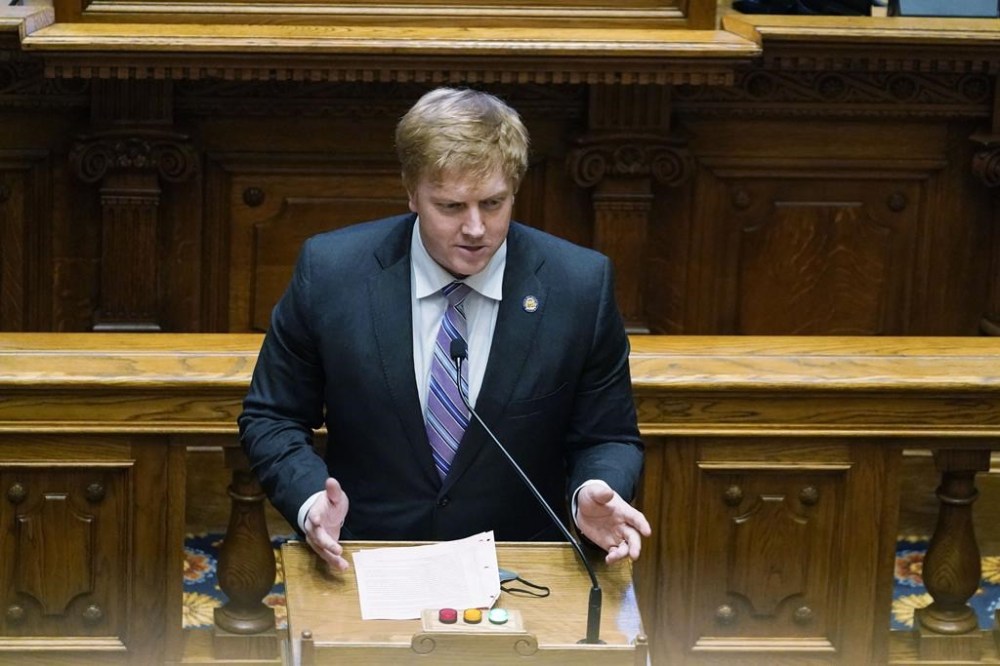
“As they say, don’t let the perfect be the enemy of the good,” said House Appropriations Committee Chairman Matt Hatchett, a Dublin Republican, explaining that not every request was satisfied, but many were.
Spending would fall from this year’s budget after Gov. Brian Kemp and lawmakers supplemented that budget will billions in one-time cash, boosting state spending to $38 billion in the year ending June 30. Kemp backed the budget in remarks to lawmakers Thursday and is expected to sign it.
Public school teachers would get a $2,500 raise starting July 1, boosting average teacher pay in Georgia above $65,000 annually, as the Republican governor proposed in January. That is in addition to a $1,000 bonus Kemp sent out in December. Prekindergarten teachers also would get a $2,500 raise.
State and university employees also would get a 4% pay increase, up to $70,000 in salary. The typical state employee makes $50,400.
Some employees would get more. State law enforcement officers would get an additional $3,000 bump, atop the $6,000 special boost they got last year. Child welfare workers also would receive extra $3,000 raises.
Judges, though, won’t get the big pay raises once proposed. Instead, they only will get the 4% other state employees will receive.
One big winner in the budget would be Georgia’s public prekindergarten program. Kemp on Wednesday declared lawmakers could spend an extra $48 million in lottery funds. Lawmakers put nearly all that money into the state’s Department of Early Care and Learning, a move that won plaudits from Senate Minority Leader Gloria Butler, a Stone Mountain Democrat.
“For most of my 30 years in the Senate, Democrats pushed for that funding,” Butler said. “Tonight my friends in the majority listened.”
The state would spend hundreds of millions of dollars more to increase what it pays to nursing homes, home health care providers, dialysis providers, physical and occupational therapists and some physicians, but lawmakers cut back some of those rate increases in their final document.
Lawmakers agreed on spending nearly $19 million more on domestic violence shelters and sexual assault response to offset big cuts in federal funding that some agencies face.
The budget also would raise the amount that local school boards have to pay for health insurance for non-certified employees such as custodians, cafeteria workers and secretaries.
Senate Appropriations Committee Chairman Blake Tillery, a Vidalia Republican, argued it was fair to speed up the phase-in of higher premiums because of other money the state is pumping into education, including boosting by $205 million the state’s share of buying and operating school buses and $104 million for school security. The Senate would add another $5 million for school security for developing school safety plans.
Lawmakers shifted another $60 million into new construction projects. Tillery said that was at Kemp’s behest, seeking not to commit so much money to new ongoing spending, in case revenues fall.
The state already plans to pay cash for new buildings and equipment in the upcoming budget, instead of borrowing as normal, reflecting billions in surplus cash Georgia has built up in recent years.