Jury: BNSF Railway contributed to 2 deaths in Montana town where asbestos sickened thousands

Advertisement

Advertise with us

HELENA, Mont. (AP) — A federal jury on Monday said BNSF Railway contributed to the deaths of two people who were exposed to asbestos decades ago when tainted mining material was shipped through a Montana town where thousands have been sickened.

Read this article for free:


or

Already have an account? Log in here »

To continue reading, please subscribe:

Subscribe and receive a limited-edition Free Press branded hat or tote.

Digital Subscription

One year of digital access for only $205*

  • Enjoy unlimited reading on winnipegfreepress.com
  • Read the E-Edition, our digital replica newspaper
  • Access News Break, our award-winning app
  • Play interactive puzzles

*First annual payment billed as $205.00 + GST for one year. This annual subscription will automatically renew at $233.00 + GST every 52 weeks (10% off the regular annual price of $259.35). Offer available to new and qualified returning subscribers only. Cancel any time.

To continue reading, please subscribe:

Add Free Press access to your Brandon Sun subscription for only an additional

$1 for the first 4 weeks*

  • Enjoy unlimited reading on winnipegfreepress.com
  • Read the E-Edition, our digital replica newspaper
  • Access News Break, our award-winning app
  • Play interactive puzzles
Start now

*Your next Brandon Sun subscription payment will increase by $1.00 and you will be charged $17.95 plus GST for four weeks. After four weeks, your payment will increase to $24.95 plus GST every four weeks.

Hey there, time traveller!
This article was published 22/04/2024 (897 days ago), so information in it may no longer be current.

HELENA, Mont. (AP) — A federal jury on Monday said BNSF Railway contributed to the deaths of two people who were exposed to asbestos decades ago when tainted mining material was shipped through a Montana town where thousands have been sickened.

The jury awarded $4 million each in compensatory damages to the estates of the two plaintiffs, who died in 2020. Jurors said asbestos-contaminated vermiculite that spilled in the rail yard in the town of Libby, Montana was a substantial factor in the plaintiffs’ illnesses and deaths.

Family members of the two victims hugged their attorneys after the verdict was announced. An attorney for the plaintiffs said the ruling brought some accountability, but one family member told The Associated Press that no amount of money would replace her lost sister.
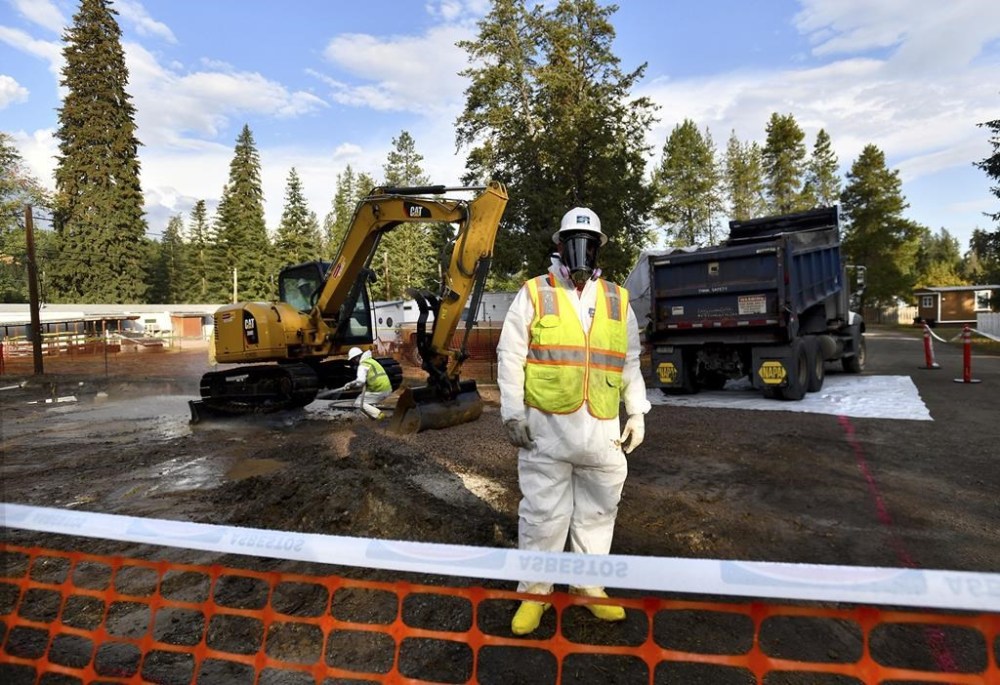
FILE - Environmental cleanup specialists work at one of the last remaining residential asbestos cleanup sites in Libby, Montana, in mid-September. BNSF Railway attorneys are expected to argue before jurors Friday, April 19, 2024, that the railroad should not be held liable for the lung cancer deaths of two former residents of the asbestos-contaminated Montana town, one of the deadliest sites in the federal Superfund pollution program. (Kurt Wilson/The Missoulian via AP, File)

“I’d rather have her than all the money in the world,” Judith Hemphill said of her sister, Joyce Walder.

The vermiculite from Libby has high concentrations of naturally-occurring asbestos and was used in insulation and for other commercial purposes in homes and businesses across the U.S.

After being mined from a mountaintop outside town, it was loaded onto rail cars that sometimes spilled the material in the Libby rail yard. Residents have described piles of vermiculite being stored in the yard and dust from the facility blowing through downtown Libby.

The jury did not find that BNSF acted intentionally or with indifference so no punitive damages were awarded. Warren Buffett’s Berkshire Hathaway Inc. acquired BNSF in 2010, two decades after the W.R. Grace & Co. vermiculite mine near Libby shut down and stopped shipping the contaminated mineral.

The estates of the two victims argued that the railroad knew the asbestos-tainted vermiculite was dangerous and failed to clean it up. Both lived near the rail yard decades ago and died from mesothelioma, a rare lung cancer linked to asbestos exposure.

The pollution in Libby has been cleaned up, largely at public expense. W.R. Grace, which played a central role in the town’s tragedy, filed for bankruptcy in 2001 and paid $1.8 billion into an asbestos trust fund to settle future cases.

Yet the long timeframe over which asbestos-related diseases develop means people previously exposed are likely to continue getting sick for years to come, health officials say.

The case in federal civil court over the two deaths was the first of numerous lawsuits against the Texas-based railroad corporation to reach trial over its past operations in Libby. Current and former residents of the small town near the U.S.-Canada border want BNSF held accountable, accusing it of playing a role in asbestos exposure that health officials say has killed several hundred people and sickened thousands.

“This is good news. This is the first community exposure case that will hold the railroad accountable for what they’ve done,” said Mark Lanier, an attorney for Walder and Hemphill’s estates.

The railroad was considering whether to appeal, said a BNSF spokesperson, who referred to it as a “very sad case.”

“They (the jury) had the difficult task of evaluating conduct that occurred more than 50 years ago, before BNSF ever existed,” said Kendall Sloan, the railroad’s director of external communications.

BNSF attorney Chad Knight told jurors last week the railroad’s employees didn’t know the vermiculite was filled with hazardous microscopic asbestos fibers.

“In the ‘50s, ’60s and ’70s no one in the public suspected there might be health concerns,” Knight said Friday.

The railroad’s experts also suggested during the trial that the plaintiffs could have been exposed to asbestos elsewhere.
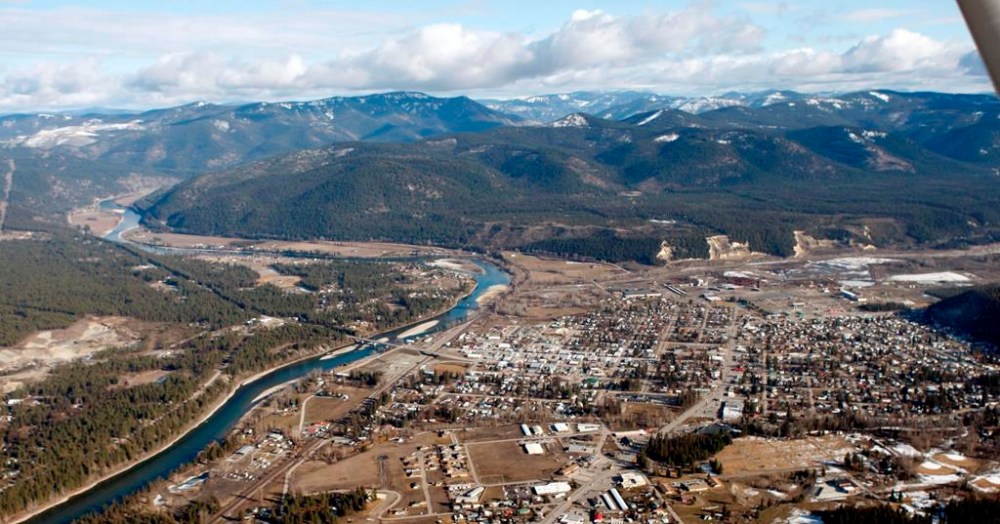
FILE - An aerial view of the town of Libby, Mont., Feb. 17, 2010. Libby, the town of 3,000 along the Kootenai River has emerged as one of deadliest Superfund pollution sites in the nation's history. A jury on Monday, April 22, 2024, sided with plaintiffs who said BNSF Railway contributed to the deaths of two people exposed to asbestos in Libby decades ago. (AP Photo/Rick Bowmer, File)

The railroad said it was obliged under law to ship the vermiculite, which was used in insulation and for other commercial purposes, and that W.R. Grace employees had concealed the health hazards from the railroad.

U.S. District Judge Brian Morris had instructed the jury it could only find the railroad negligent based on its actions in the Libby Railyard, not for hauling the vermiculite.

Former Libby resident Bill Johnston, who followed the trial, said he was glad the victims’ estates got a substantial award.

Johnston, 67, recalled playing in piles of vermiculite at the rail yard as a child and helping his father add piles of the material to their home garden, where it was used as a soil amendment. He, his two siblings and their parents have all been diagnosed with asbestos-related diseases, Johnston said Monday.

“They didn’t do anything intentionally to cause this harm to their body. Other people knew about it and didn’t care,” he said of Libby asbestos victims. “What’s that worth? It’s hard to put a value on that. But when you say you’re going to die prematurely or the life you have left is going to be tethered to an oxygen bottle, there should be some value that makes their life easier in the end.”

BNSF was formed in 1995 from the merger of Burlington Northern railroad, which operated in Libby for decades, and the Santa Fe Pacific Corporation.

Looming over the proceedings was W.R. Grace, which operated the mountaintop vermiculite mine 7 miles (11 kilometers) outside of Libby until it closed in 1990. Morris referred to the chemical company as “the elephant in the room” during the BNSF trial and reminded jurors repeatedly that the case was about the railroad’s conduct, not W.R. Grace’s separate liability.

Federal prosecutors in 2005 indicted W. R. Grace and executives from the company on criminal charges over the contamination in Libby. A jury acquitted them following a 2009 trial.

The Environmental Protection Agency descended on Libby after 1999 news reports of illnesses and deaths among mine workers and their families. In 2009 the agency declared in Libby the nation’s first ever public health emergency under the federal Superfund cleanup program.

A second trial against the railroad over the death of a Libby resident is scheduled for May in federal court in Missoula.


Report Error Submit a Tip

More Stories

MPI lowers speed limit on tech upgrade with ‘IT roadmap’ following Project Nova debacle

Carol Sanders 5 minute read Preview

MPI lowers speed limit on tech upgrade with ‘IT roadmap’ following Project Nova debacle

Carol Sanders 5 minute read Updated: Yesterday at 9:44 PM CDT

Manitoba Public Insurance is now using an “IT road map” and phasing in new technology and systems after pulling the plug last year on its failed $164-million overhaul known as Project Nova, its annual report says.

Read
Updated: Yesterday at 9:44 PM CDT

Botched execution revives death penalty debate

Arthur Chapman 5 minute read 2:00 AM CDT

The United States of America’s seemingly endless, often futile, search for the painless, bloodless method of executing prisoners continues. The latest horrifying chapter occurred in Tennessee on Sept. 30, when the state tried to kill convicted murderer Christa Pike by lethal injection.

It didn’t work. Pike survived two dosages of pentobarbital. She was rushed to a hospital where, according to her lawyer, she was receiving “lifesaving care”.

Tennessee governor Bill Lee has cancelled upcoming executions, but he isn’t moving away from capital punishment.

Lee said, as quoted in the New York Times: “The people of Tennessee have determined that capital punishment is the appropriate sentence for the most heinous of crimes. The people of Tennessee expect those sentences to be carried out in a manner that’s not only legal and constitutional but effective, and that didn’t happen.”

Morning-show veteran swaps microphone for macchiatos at new Corydon café

David Sanderson 9 minute read Preview

Morning-show veteran swaps microphone for macchiatos at new Corydon café

David Sanderson 9 minute read Saturday, Oct. 3, 2026

Good news if you were used to having your morning coffee with Terri Gale, who earlier this summer signed off from CTV Your Morning, after 15 years on the job.

Gale, the three-hour program’s longtime weather expert, and her husband Rob Gale, the ex-head soccer coach of Valour FC and co-founder of the Northern Super League’s new Winnipeg franchise, are the owners of Golden Hour Café and Bar at 775 Corydon Ave.

Gale (formerly Apostle) nods when she is asked who would know more about caffeinated beverages than a person who, for the last decade and a half, set her alarm to go off in the wee small hours.

“I do love coffee and take mine black. Except because I hate burning my tongue — not a good thing when you speak for a living — I got into the habit of throwing a couple of ice cubes in my cup, to be on the safe side,” Gale says, seated on the second level of their attractive, 2,100-square-foot premises, which officially opened in mid-September.

Read
Saturday, Oct. 3, 2026

Puzzles Palace

1 minute read Monday, Jul. 27, 2026

To solve our puzzles, please subscribe with this special offer: |

13 guns seized from West St. Paul homes

1 minute read Yesterday at 12:28 PM CDT

Two men have been charged with a number of firearms offences after an RCMP investigation into illegal weapons in West St. Paul yielded the seizure of more than a dozen firearms last month.

RCMP investigators from the Manitoba Integrated Law Enforcement Team, which probes organized and serious crime in the province, began looking into the two suspects on a tip from the Canada Border Services Agency.

Officers obtained warrants to search two homes, one on Pipeline Road and the other on Griffin Way, on Sept. 11.

Between the two houses, Mounties found 13 guns, including two that were sawed off, about 20,000 rounds of ammunition and several high-capacity magazines that had been altered to hold more ammunition than is legally allowed.

Real journalists matter in an AI world

Paul Deegan 4 minute read Preview

Real journalists matter in an AI world

Paul Deegan 4 minute read 2:00 AM CDT

An algorithm can decide what you see, but it doesn’t report the news. Nunatsiaq News, an award-winning newspaper in Nunavut, recently reported that a so-called “news” website was posting AI-generated articles about the north by stealing real news stories produced by real journalists.

The articles were supposedly written by Nunavut correspondent Leah Qammaniq — a fake journalist, with a fake photo and a fake bio.

Governor General Louise Arbour warned us of fake news in her installation speech in June. She said, “We must continue to protect the public space in which our national debates take place: from schools and universities to the media, political parties, unions and civil society organizations …With instant access to vast amounts of information, it is very tempting to pay little attention to the reliability of sources. The lines between knowledge and belief, between truth and falsehood, between facts and assumptions, are increasingly blurred. AI could be threatening not only the way we live and work, but also the control we exercise over our own destiny.”

The Government of Canada has recognized the problem as well. Its recent discussion paper, Enhancing trust in artificial intelligence through increased transparency, stated, “Canadians encounter news reporting, product reviews, and audio-visual content across the internet, often without any indication of whether it was written by a person, generated by an AI system, or produced through some combination of both … A particular concern within this broader landscape is that generative AI greatly enables the creation and dissemination of deceptive or misleading content.”

Read
2:00 AM CDT