Saks says drug criminalization decision ‘urgent’, B.C. says feds have all they need
Advertisement
Read this article for free:
or
Already have an account? Log in here »
To continue reading, please subscribe:

Digital Subscription
One year of digital access for only $205*
- Enjoy unlimited reading on winnipegfreepress.com
- Read the E-Edition, our digital replica newspaper
- Access News Break, our award-winning app
- Play interactive puzzles
*First annual payment billed as $205.00 + GST for one year. This annual subscription will automatically renew at $233.00 + GST every 52 weeks (10% off the regular annual price of $259.35). Offer available to new and qualified returning subscribers only. Cancel any time.
To continue reading, please subscribe:
Add Free Press access to your Brandon Sun subscription for only an additional
$1 for the first 4 weeks*
- Enjoy unlimited reading on winnipegfreepress.com
- Read the E-Edition, our digital replica newspaper
- Access News Break, our award-winning app
- Play interactive puzzles
*Your next Brandon Sun subscription payment will increase by $1.00 and you will be charged $17.95 plus GST for four weeks. After four weeks, your payment will increase to $24.95 plus GST every four weeks.
Read unlimited articles for free today:
or
Already have an account? Log in here »
Hey there, time traveller!
This article was published 01/05/2024 (870 days ago), so information in it may no longer be current.
OTTAWA – Addictions Minister Ya’ara Saks said she needs more information before prohibiting public use of illicit drugs again in British Columbia, but the province says she already has everything she needs.
The B.C. government asked Health Canada to amend an exemption that decriminalized hard drugs in that province to make public drug use illegal once again.
Saks told reporters in Ottawa Wednesday the decision needed to be made urgently but she needed more from the province.
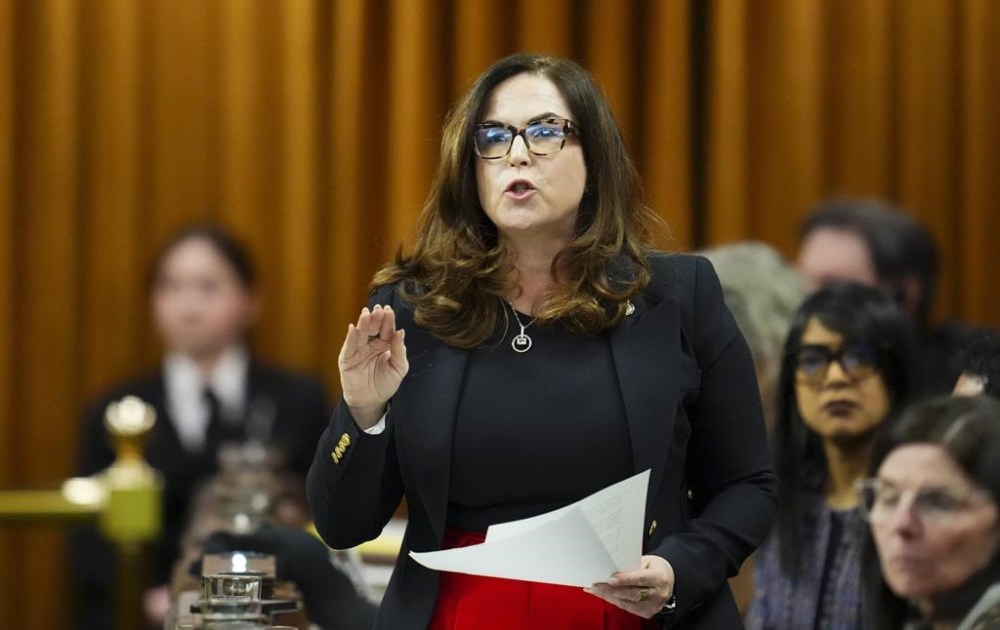
“We’ve asked B.C. for updates and more information on what they’ve submitted to us,” Saks said on her way into a Liberal caucus meeting Wednesday.
“We understand that this is urgent, which is why we’ve asked them to respond to us on an urgent basis so that we can address this.”
Saks would not say what information she had requested, and her office did not immediately respond to a request for details.
B.C. Health Minister Adrian Dix, however, said it was hard for him to imagine that federal action was waiting on more information from the province, with both Saks and Prime Minister Justin Trudeau having been briefed.
A statement from B.C.’s Ministry of Mental Health and Addictions said the province had received a request for more information on Wednesday morning and it had already responded with additional data on substance use along with possible guidance for police.
“We will continue to work quickly with the federal government so these changes can be enacted as soon as possible, so police can have the tools they need to address drug use in public spaces,” the statement said.
The province is more than a year into a three-year pilot project to decriminalize possession of small amounts of certain illegal drugs, including heroin, fentanyl, cocaine and methamphetamine. A Health Canada exemption was issued to allow the pilot to proceed.
The request made last week by Premier David Eby, asked for the exemption to be amended to recriminalize the use of those drugs in public spaces, such as hospitals and parks, following concerns from police and health-workers and a backlash from the public.
Possession in private spaces and certain other locations would still be covered by the decriminalization program.
Dix said Wednesday that Eby had already spoken with Trudeau, and Saks has consulted with B.C. Addictions Minister Jennifer Whiteside.Eby said last week that the federal government was “fully expecting” its request, as the province had been talking to Health Canada and its federal counterparts “for a little bit now.”
Dix did not say what information had been requested, but noted their federal counterparts “had been kept in the loop.”
“We want them to act because we’re taking all of the steps necessary here,” Dix said at an unrelated news conference.
“It’s hard for me to imagine that them not acting would be based on not having information because, frankly, we’re providing them all of the information we have to ensure that this happens quickly and expeditiously.”
The Canadian Press obtained a letter sent from Whiteside to Saks dated April 26 formally requesting the amendment.
“Treating addiction as a health issue and not a criminal justice one is critical to ensuring that people feel safe coming forward for help in the context of the ongoing public health emergency that is claiming so many lives in our province and across the country. At the same time, our communities have to be safe and welcoming for everyone,” the three-page letter said.
“We are committed to working collaboratively with Health Canada to update B.C.’s (section) 56 exemption in an expedited manner, and thank you in advance for your co-operation,” the letter said, referring to the Controlled Drugs and Substances Act.
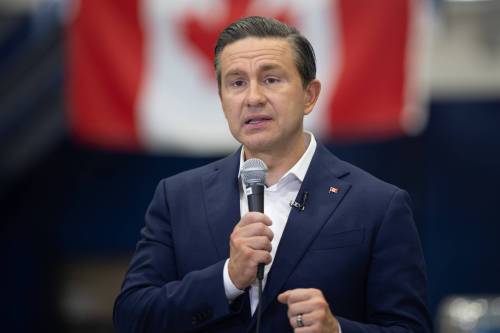
Eby’s request has become a major focus of the opposition Conservatives this week, and Leader Pierre Poilievre has asked the government to immediately recriminalize drugs in public spaces in B.C.
Brad Vis, a B.C. Conservative MP, told reporters on Parliament Hill that Saks was out of touch about the realities of public drug use and decriminalization in B.C.
“This is out of control. You talk to any British Columbian and they can’t take much more.”
Provincial Opposition party BC United said in a statement that Leader Kevin Falcon had introduced legislation Wednesday that seeks to dismantle NDP government’s drug decriminalization policy. The bill passed its first reading in the B.C. legislature, the party said.
Poilievre also posted a letter to X Wednesday asking that Trudeau reject Toronto’s own long-standing request to extend the decriminalization pilot.
“If you allow Toronto to legalize hard drugs, as you did with British Columbia, the only outcome will be leaving the most vulnerable Canadians to a life of misery and despair,” Poilievre said in the letter.
Trudeau said during question period that Poilievre was “fearmongering,” noting that Vancouver had asked for a similar decriminalization program, but his government only works with provinces and public health systems.
He said they would work with the provincial governments in place on proposals that they have to deal with the opioid epidemic.
Toronto Public Health said in a statement Monday that it is monitoring B.C’s experience, and that in its proposed model, public drug use would remain illegal.

Ontario Premier Doug Ford repeated his call Monday for Toronto to drop that application.
Toronto’s medical officer of health released a statement Wednesday reaffirming a commitment to decriminalization, in light of B.C.’s latest move.
But Dr. Eileen de Villa said that “lighting up a crack pipe on a playground or injecting drugs on the subway is not acceptable and should not be allowed.”
— With files from Stephanie Taylor in Ottawa and Brieanna Charlebois in Vancouver
This report by The Canadian Press was first published May 1, 2024.
Related Articles
Put perfect policy aside, NDP must act now on drug crisis
Advertisement Advertise With Us
Advertisement Advertise With Us