Patients going without care due to nursing shortage in Manitoba First Nation

Advertisement

Advertise with us

OTTAWA - The chief of a First Nation in northern Manitoba says its nursing station is operating at half-capacity, and as a result members are going without the care they need.

Read this article for free:


or

Already have an account? Log in here »

To continue reading, please subscribe:

Subscribe and receive a limited-edition Free Press branded hat or tote.

Digital Subscription

One year of digital access for only $205*

  • Enjoy unlimited reading on winnipegfreepress.com
  • Read the E-Edition, our digital replica newspaper
  • Access News Break, our award-winning app
  • Play interactive puzzles

*First annual payment billed as $205.00 + GST for one year. This annual subscription will automatically renew at $233.00 + GST every 52 weeks (10% off the regular annual price of $259.35). Offer available to new and qualified returning subscribers only. Cancel any time.

To continue reading, please subscribe:

Add Free Press access to your Brandon Sun subscription for only an additional

$1 for the first 4 weeks*

  • Enjoy unlimited reading on winnipegfreepress.com
  • Read the E-Edition, our digital replica newspaper
  • Access News Break, our award-winning app
  • Play interactive puzzles
Start now

*Your next Brandon Sun subscription payment will increase by $1.00 and you will be charged $17.95 plus GST for four weeks. After four weeks, your payment will increase to $24.95 plus GST every four weeks.

Hey there, time traveller!
This article was published 14/06/2024 (851 days ago), so information in it may no longer be current.

OTTAWA – The chief of a First Nation in northern Manitoba says its nursing station is operating at half-capacity, and as a result members are going without the care they need.

“Health care is supposed to be universal — it’s supposed to be comprehensive, accessible, affordable and properly funded,” said Chief David Monias of Pimicikamak Cree Nation.

“None of those principles are being applied.”
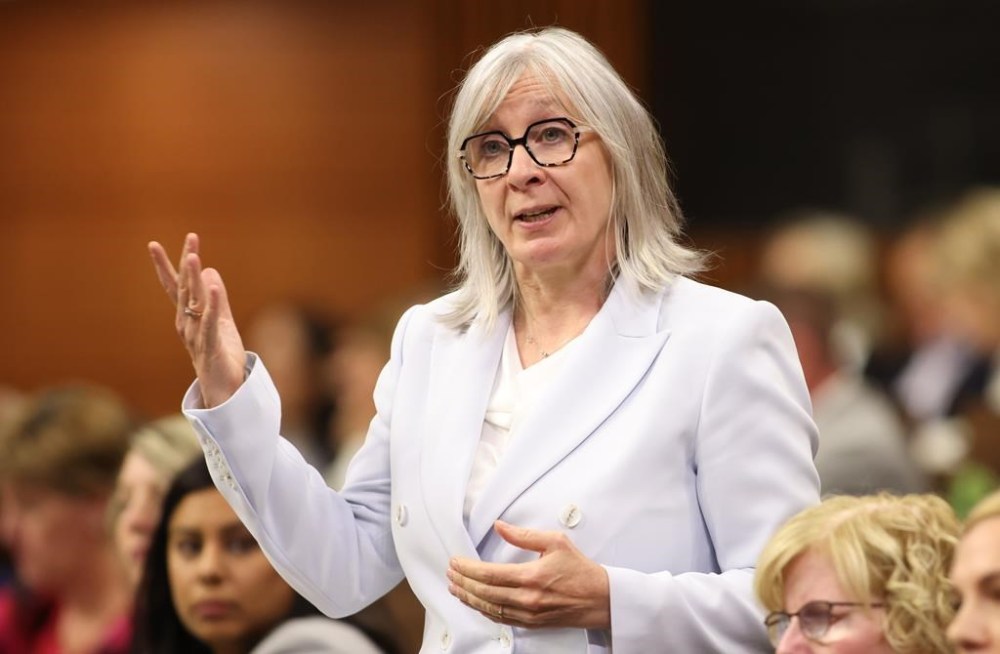
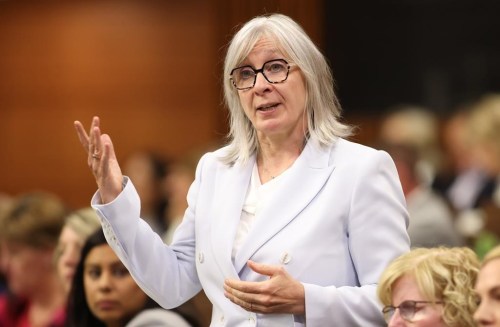
Minister of Indigenous Services Patty Hajdu rises during Question Period in the House of Commons on Parliament Hill in Ottawa on Thursday, June 13, 2024. A First Nation in northern Manitoba says its nursing station is operating at half-capacity, and as a result members are going without the care they need. THE CANADIAN PRESS/ Patrick Doyle

His community is supposed to have 13 or 14 nurses available, but most days there are only five or six, he said.

Because there’s not enough staff, those nurses are mainly handling emergency situations while patients with diseases like diabetes and hypertension are left without necessary routine care.

And when such ailments become dire, patients are being flown to Winnipeg, because the station isn’t equipped to handle acute issues.

The situation became so untenable earlier this year that they had to declare a state of emergency.

“We have people with brain tumours that were not diagnosed,” said Monias. “It’s not until they get sent out to Winnipeg that they find there is something wrong with them.”

When the federal government hires nurses to work in the First Nation, they don’t always stay because their roles are meant to be transferable to several different communities depending on need.

Some people have quit altogether because they burned out due to overwork, he said.

Government data show that nursing stations in remote First Nations communities in Manitoba were facing a 67 per cent operational vacancy in the last fiscal year.

Others in Ontario are not much better off, according to numbers tabled in the House of Commons last month in response to an NDP MP’s written question.

The document says that over the 2023-24 fiscal year, all Indigenous Services Canada-operated nursing stations in Manitoba have run at a reduced capacity due to staffing shortages.

Indigenous Services employs nurses in 50 remote or isolated nursing stations in Alberta, Manitoba, Ontario and Quebec.

“To avoid closures and maintain essential emergency services (in Manitoba), the region has had to triage and relocate registered nurses, licensed practical nurses, paramedics and other allied professionals,” the document says.

Indigenous Services Minister Patty Hajdu said her department is trying to increase the volume of applicants in remote communities, and noted the nursing shortage is being felt countrywide.

“We kind of have to do the short-term fix with trying to lure more nurses to remote communities, but also keep focused on that longer-term capacity-building for First Nations so they have the ongoing commitment of people who want to stay in that community,” said Hajdu.

Monias said his community is interested in taking control of its nursing station, but does not want to be responsible for a system they didn’t break.

“It would be nice to have our own local hiring authority to be able to hire these people, and they can work for us so they don’t get sent out anywhere else,” he said.

“But we know that once you do that, once you accept (the responsibility for health care), it’s hard to turn the ship around because it’s so big.”

The federal government recently released job postings for nurses in remote First Nations communities in Manitoba, Alberta and Ontario.

The posting for Manitoba says those hired will be flown from St. Andrews to a number of First Nations on rotations.

Nurses can be paid up to $6,750 as a recruitment allowance after their first month working, and up to $16,500 as a retention allowance in their second year on top of their base annual salary.

“The department is doing what it can do,” said Hajdu, but the solution to the crisis will come when First Nations have local capacity to hire nurses from their own communities.

With that, the labour pool will be stronger because they won’t need to lure more nurses to remote communities, she said.

This report by The Canadian Press was first published June 14, 2024.

Report Error Submit a Tip

More Stories

‘People count on this place’: Pembina Hwy. Giant Tiger latest location slated to close

By Matthew Frank 3 minute read Preview

‘People count on this place’: Pembina Hwy. Giant Tiger latest location slated to close

By Matthew Frank 3 minute read Yesterday at 4:34 PM CDT

Another Giant Tiger store in Winnipeg will shutter next year, leaving some area residents concerned about a lack of affordable groceries in the neighbourhood.

Red papers taped to the front doors of the Canadian retail chain’s location at Pembina Highway and Southpark Drive indicate it will close Feb. 27.

Doreen Yanchuk, a self-described bargain hunter, shook her head when she saw the signs Monday. The 67-year-old said she’s a regular customer at the location because it’s a five-minute drive from her home.

“They have very good sales here, which draws people to the shop because everything is expensive,” Yanchuk said.

Read
Yesterday at 4:34 PM CDT

Today’s horoscope

Georgia Nicols 4 minute read Preview

Today’s horoscope

Georgia Nicols 4 minute read Sunday, Oct. 11, 2026

MOON ALERT: Avoid shopping (except food and gas) and important decisions until after 10:45 a.m. After that, the moon moves from Libra into Scorpio.

ARIES (March 21-April 19)

You have a choice. You can either get embroiled in disputes about shared property, debt, insurance issues or inheritances; or instead, relax and have a playful day featuring sporting events, social outings and fun activities with kids.

TAURUS (April 20-May 20)

Read
Sunday, Oct. 11, 2026

Riding the Unity Bus to rally support for Canada in Alberta

Melissa Martin 8 minute read Preview

Riding the Unity Bus to rally support for Canada in Alberta

Melissa Martin 8 minute read Updated: Yesterday at 9:57 PM CDT

WAINWRIGHT, Alta. — The Unity Bus arrives right on time, pulling into a parking lot on the edge of this town of about 6,600 people close to the Alberta-Saskatchewan border. As the vehicle slows to a halt, resplendent in its patriotic red-and-white paint, a small group of supporters stand waiting, decked in their own maple leaf garb.

The Unity Bus’s doors open and former Alberta deputy premier Thomas Lukaszuk bounds to the ground. The supporters, volunteers with Lukaszuk’s Forever Canadian campaign, welcome him with applause; he greets them with open arms. He knows many by name, having been to Wainwright four times; some of them fondly call him “the boss.”

“Do you need some stickers?” he asks. “Do you need some swag to give away?”

It’s a chilly Thanksgiving Monday morning on the eastern edge of Alberta. A sharp wind nips at exposed skin and drab grey clouds hang low in the sky. Such weather does not encourage high spirits, but Lukaszuk and these volunteers can’t afford to let theirs falter: in just one week, on Oct. 19, Albertans will vote on a historic question on whether to remain in Canada.

Read
Updated: Yesterday at 9:57 PM CDT

Patients going without care due to nursing shortage in Manitoba First Nation

Alessia Passafiume, The Canadian Press 4 minute read Preview

Patients going without care due to nursing shortage in Manitoba First Nation

Alessia Passafiume, The Canadian Press 4 minute read Friday, Jun. 14, 2024

OTTAWA - The chief of a First Nation in northern Manitoba says its nursing station is operating at half-capacity, and as a result members are going without the care they need.

"Health care is supposed to be universal — it's supposed to be comprehensive, accessible, affordable and properly funded," said Chief David Monias of Pimicikamak Cree Nation.

"None of those principles are being applied."

His community is supposed to have 13 or 14 nurses available, but most days there are only five or six, he said.

Read
Friday, Jun. 14, 2024

Woman accused of pulling handgun on taxi driver

1 minute read Yesterday at 10:39 AM CDT

A 45-year-old woman accused of pulling a handgun on a Winnipeg taxi driver is facing multiple firearms-related charges.

It happened Sunday afternoon, at about 2:30 p.m., near the intersection of Concordia Avenue and Louelda Street. Officers learned a woman got into a cab in the Munroe East neighbourhood and pulled out a handgun, asking the driver to take her to a specific location, the Winnipeg Police Service stated in a news release.

The taxi driver activated the taxi's emergency beacon, exited the vehicle, and contacted police.

The woman got into the driver's seat of the taxi, but the keys had been removed, and she fled on foot. A suspect was arrested shortly afterward in the 1000 block of Concordia Avenue. Police seized a .22-calibre handgun during the arrest.

Carney: Trump’s ‘energy ceasefire’ could ‘de-escalate’ war in Ukraine

Kyle Duggan, The Canadian Press 4 minute read Preview

Carney: Trump’s ‘energy ceasefire’ could ‘de-escalate’ war in Ukraine

Kyle Duggan, The Canadian Press 4 minute read Sunday, Oct. 11, 2026

OTTAWA - Mark Carney thanked U.S. President Donald Trump for “his leadership toward securing an energy ceasefire" between Ukraine and Russia, the Prime Minister's Office said on Sunday.

But on the same day, Carney also expressed to Ukraine's leader that Trump's new diesel supply agreement with Russia undermines Canada's efforts to end the war in Europe.

Trump posted on his Truth Social account on Sunday that Ukraine and Russia have agreed to an "energy ceasefire," but did not immediately offer any details.

Carney expressed “strong support for this agreement," according to a readout from the PMO that followed a conversation between the two leaders. And on his own social media account, Carney offered that Trump’s newly announced “energy ceasefire” could help wind down Russia’s war against Ukraine.

Read
Sunday, Oct. 11, 2026