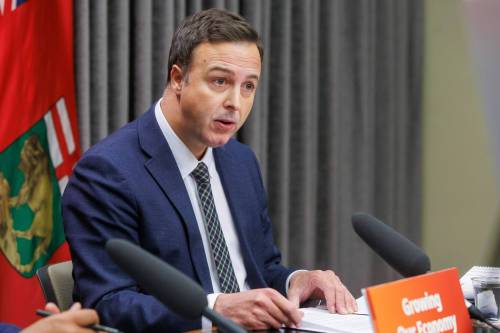
Canada’s premiers forced to confront escalating climate change-related disasters
Advertisement
Read this article for free:
or
Already have an account? Log in here »
To continue reading, please subscribe:

Digital Subscription
One year of digital access for only $205*
- Enjoy unlimited reading on winnipegfreepress.com
- Read the E-Edition, our digital replica newspaper
- Access News Break, our award-winning app
- Play interactive puzzles
*First annual payment billed as $205.00 + GST for one year. This annual subscription will automatically renew at $233.00 + GST every 52 weeks (10% off the regular annual price of $259.35). Offer available to new and qualified returning subscribers only. Cancel any time.
To continue reading, please subscribe:
Add Free Press access to your Brandon Sun subscription for only an additional
$1 for the first 4 weeks*
- Enjoy unlimited reading on winnipegfreepress.com
- Read the E-Edition, our digital replica newspaper
- Access News Break, our award-winning app
- Play interactive puzzles
*Your next Brandon Sun subscription payment will increase by $1.00 and you will be charged $17.95 plus GST for four weeks. After four weeks, your payment will increase to $24.95 plus GST every four weeks.
Read unlimited articles for free today:
or
Already have an account? Log in here »
Hey there, time traveller!
This article was published 25/07/2024 (789 days ago), so information in it may no longer be current.
HALIFAX – As Canada’s premiers reckoned with housing, health care and their contentious relationship with Ottawa during meetings last week in Halifax, many of them remained consumed by climate change-related natural disasters that have only escalated since they returned home.
“It’s not lost on us that emergency preparedness for natural disasters is more important than ever,” Nova Scotia Premier Tim Houston said in his closing remarks on the final day of the Council of the Federation conference.
Canada’s provincial and territorial premiers gathered for three days of meetings, and discussion of ongoing natural disasters was consistently on the agenda, Houston said. This summer has so far included multiple flash floods, including one this month in Nova Scotia that killed a 13-year-old boy, and wildfires across the country that have resulted in destruction of property and the evacuation of thousands of residents.
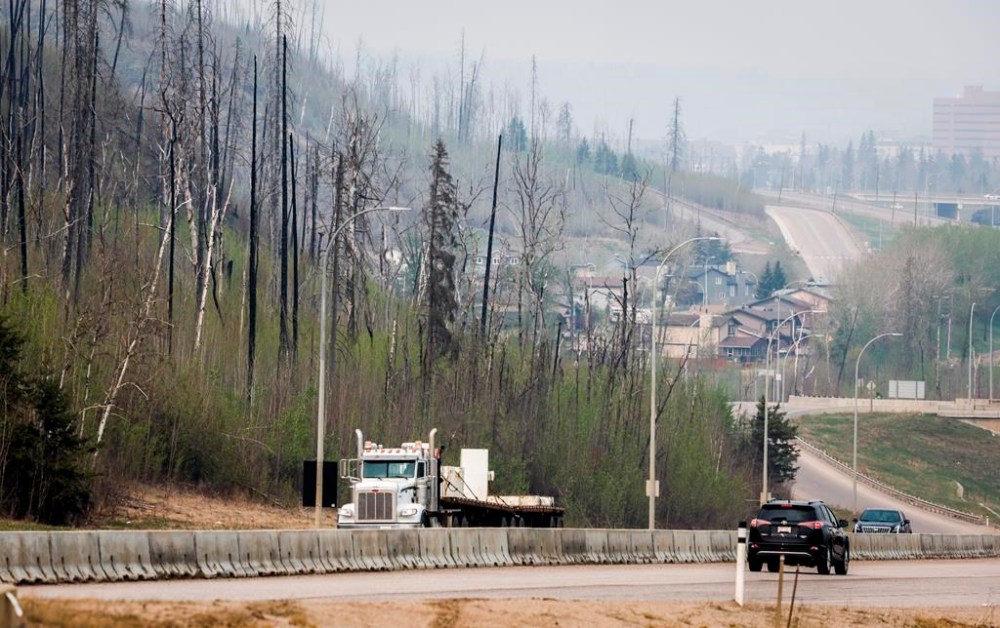
“There’s a number of premiers around the table today battling forest fires back home. Of course here in this province we had the tragic flash flooding death just last week,” the premier said on the second day of meetings. On July 11, Eli Young was swept into a ditch in a Wolfville, N.S., park during a flash flood that caused extensive damage across the western part of the province.
“So, of course, emergency preparedness discussions certainly take on additional meaning and importance at a time like this,” he said.
Blair Feltmate, director of the Intact Centre on Climate Adaptation at the University of Waterloo, says discussion is not enough. He said in an interview Wednesday that all levels of government need to treat escalating climate change-related natural disasters as the crisis they are and quickly enact mitigation strategies before things get worse.
Feltmate said there are natural disaster mitigation strategies that governments could implement. “The problem is, they are not rolling out known solutions quickly enough,” he said.
“This is a red alert type of situation. Not only is there an enormously high degree of risk, we’re realizing that risk is only going to increase. As bad as things are now with floods, the wildfires and the extreme heat events, it’s going to get worse. Climate change is irreversible,” he said.
Canada’s North, which has also faced recent wildfires, is suffering from a drought that has left water levels on the Mackenzie River so low barges can’t travel on it.
“We’re facing a situation right now, where climate change has resulted in the lowest water we’ve ever seen on the Mackenzie River — that’s essentially our highway,” Northwest Territories Premier R.J. Simpson said last week at the premiers conference.
Simpson called for federal support for communities that rely on Canada’s longest river for access to essential goods and food, and urgent funding to build the proposed Mackenzie Valley Highway to provide an alternative to river travel.
“We are now in a situation where people are essentially stranded, we need to fly in goods, which is going to double the cost the consumer is going to pay at the grocery store …. This is holding up construction of new infrastructure. It’s a serious issue we are facing,” the premier said.
Since last week’s meetings, many wildfires across Western Canada have substantially grown.
As of Wednesday, British Columbia had about 430 ongoing wildfires, with 107 of them having started within the previous 24 hours, and residents from about 470 properties had been forced to evacuate. About 20 buildings had been destroyed by the Shetland Creek wildfire, including at least six homes. Wildfire officials say 8,099 square kilometres of the province has burned since April 1.

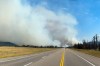
In Alberta, wildfire officials say an estimated 20,000 to 25,000 people have evacuated the community of Jasper since an order was issued Monday night. About 180 wildfires were burning across Alberta as of late Wednesday, and about one-third of them were considered out of control.
Feltmate said concrete steps for wildfire mitigation are included in the federal wildland fire prevention and mitigation strategy, which was released by Ottawa on June 5. This report recommends “proactive” fire prevention techniques like prescribed burnings, removing hazardous fire fuels like dry shrubs and grasslands and educating the public on how to limit human-caused wildfires.
The Intact Centre on Climate Adaptation has also released guides for individuals to mitigate risks from wildfires, extreme heat and floods. They include removing mulch and plants from right next to your home if you live in a wildfire-risk area, checking for leaks in plumbing, and using heat-resistant curtains and fans to cool your home during a heat wave. More costly recommendations include installing a sump pump, adding non-combustible screens to external vents and replacing wooden fencing near the house with wire or metal fence.
“The good news is we know where the problems reside, we know where the key areas are that are that present the greatest risk for flooding, wildfire and extreme heat,” Feltmate said. “Now we need to act with urgency.”
This report by The Canadian Press was first published July 25, 2024.
Related Articles
Fire continues to rage in Jasper, but officials say critical infrastructure intact


Advertisement Advertise With Us
Advertisement Advertise With Us