Contaminated drinking water is a growing concern for cities facing wildfires
Advertisement
Read this article for free:
or
Already have an account? Log in here »
To continue reading, please subscribe:

Digital Subscription
One year of digital access for only $205*
- Enjoy unlimited reading on winnipegfreepress.com
- Read the E-Edition, our digital replica newspaper
- Access News Break, our award-winning app
- Play interactive puzzles
*First annual payment billed as $205.00 + GST for one year. This annual subscription will automatically renew at $233.00 + GST every 52 weeks (10% off the regular annual price of $259.35). Offer available to new and qualified returning subscribers only. Cancel any time.
To continue reading, please subscribe:
Add Free Press access to your Brandon Sun subscription for only an additional
$1 for the first 4 weeks*
- Enjoy unlimited reading on winnipegfreepress.com
- Read the E-Edition, our digital replica newspaper
- Access News Break, our award-winning app
- Play interactive puzzles
*Your next Brandon Sun subscription payment will increase by $1.00 and you will be charged $17.95 plus GST for four weeks. After four weeks, your payment will increase to $24.95 plus GST every four weeks.
Read unlimited articles for free today:
or
Already have an account? Log in here »
Hey there, time traveller!
This article was published 14/01/2025 (628 days ago), so information in it may no longer be current.
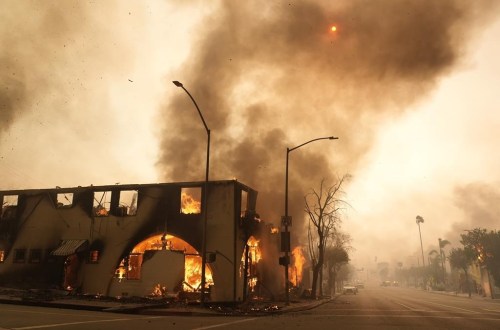
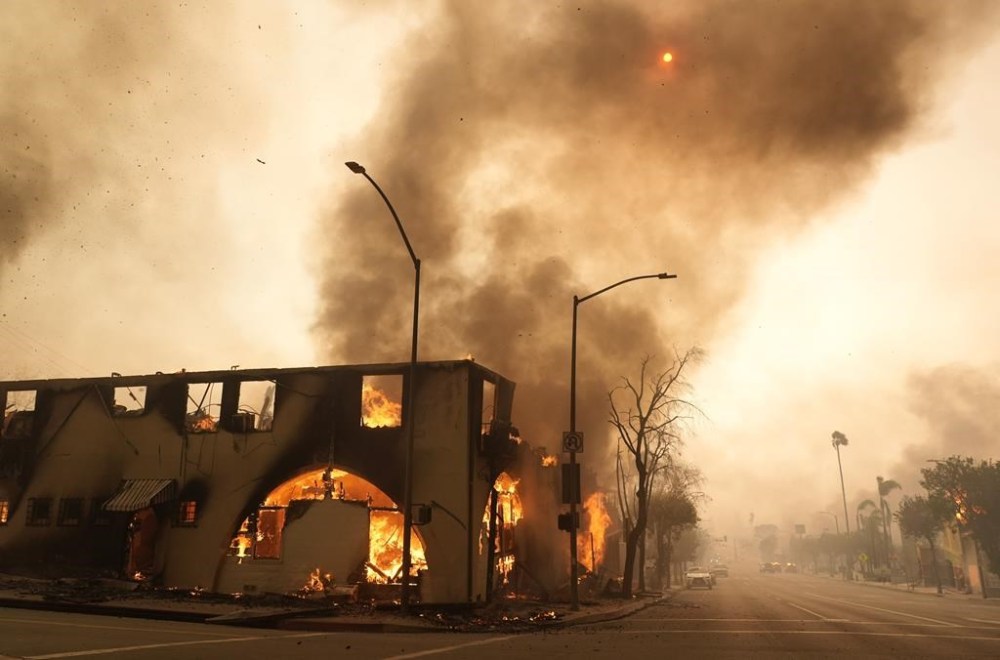
As fires continue to burn across Los Angeles, several utilities have declared their drinking water unsafe until extensive testing can prove otherwise.
A warmer, drier climate means wildfires are getting worse, and encroaching on cities — with devastating impact. Toxic chemicals from those burns can get into damaged drinking water systems, and even filtering or boiling won’t help, experts say.
Last week, Pasadena Water and Power issued a “Do Not Drink” notice to about a third of its customers for the first time since it began distributing water more than a century ago. With at least one burned pump, several damaged storage tanks, and burned homes, they knew there was a chance toxic chemicals had entered their pipes.
“Out of the abundance of caution, you kind of have to assume the worst,” said Stacie Takeguchi, chief assistant general manager for the utility.
This week, they lifted the notice for most of the area after testing.
Why urban fires are a risk to drinking water
When large fires burn in towns and cities, rather than forests and grasslands, infrastructure can be heavily damaged. When drinking water systems are damaged in a fire, “we can have ash, smoke, soot, other debris and gases get sucked into the water piping network,” said Andrew Whelton, a Purdue University engineering professor who researches water contamination in communities hit by fire.
Those elements can be particularly toxic because chemically engineered synthetics in building materials and households are heating, burning and releasing particles and gases, he said. Some of those chemicals are harmful even at low concentrations, experts say.
How chemicals get into the pipes
Water systems typically are under enough internal pressure to keep harmful elements out. But that critical pressure can be lost in many ways during a fire, which means toxins can get in.
There’s normal demand on the water system from people who didn’t need to evacuate. Firefighters use a lot of water. Pipes in burned buildings can be damaged, spewing water.
Power loss can also cause pressure loss when pumps stop working, said Greg Pierce, professor of urban environmental policy at the University of California. This happened during the 2023 Maui fires.
“It’s really hard, if not impossible, to keep up the power supply to the whole water system in the event of a fire, because you’re either shutting off the power, because power can contribute to the fire, or it just goes out,” Pierce said. “And then you’re relying on generators at best in spots.”
The loss of pressure can affect not only water quality but also water availability for firefighting. Hydrants ran dry in the Pacific Palisades neighborhood as surrounding homes burned. The utility says it was from high demand and the pumps were working, but California Gov. Gavin Newsom said the state will investigate.
What’s the health risk?
Toxic chemicals in drinking water after a fire pose risks ranging from temporary nausea to cancer, experts say.
“In Paradise (California), there were benzene levels high enough to acutely give a child a blood disorder” said Dr. Lynn Goldman, dean of the Milken Institute School of Public Health at George Washington University, referring to the 2018 Camp Fire that burned most of the city.
Even very low levels of some chemicals can be a concern. In California, state regulators say only one part per billion of benzene — a known carcinogen — is considered a safe level in drinking water, calculating for 70 years of exposure. The national recommendation is no more than five parts per billion.
“In terms of cancer risk, what we’re really interested in is the cumulative amount that you’re exposed to over your entire lifetime,” Goldman said. “And if a short-term exposure adds a lot to that, that is a real risk.”
Benzene and similar compounds are known as volatile because they tend to become airborne, like gasoline that turns to vapor when it drips from the pump onto your car. A group of heavier compounds, called semi-volatile organic compounds, or SVOCs, were found in water pipes in Louisville, Colorado after the 2021 Marshall Fire, even when benzene and other better-known chemicals weren’t. Whelton says it’s critical to test for both.
What’s next?
Vast Los Angeles County has more than 200 water service providers, but so far only a handful believe that damage or loss of pressure may have resulted in chemical contamination and have issued “Do Not Drink” notices. Utilities are focused on ensuring there’s enough water for fighting fires, though some are beginning to test for contaminants. It can take weeks to months of testing before water can be declared safe for drinking in areas with minimal damage.
That is sometimes a best-case scenario.
In the Paradise Fire, most buildings burned. The city rebuilt a reservoir and is working to replace 10,000 service lines. It expects to spend the next decade and $50 million to replace roughly 17 of 172 miles of main lines that were contaminated.

Whelton doesn’t recommend people pay for expensive water testing in their homes until their utility has declared the public water system safe.
Many publicly available water quality tests are “not capable of finding fire-related drinking water contamination,” Whelton wrote on X this week. Getting your water professionally tested once the utility’s water is declared safe would be the best way to learn whether your pipes are contaminated, he said.
People should follow guidance issued by their utility or local health department on safety precautions until their water is declared safe.
__
The Associated Press receives support from the Walton Family Foundation for coverage of water and environmental policy. The AP is solely responsible for all content. For all of AP’s environmental coverage, visit https://apnews.com/hub/climate-and-environment
Related Articles
Dire fire warning for LA area pushed back as winds ease
Advertisement Advertise With Us
Advertisement Advertise With Us