Trump signs executive order setting 30-day deadline for drugmakers to lower prescription drug costs
Advertisement
Read this article for free:
or
Already have an account? Log in here »
To continue reading, please subscribe:

Digital Subscription
One year of digital access for only $205*
- Enjoy unlimited reading on winnipegfreepress.com
- Read the E-Edition, our digital replica newspaper
- Access News Break, our award-winning app
- Play interactive puzzles
*First annual payment billed as $205.00 + GST for one year. This annual subscription will automatically renew at $233.00 + GST every 52 weeks (10% off the regular annual price of $259.35). Offer available to new and qualified returning subscribers only. Cancel any time.
To continue reading, please subscribe:
Add Free Press access to your Brandon Sun subscription for only an additional
$1 for the first 4 weeks*
- Enjoy unlimited reading on winnipegfreepress.com
- Read the E-Edition, our digital replica newspaper
- Access News Break, our award-winning app
- Play interactive puzzles
*Your next Brandon Sun subscription payment will increase by $1.00 and you will be charged $17.95 plus GST for four weeks. After four weeks, your payment will increase to $24.95 plus GST every four weeks.
Read unlimited articles for free today:
or
Already have an account? Log in here »
Hey there, time traveller!
This article was published 12/05/2025 (512 days ago), so information in it may no longer be current.
WASHINGTON (AP) — President Donald Trump on Monday signed a sweeping executive order setting a 30-day deadline for drugmakers to electively lower the cost of prescription drugs in the U.S. or face new limits down the road over what the government will pay.
The order calls on the health department, led by Robert F. Kennedy Jr., to broker new price tags for drugs over the next month. If deals are not reached, Kennedy will be tasked with developing a new rule that ties the price the U.S. pays for medications to lower prices paid by other countries.
“We’re going to equalize,” Trump said during a Monday morning press conference. “We’re all going to pay the same. We’re going to pay what Europe pays.”

It’s unclear what — if any — impact the Republican president’s executive order will have on millions of Americans who have private health insurance. The federal government has the most power to shape the price it pays for drugs covered by Medicare and Medicaid.
Trump’s promised new — but uncertain — savings on drug prices, just hours after the Republican-led House released its new plan to trim $880 billion from Medicaid.
Taxpayers spend hundreds of billions of dollars on prescription drugs, injectables, transfusions and other medications every year through Medicare, which covers nearly 70 million older Americans. Medicaid, which provides nearly-free health care for almost 80 million poor and disabled people in the U.S. also spends tens of billions of dollars each year for drugs.
Top US drugmakers say Trump’s order is bad for patients
The nation’s pharmaceutical lobby, which represents the top U.S. drugmakers, immediately pushed back against Trump’s order, calling it a “bad deal” for American patients. Drugmakers have long argued that any threats to their profits could impact the research they do to develop new drugs.
“Importing foreign prices from socialist countries would be a bad deal for American patients and workers,” Stephen J. Ubl, the president and CEO of PhRMA, said in a statement. “It would mean less treatments and cures and would jeopardize the hundreds of billions our member companies are planning to invest in America.”
Trump’s so-called “most favored nation” approach to Medicare drug pricing has been controversial since he first tried to implement it during his first term. He signed a similar executive order in the final weeks of his presidency, which called for the U.S. to only pay a lower price that other countries pay for some drugs — such as injectables or cancer drugs given through infusions — administered in a doctor’s office.
That narrow executive order faced hurdles, with a court order that blocked the rule from going into effect under President Joe Biden’s administration. The pharmaceutical industry argued that Trump’s 2020 attempt would give foreign governments the “upper hand” in deciding the value of medicines in the U.S.
The concept also remains unpopular with many in his own party. Senate Majority Leader John Thune, R-S.D., noted to reporters on Monday that it would be “fairly controversial” if Trump had tried to push through the policy legislatively, rather than via an executive order.
Trump says other countries are to blame
Trump repeatedly defended pharmaceutical companies, instead blaming other countries for the high price Americans pay for drugs, during a wide-ranging speech at the White House on Monday. The president was flanked by Kennedy, Centers for Medicare and Medicaid Services administrator Dr. Mehmet Oz, Food and Drug Administration commissioner Dr. Marty Makary and National Institutes of Health director Jay Bhattacharya.
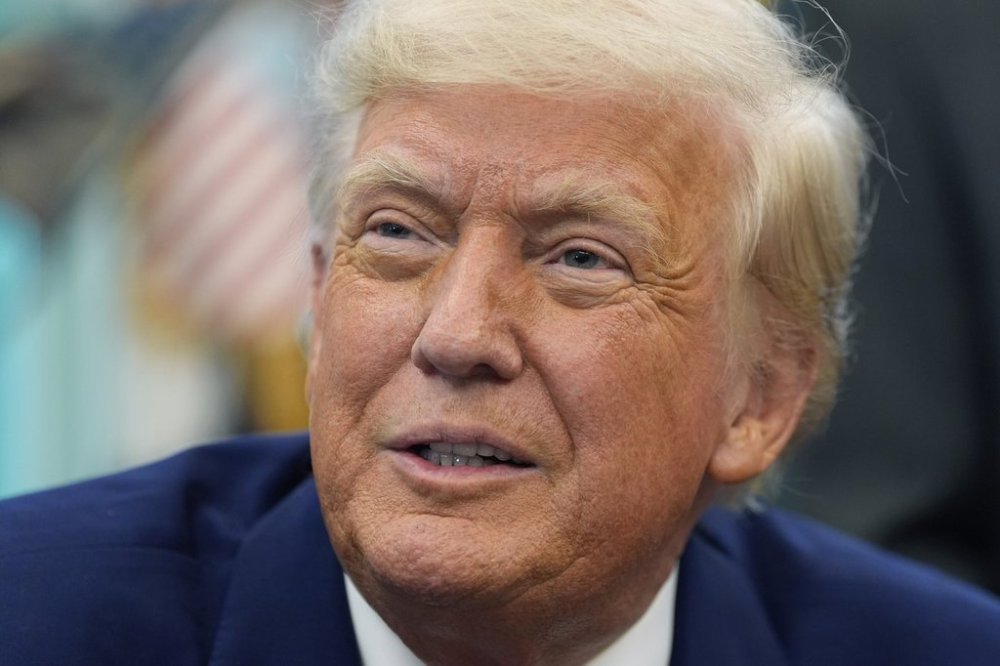
He did, however, threaten the companies with federal investigations into their practices and opening up the U.S. drug market to bring in more imported medications from other countries.
“The pharmaceutical companies make most of their profits from America,” Trump said. “That’s not a good thing.”
Trump played up the announcement over the weekend, boasting in one post that his plan could save “TRILLIONS OF DOLLARS.”
But on Monday, the White House offered no specifics for how much money the administration anticipates it could save.
The health department’s top leaders will be meeting with drug company executives over the next 30 days to offer new prices on drugs that are based off what other countries pay, Oz said on Monday.
Americans are unlikely to see immediate savings
Americans are unlikely to see relief on rising drug costs quickly because of the order, said Rachel Sachs, a health law expert at Washington University.
“It really does seem the plan is to ask manufacturers to voluntarily lower their prices to some point, which is not known,” Sachs said. “If they do not lower their prices to the desired point, HHS shall take other actions with a very long timeline, some of which could potentially, years in the future, lower drug prices.”
The health department has the most authority to change the prices of drugs covered by Medicare and Medicaid because it can set regulations. Even still, the agency’s power to do so is limited. Congress just approved in 2022 a new law that allows Medicare to negotiate the price it pays for a handful of prescription drugs starting in 2026. Before the law, Medicare paid what the drug companies charged. Drug companies unsuccessfully sued over the implementation of the law.
The price that millions of Americans covered by private insurance pay for drugs is even harder for the agency to manipulate.
The U.S. routinely outspends other nations on drug prices, compared with other large and wealthy countries, a problem that has long drawn the ire of both major political parties, but a lasting fix has never cleared Congress.
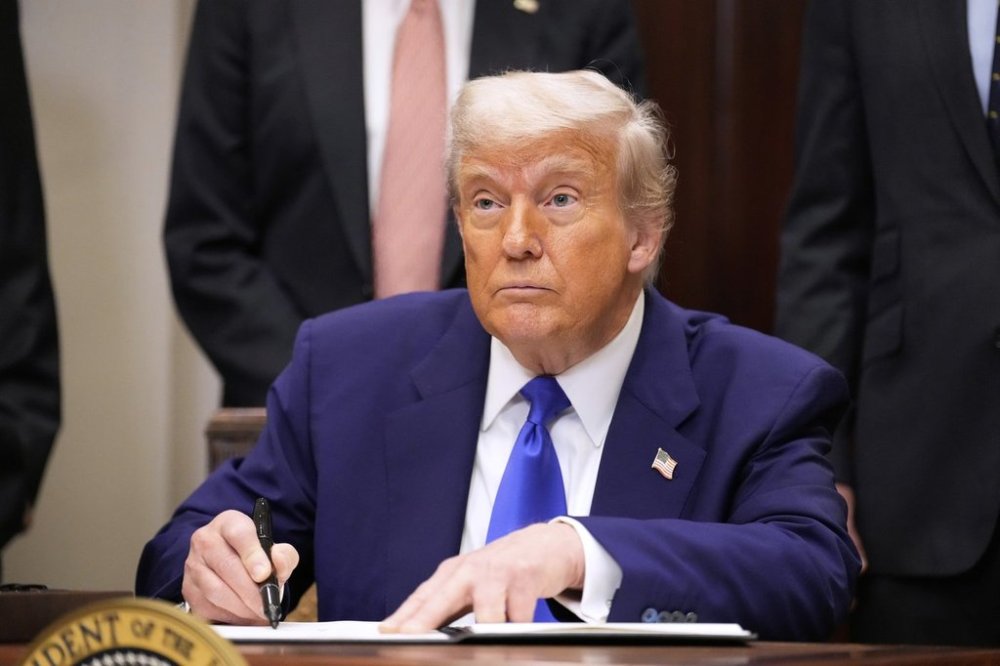
Trump came into his first term accusing pharmaceutical companies of “getting away with murder” and complaining that other countries whose governments set drug prices were taking advantage of Americans.
Trump says he’ll ‘do the right thing’
Ahead of the announcement, Trump puffed up his rhetoric toward the industry again on social media, writing that the “Pharmaceutical/Drug Companies would say, for years, that it was Research and Development Costs, and that all of these costs were, and would be, for no reason whatsoever, borne by the ‘suckers’ of America, ALONE.”

Referring to drug companies’ powerful lobbying efforts, he said that campaign contributions “can do wonders, but not with me, and not with the Republican Party.”
“We are going to do the right thing,” he wrote.
Several pharmaceutical companies gained ground in the stock market on Monday morning. Merck, a company that made $64.2 billion last year with the help of its cancer treatment Keytruda, jumped 3.9%. Pharma giant Pfizer, which notched $63.6 billion in revenue in 2024, rose 2.5% while Gilead Sciences rose 5.8%.
___
Associated Press writers Will Weissert in Washington and Damian Troise in New York contributed to this report.