Groups sue EPA over canceled $7 billion solar program intended to help poorer Americans
Advertisement
Read this article for free:
or
Already have an account? Log in here »
To continue reading, please subscribe:

Digital Subscription
One year of digital access for only $205*
- Enjoy unlimited reading on winnipegfreepress.com
- Read the E-Edition, our digital replica newspaper
- Access News Break, our award-winning app
- Play interactive puzzles
*First annual payment billed as $205.00 + GST for one year. This annual subscription will automatically renew at $233.00 + GST every 52 weeks (10% off the regular annual price of $259.35). Offer available to new and qualified returning subscribers only. Cancel any time.
To continue reading, please subscribe:
Add Free Press access to your Brandon Sun subscription for only an additional
$1 for the first 4 weeks*
- Enjoy unlimited reading on winnipegfreepress.com
- Read the E-Edition, our digital replica newspaper
- Access News Break, our award-winning app
- Play interactive puzzles
*Your next Brandon Sun subscription payment will increase by $1.00 and you will be charged $17.95 plus GST for four weeks. After four weeks, your payment will increase to $24.95 plus GST every four weeks.
Read unlimited articles for free today:
or
Already have an account? Log in here »
Hey there, time traveller!
This article was published 06/10/2025 (361 days ago), so information in it may no longer be current.
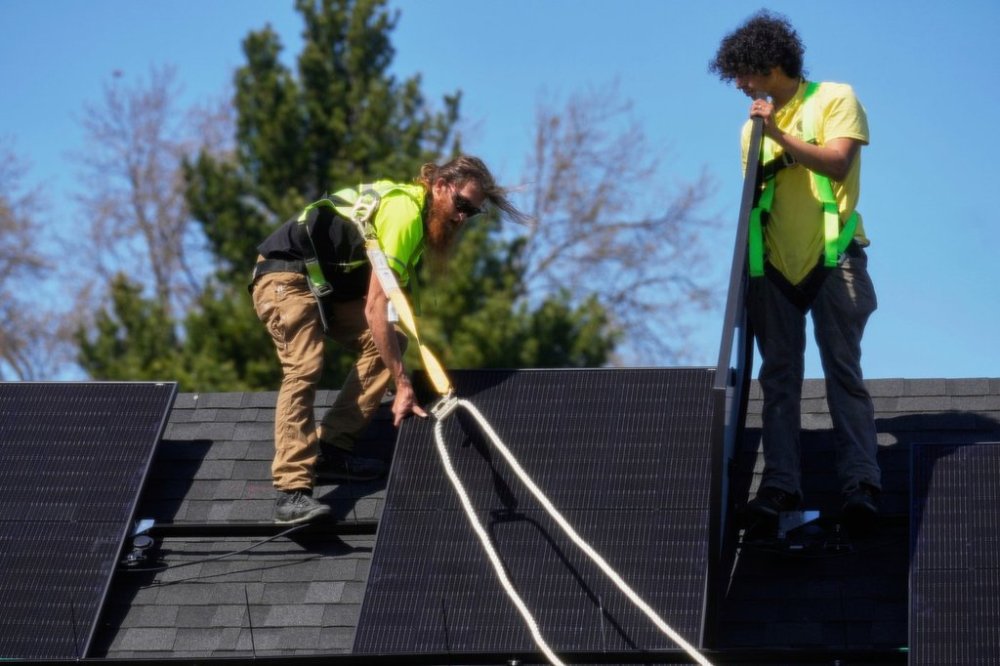
Several groups and nonprofit organizations filed a lawsuit Monday against the Environmental Protection Agency over the canceling of a $7 billion Solar for All program intended to make solar power accessible to more than 900,000 lower-income Americans.
They say the Trump administration’s termination of the program was illegal and they want a federal judge to direct the EPA to reinstate it. The program is affiliated with another $20 billion in green funding also terminated under President Donald Trump that EPA Administrator Lee Zeldin had characterized as a fraudulent scheme fraught with waste.
The EPA said in an email Monday that it does not comment on litigation.
The lawsuit is the latest legal action against the administration amid its assault on clean energy policy and related funding and programs across the country. Trump has moved to boost production of fossil fuels such as oil, natural gas and coal.
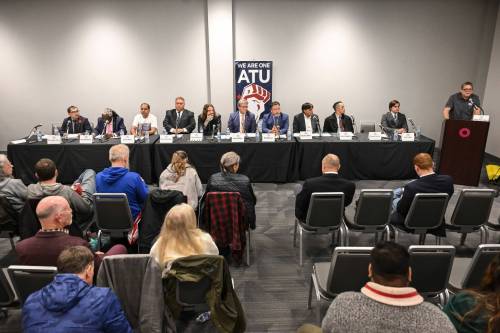
The lawsuit filed in Rhode Island by the Rhode Island AFL-CIO labor organization and others — including the public interest law center Rhode Island Center for Justice and the nonprofit Solar United Neighbors — detailed the importance of the program for local workforces and lower-income communities looking for access to clean-energy project funding.
Patrick Crowley, president of the Rhode Island AFL-CIO, said Monday that the program’s termination kills jobs and will drive up electricity prices.
EPA rescinded Solar for All in August
The Solar for All money was rescinded after Trump’s massive tax and spending law passed in Congress in July. Zeldin said in a statement on social media at the time, “the bottom line is this: EPA no longer has the statutory authority to administer the program or the appropriated funds to keep this boondoggle alive.”
The groups argued in the lawsuit that the law only revoked climate grants not yet awarded by the EPA and that these solar funds were already awarded.
“The Trump administration’s rollback of the Solar for All program is a shameless attempt to prop up fossil fuel companies at the expense of families,” said Kate Sinding Daly, senior vice president for law and policy at the Conservation Law Foundation, one of the nonprofit legal advocacy groups representing the plaintiffs.
“This program would provide families with low incomes access to clean, affordable solar power: energy that lowers bills, improves air quality, and keeps people safer during extreme heat,” she added in a statement.
The lawsuit cites previous EPA estimates that the program would have saved recipients about $400 each year on electricity bills and cumulatively reduced or avoided greenhouse gas emissions by over 30 million metric tons of carbon dioxide equivalent.
The program was part of a larger, climate-friendly funding push
The $7 billion Solar for All program was part of the $27 billion “green bank,” formally known as the Greenhouse Gas Reduction Fund. It was established in the Democratic-backed climate law passed in 2022 under former President Joe Biden.
The other $20 billion, canceled by the Trump administration in March, was slated for eight community development banks and nonprofit organizations for tens of thousands of projects to combat the effects of climate change, such as residential energy efficiency projects to larger-scale investments such as community cooling.
Groups have also sued over the cancelation of that money — with a federal judge saying they must have access to some of the funds — though recently, an appeals court ruled that federal officials can move forward with its termination.
Trump’s assault on environmental policy and regulation
The Trump administration has targeted a host of programs and policies dedicated to clean energy.

Just last week, the administration canceled $7.6 billion in grants for hundreds of climate-friendly projects across 16 states. It has also interfered with nearly complete offshore wind developments, moved to rescind the crucial ‘endangerment finding’ that allows climate regulation, is looking to end greenhouse gas emissions reporting requirements for large polluters, and taken a slew of other deregulatory measures.
___
Read more of AP’s climate coverage.
___
The Associated Press’ climate and environmental coverage receives financial support from multiple private foundations. AP is solely responsible for all content. Find AP’s standards for working with philanthropies, a list of supporters and funded coverage areas at AP.org.