MacArthur Foundation awards $100M to outbreak surveillance network, a boost amid global health cuts
Advertisement
Read this article for free:
or
Already have an account? Log in here »
To continue reading, please subscribe:

Digital Subscription
One year of digital access for only $205*
- Enjoy unlimited reading on winnipegfreepress.com
- Read the E-Edition, our digital replica newspaper
- Access News Break, our award-winning app
- Play interactive puzzles
*First annual payment billed as $205.00 + GST for one year. This annual subscription will automatically renew at $233.00 + GST every 52 weeks (10% off the regular annual price of $259.35). Offer available to new and qualified returning subscribers only. Cancel any time.
To continue reading, please subscribe:
Add Free Press access to your Brandon Sun subscription for only an additional
$1 for the first 4 weeks*
- Enjoy unlimited reading on winnipegfreepress.com
- Read the E-Edition, our digital replica newspaper
- Access News Break, our award-winning app
- Play interactive puzzles
*Your next Brandon Sun subscription payment will increase by $1.00 and you will be charged $17.95 plus GST for four weeks. After four weeks, your payment will increase to $24.95 plus GST every four weeks.
Read unlimited articles for free today:
or
Already have an account? Log in here »
Hey there, time traveller!
This article was published 18/11/2025 (327 days ago), so information in it may no longer be current.
NEW YORK (AP) — The MacArthur Foundation is awarding $100 million to a private pandemic prevention network across Africa, offering critical support to infectious disease surveillance at a time when governments are reducing global health spending.
It was announced Tuesday that Sentinel — a project that creates cost-effective pathogen detection tests, monitors outbreaks with real-time tracking tools and trains local scientists to carry out community-led responses — won the MacArthur Foundation’s 100&Change competition.
Sentinel reports training more than 3,000 public health workers from 53 of Africa’s 54 countries. The award money will help expand its geographic reach over the next five years, creating a more robust system that can better alert local communities — and, in turn, the world — to previously undetected diseases.
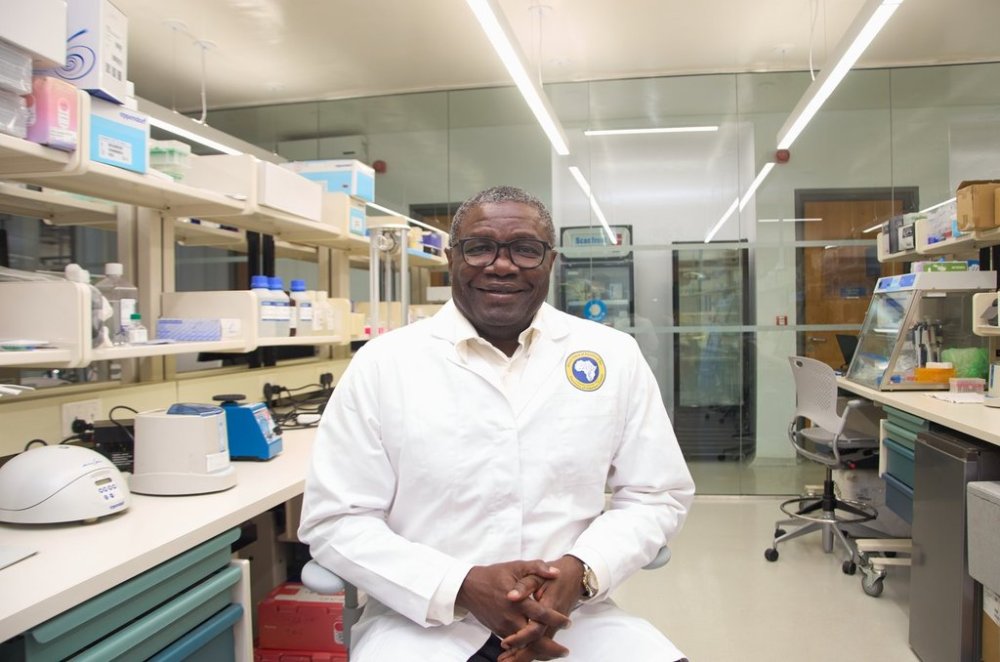
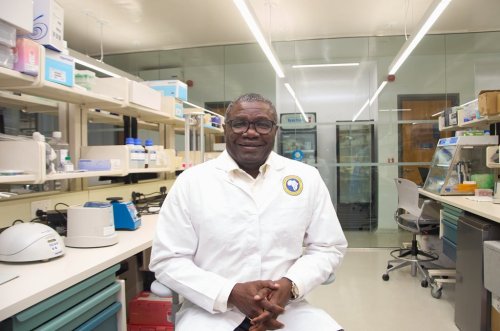
“This investment affirms that solutions to global health challenges can be led from Africa,” Sentinel co-director Christian Happi, who leads the Institute of Genomics and Global Health at Redeemer’s University in Nigeria, said in a statement. “Sentinel is about trust, collaboration, and building the systems that allow every country to respond swiftly and confidently to disease threats.”
With the MacArthur Foundation’s recognition of an African initiative that is empowering public health officials from the bottom up, the heavyweight American philanthropy hopes to encourage similar investments from its peers.
In the ten years since starting 100&Change with the issue-agnostic goal of driving philanthropy to pursue bolder endeavors and larger grants, an official said they’ve seen just that — as well as more concern for global health.
“This grant is further wind in those sails, I’d say” said Chris Cardona, the managing director of Exploration, Discovery and Programs at the MacArthur Foundation. “But given the scale of the challenge and the size of the funding gaps, there’s much more to be done.”
“We are glad to shine that spotlight and to show the value for U.S. donors of funding internationally — especially to projects that are bridging and building capacity across countries like Sentinel is doing,” he added.
Meanwhile, global health programs are contending with fewer funds and less cooperation as major donor countries deprioritize multilateral efforts.
Gavi, a public-private alliance that has paid for more than 1 billion children to be vaccinated, faces a replenishment shortfall as U.S. President Donald Trump’s administration cut the country’s support. U.S. Centers for Disease Control and Prevention staff were told earlier this year to stop working with the World Health Organization, a move that experts warn will impede work on stopping outbreaks such as mpox in Africa.
The Trump administration has vowed to prioritize disease surveillance as it turns sharply from traditional U.S. foreign assistance. But it has also sought to cancel $500 million for activities related to infectious diseases and child and maternal health and another $400 million to address the global HIV epidemic.
So uncertain is the state of global development commitments that the Gates Foundation, one of the most powerful institutions in global health, delayed its annual report on the progress toward those goals.
“This work in Africa would be important because, as the U.S. and European nations pull out from support globally, we will have less visibility of what’s going on overseas,” said Dr. Ali S. Khan, dean of the University of Nebraska Medical Center College of Public Health.
Sentinel began as a collaboration between Happi’s lab and Dr. Pardis Sabeti’s lab at the Broad Institute in Cambridge, Massachusetts, on Lassa fever. Traveling into villages where the virus was spreading provided key insights they wouldn’t have had without deeply embedding in the community, according to Sabeti.
They’ve now set out to provide those communities with the diagnostic technologies and professional connections necessary to identify, control and send early warnings about new threats.
Sabeti said the award is “transformative” considering that public health is being “decimated” and the field faces “existential crises.” When the United States no longer supports other countries’ efforts to stop pandemics like it used to, she said, local frontline responders must be empowered.
“By giving people in communities the information that they need, they end up becoming sentinels for an emerging outbreak,” Sabeti said. “And it’s really allowing every person on the planet to participate in stopping the next pandemic.”

Former USAID Deputy Assistant Administrator for Global Health Nidhi Bouri said governments’ budget cuts have highlighted the need for diversified funding streams.
She emphasized that pandemic surveillance requires “continuous monitoring” and is “not something you can do half the time.”
“There is a collective responsibility — but more so a collective interest globally — for a range of stakeholders to evaluate how they can support different investments with the shared goal of mitigating the spread of diseases across the globe,” Bouri said. “Because it impacts everyone.”
____
Associated Press coverage of philanthropy and nonprofits receives support through the AP’s collaboration with The Conversation US, with funding from Lilly Endowment Inc. The AP is solely responsible for this content. For all of AP’s philanthropy coverage, visit https://apnews.com/hub/philanthropy.