Trump administration rolls out rural health funding, with strings attached

Advertisement

Advertise with us

States will share $10 billion for rural health care next year in a program that aims to offset the Trump administration's massive budget cuts to rural hospitals, federal officials announced Monday.

Read this article for free:


By clicking the button above, an account will be created and you will begin to receive some of our recommended newsletters. You may opt out of any newsletter by visiting your Email and Communication Preferences page or by clicking "unsubscribe" at the bottom of any email.

or

Already have an account? Log in here »

To continue reading, please subscribe:

Digital Subscription

One year of digital access for only $1.44 a week*

  • Enjoy unlimited reading on winnipegfreepress.com
  • Read the E-Edition, our digital replica newspaper
  • Access News Break, our award-winning app
  • Play interactive puzzles

*Billed as $5.77 plus GST every four weeks. After 52 weeks, price increases to the regular rate of $19.95 plus GST every four weeks. Offer available to new and qualified returning subscribers only. Cancel any time.

To continue reading, please subscribe:

Add Free Press access to your Brandon Sun subscription for only an additional

$1 for the first 4 weeks*

  • Enjoy unlimited reading on winnipegfreepress.com
  • Read the E-Edition, our digital replica newspaper
  • Access News Break, our award-winning app
  • Play interactive puzzles
Start now

*Your next Brandon Sun subscription payment will increase by $1.00 and you will be charged $17.95 plus GST for four weeks. After four weeks, your payment will increase to $24.95 plus GST every four weeks.

Hey there, time traveller!
This article was published 29/12/2025 (294 days ago), so information in it may no longer be current.

States will share $10 billion for rural health care next year in a program that aims to offset the Trump administration’s massive budget cuts to rural hospitals, federal officials announced Monday.

But while every state applied for money from the Rural Health Transformation Program, it won’t be distributed equally. And critics worry that the funding might be pulled back if a state’s policies don’t match up with the administration’s.

Officials said the average award for 2026 is $200 million, and the fund puts a total of $50 billion into rural health programs over five years. States propose how to spend their awards, and the Centers for Medicare and Medicaid Services assigns project officers to support each state, said agency administrator Dr. Mehmet Oz.

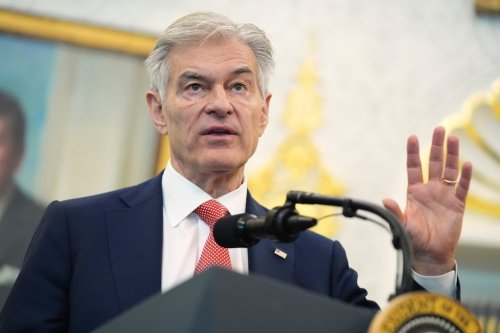
FILE - Mehmet Oz, administrator of the Centers for Medicare & Medicaid Services, speaks during an event about drug prices with President Donald Trump, Thursday, Nov. 6, 2025, in the Oval Office of the White House in Washington. (AP Photo/Evan Vucci, File)

“This fund was crafted as part of the One Big Beautiful Bill, signed only six months ago now into law, in order to push states to be creative,” Oz said in a call with reporters Monday.

Under the program, half of the money is equally distributed to each state. The other half is allocated based on a formula developed by CMS that considered rural population size, the financial health of a state’s medical facilities and health outcomes for a state’s population.

The formula also ties $12 billion of the five-year funding to whether states are implementing health policies prioritized by the Trump administration’s “Make America Healthy Again” initiative. Examples include requiring nutrition education for health care providers, having schools participate in the Presidential Fitness Test or banning the use of SNAP benefits for so-called junk foods, Oz said.

Several Republican-led states — including Arkansas, Iowa, Louisiana, Nebraska, Oklahoma and Texas — have already adopted rules banning the purchase of foods like candy and soda with SNAP benefits.

The money that the states get will be recalculated annually, Oz said, allowing the administration to “claw back” funds if, for example, state leaders don’t pass promised policies. Oz said the clawbacks are not punishments, but leverage governors can use to push policies by pointing to the potential loss of millions.

“I’ve already heard governors express that sentiment that this is not a threat, that this is actually an empowering element of the One Big Beautiful Bill,” he said.

Carrie Cochran-McClain, chief policy officer with the National Rural Health Association, said she’s heard from a number of Democratic-led states that refused to include such restrictions on SNAP benefits even though it could hurt their chance to get more money from the fund.

“It’s not where their state leadership is,” she said.

Experts say fund is inadequate in face of other cuts

Oz and other federal officials have touted the program as a 50% increase in Medicaid investments in rural health care. Rep. Don Bacon, a Republican from Nebraska who has been critical of many of the administration’s policies but voted for the budget bill that slashed Medicaid, pointed to the fund when recently questioned about how the cuts would hurt rural hospitals.

“That’s why we added a $50 billion rural hospital fund, to help any hospital that’s struggling,” Bacon said. “This money is meant to keep hospitals afloat.”

But experts say it won’t nearly offset the losses that struggling rural hospitals will face from the federal spending law’s $1.2 trillion cut from the federal budget over the next decade, primarily from Medicaid. Millions of people are also expected to lose Medicaid benefits.

Estimates suggest rural hospitals could lose around $137 billion over the next decade because of the budget measure. As many as 300 rural hospitals were at risk for closure because of the GOP’s spending package, according to an analysis by The Cecil G. Sheps Center for Health Services Research at the University of North Carolina at Chapel Hill.

“When you put that up against the $50 billion for the Rural Health Transformation Fund, you know — that math does not add up,” Cochran-McClain said.

She also said there’s no guarantee that the funding will go to rural hospitals in need. For example, she noted, one state’s application included a proposal for healthier, locally sourced school lunch options in rural areas.

And even though innovation is a goal of the program, Cochran-McClain said it’s tough for rural hospitals to innovate when they were struggling to break even before Congress’ Medicaid cuts.

“We talk to rural providers every day that say, ‘I would really love to do x, y, z, but I’m concerned about, you know, meeting payroll at the end of the month,’” she said. “So when you’re in that kind of crisis mode, it is, I would argue, almost impossible to do true innovation.”

___

The Associated Press Health and Science Department receives support from the Howard Hughes Medical Institute’s Department of Science Education and the Robert Wood Johnson Foundation. The AP is solely responsible for all content.

Report Error Submit a Tip

More Stories

Disgraced ex-dean landed job at German university after fleeing Winnipeg

Maggie Macintosh 8 minute read Preview

Disgraced ex-dean landed job at German university after fleeing Winnipeg

Maggie Macintosh 8 minute read Friday, Oct. 16, 2026

Before he was arrested in a posh Paris suburb, the disgraced dean of Manitoba’s only law school — who fled the country following a 2020 expense scandal — kept a low profile at a German university.

Read
Friday, Oct. 16, 2026

Trump administration rolls out rural health funding, with strings attached

Devi Shastri And Margery A. Beck, The Associated Press 5 minute read Preview

Trump administration rolls out rural health funding, with strings attached

Devi Shastri And Margery A. Beck, The Associated Press 5 minute read Monday, Dec. 29, 2025

States will share $10 billion for rural health care next year in a program that aims to offset the Trump administration's massive budget cuts to rural hospitals, federal officials announced Monday.

But while every state applied for money from the Rural Health Transformation Program, it won't be distributed equally. And critics worry that the funding might be pulled back if a state's policies don't match up with the administration's.

Officials said the average award for 2026 is $200 million, and the fund puts a total of $50 billion into rural health programs over five years. States propose how to spend their awards, and the Centers for Medicare and Medicaid Services assigns project officers to support each state, said agency administrator Dr. Mehmet Oz.

“This fund was crafted as part of the One Big Beautiful Bill, signed only six months ago now into law, in order to push states to be creative," Oz said in a call with reporters Monday.

Read
Monday, Dec. 29, 2025

Four councillor candidates vie for wide-open Fort Rouge-East Fort Garry ward

Malak Abas 6 minute read Preview

Four councillor candidates vie for wide-open Fort Rouge-East Fort Garry ward

Malak Abas 6 minute read Yesterday at 3:21 PM CDT

One of Winnipeg’s most densely populated wards is up for grabs come election day.

Four candidates are in the running in Fort Rouge-East Fort Garry, with the councillor position wide open after area Coun. Sherri Rollins announced in July she would be withdrawing her candidacy.

Journalist Brook Jones, hospitality worker and union organizer Carson Mauthe, city planner Jeff Palmer and retired finance worker Kevin Stuart have thrown their hats in the race.

Palmer has worked as a city planner for more than 20 years, in both the non-profit and private sectors, including CentreVenture and the University of Winnipeg Community Renewal Corporation.

Read
Yesterday at 3:21 PM CDT

Movie theatre reopening generates excitement in Selkirk

Gabrielle Piché 3 minute read Preview

Movie theatre reopening generates excitement in Selkirk

Gabrielle Piché 3 minute read Saturday, Oct. 17, 2026

Selkirk got an extra dose of lights, cameras and action this weekend.

And ribbon cutting — for the grand reopening of the city’s sole theatre.

“It’s fantastic,” Mayor Larry Johannson said. “The sky’s the limit.”

The Garry Theatre now operates under a non-profit charity. It’s been closed since 2021, when Landmark Cinemas left the city.

Read
Saturday, Oct. 17, 2026

Deaths, injuries as fire hits Alberta military base: McGuinty

Fakiha Baig, The Canadian Press 4 minute read Preview

Deaths, injuries as fire hits Alberta military base: McGuinty

Fakiha Baig, The Canadian Press 4 minute read Updated: Yesterday at 2:17 AM CDT

WAINWRIGHT - Defence Minister David McGuinty says there have been deaths and injuries after a fire broke out Saturday at a military base in Alberta.

Fire crews scrambled late into the night as fierce winds whipped flames beyond CFB Wainwright, a massive military training base located 200 kilometres southeast of Edmonton.

McGuinty, speaking to reporters in Ottawa, confirmed the casualties but had no other details to share, including numbers or what happened.

"I cannot recall such an incident in my short time for sure as a minister, but I cannot recall an incident like this in recent memory,” McGuinty said.

Read
Updated: Yesterday at 2:17 AM CDT

De Havilland calls for national water bomber fleet as it scrambles to meet demand

Christopher Reynolds, The Canadian Press 7 minute read Preview

De Havilland calls for national water bomber fleet as it scrambles to meet demand

Christopher Reynolds, The Canadian Press 7 minute read Updated: Yesterday at 1:49 PM CDT

MONTREAL - On July 13, a pair of Canadair water bombers touched down on the Seine River, skimming along its surface to refill their water tanks as they battled a wildfire south of Paris.

The "super scoopers," with their signature ketchup-red wing tips on a mustard-yellow body, sucked up 6,000-plus litres from France’s most famous waterway in one go as part of a fight against the flames then rampaging across Europe.

The event in north-central France underscored how wildfires are ranging even farther from their traditional grounds and fuelling an urgent need for water bombers to fend off climate disasters.

The iconic Canadair turboprops serve as the only amphibious firefighting aircraft currently in production built from the outset for that purpose, rather than being retrofitted to douse flames.

Read
Updated: Yesterday at 1:49 PM CDT