First Nations overdose deaths in B.C. drop in 2025, but still disproportionally high

Advertisement

Advertise with us

VANCOUVER - The number of overdose deaths of First Nations people in British Columbia dropped by about a third in 2025 but the population continues to be disproportionately impacted by the province's toxic drug crisis that has killed more than 18,000 people in the last decade.

Read this article for free:


or

Already have an account? Log in here »

To continue reading, please subscribe:

Subscribe and receive a limited-edition Free Press branded hat or tote.

Digital Subscription

One year of digital access for only $205*

  • Enjoy unlimited reading on winnipegfreepress.com
  • Read the E-Edition, our digital replica newspaper
  • Access News Break, our award-winning app
  • Play interactive puzzles

*First annual payment billed as $205.00 + GST for one year. This annual subscription will automatically renew at $233.00 + GST every 52 weeks (10% off the regular annual price of $259.35). Offer available to new and qualified returning subscribers only. Cancel any time.

To continue reading, please subscribe:

Add Free Press access to your Brandon Sun subscription for only an additional

$1 for the first 4 weeks*

  • Enjoy unlimited reading on winnipegfreepress.com
  • Read the E-Edition, our digital replica newspaper
  • Access News Break, our award-winning app
  • Play interactive puzzles
Start now

*Your next Brandon Sun subscription payment will increase by $1.00 and you will be charged $17.95 plus GST for four weeks. After four weeks, your payment will increase to $24.95 plus GST every four weeks.

VANCOUVER – The number of overdose deaths of First Nations people in British Columbia dropped by about a third in 2025 but the population continues to be disproportionately impacted by the province’s toxic drug crisis that has killed more than 18,000 people in the last decade.

Dr. Nel Wieman, the chief medical officer with the First Nations Health Authority, said Wednesday that emergency has been used for political gain by some, putting progress at risk.

The health authority released data that is First Nation specific for 2025 on the day after the province marked 10 years since declaring a public health emergency on April 14, 2016. 
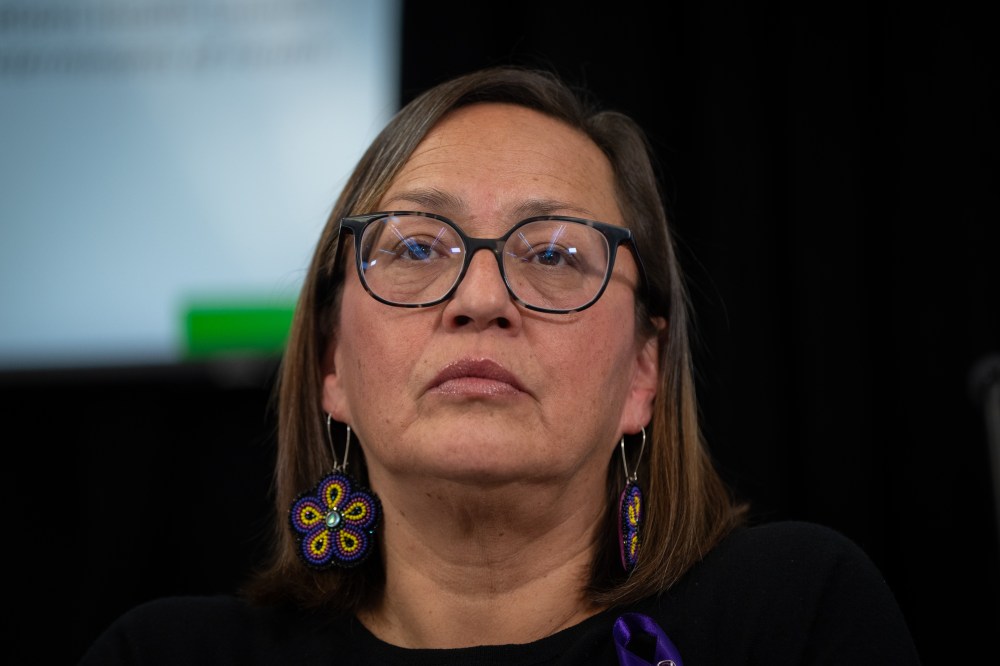
Dr. Cornelia (Nel) Wieman, First Nations Health Authority Chief Medical Officer, listens during a news conference in West Vancouver, on Monday, April 14, 2025. THE CANADIAN PRESS/Ethan Cairns

“The politicization of this emergency and the increased vilification of people who use substances threatens progress, especially as the backlash against proven, evidence-based harm reduction measures that save lives hits First Nations people the hardest, deepening existing inequities,” she said.

While progress has been made, there are significant headwinds, Wieman said. 

“These include the inaccessibility of substance-use services in communities closer to home, the lack of long-term sustained and flexible funding, and the ever-changing, dangerous, and potentially lethal unregulated drug supply that is the major driver of deaths and poisonings.”

Numbers released by the health authority show 289 First Nations members died of overdoses in 2025 compared with 433 the year before.

First Nations members in B.C. make up approximately 3.4 per cent of the population, but account for 15.8 per cent of all toxic drug deaths in 2025. 

Wieman said there is common misinformation that people struggling with substance use simply go to treatment and all of a sudden are able to return home and never face the problem again.

She said users are vilified as part of stoking fear around public safety.

“I really feel that there is a responsibility by our political and other leaders to stop scoring political points off of people who are struggling, and stop vilifying, portraying them, feeding into the stereotypes,” she said.

British Columbia has rolled back or eliminated multiple programs that were designed to help with the crisis, including ending a decriminalization pilot project covering small amounts of drugs and curtailing the province’s safer supply program so that consuming the prescription alternatives must be witnessed by a health-care worker.

At the time, the province said the change was aimed reducing the risk of the drugs being diverted to the black market. 

Figures from the B.C. Health Ministry show there were fewer than 3,900 users of the program as of December 2024 and Wieman said “disinformation that people are running around all over the province diverting their pharmaceutical alternatives is a fallacy.”

She said a change requiring people who take the safer drugs in front of a witness is a barrier for First Nations people who live remotely.

“Some people have to travel hours to get to a pharmacy. So, to go even once a week is a full-time job that day,” she said.

“Daily witnessed dosing therefore precludes a First Nations person or any other British Columbian who lives in a remote or isolated area from participating in that service if they need it.”

She said the health authority is working on the issue with the help of the province.

“We have strong views around how to have First Nations-led initiatives as part of the toxic drug crisis. But we really do rely on our partners to work with us,” she said.

Following the health authority’s event, the BC Coroners Service released figures that show 115 residents died in February due to unregulated drug toxicity, down from 150 in January.

The coroners service says that equates to about 4.1 deaths per day and that 78 per cent of the people who died in February were men.

The statement says stimulants were the most common substance detected in those who overdosed this at 83 per cent, followed by fentanyl or its analogs at 80 per cent.

 This report by The Canadian Press was first published April 15, 2026. 

Note to readers:This is a clarified story. A previous version said the health authority released Indigenous-specific data. In fact, the data was specific to First Nations.

Report Error Submit a Tip

More Stories

PCs renew calls for CFS inquiry

Carol Sanders 6 minute read Preview

PCs renew calls for CFS inquiry

Carol Sanders 6 minute read Thursday, Oct. 8, 2026

The Progressive Conservatives renewed calls to put Manitoba’s child and welfare system under the microscope Thursday, tabling a motion that urged the province to appoint a commissioner to lead a public inquiry.

Families critic Jodie Byram’s opposition day motion, which was ultimately defeated by the NDP majority, reiterated demands for an inquiry into the systemic failures of Child and Family Services, more than 20 years after the death of Phoenix Sinclair first prompted demands for answers.

“We have seen far too many children die under the care of CFS, and we need to determine where the gaps are in the system in order to make the system a safer place for children,” Byram told reporters before the motion was defeated in the legislature.

Families Minister Nahanni Fontaine said in an interview that her department, CFS agencies and authorities are “doing good work” and won’t call an inquiry.

Read
Thursday, Oct. 8, 2026

Manitoba last province requiring physical stakes on mineral claims

Gabrielle Piché 5 minute read Yesterday at 8:06 PM CDT

Potential Manitoba mine sites bear decor not seen in other provinces: GPS-enabled claim markers.

All other provinces permitting mining have dropped requirements for prospectors to physically stake land claims.

They’ve all moved to digital systems.

As Manitoba politicians trumpet plans to triple mining production, exploration companies and the local prospectors association warn outdated staking methods will slow progress.

Manitoba worker dead after fall from roof

Matthew Frank 3 minute read Thursday, Oct. 8, 2026

The province is investigating after a worker died on the job after falling off a roof last month.

The worker, who was employed by Winnipeg-based Pristine Roofing & Siding, was critically injured on Sept. 22 after falling from a roof during a residential re-roofing project in the Rural Municipality of St. Andrews, a provincial spokesperson said in an email.

The man later died.

The investigation is ongoing, and no other information will be provided, the spokesperson said Thursday.

Bit of creepy consultation could go a long way

Maureen Scurfield 5 minute read Yesterday at 2:01 AM CDT

DEAR MISS LONELYHEARTS: Halloween has always been my favourite time of year. I do my house up with lots of spooky lighting and characters on the lawn with eerie sounds booming out.

But last year I got seriously hassled by some people in the neighbourhood who thought it was too creepy. How do I get them on board this year? I don’t want to fight with them again.

— Want to Be Good Neighbour, River Heights

Dear Good Neighbour: Go to your close neighbours and explain what you want to do with your yard for Halloween this year, and also provide them with a firm time by which the celebrating will wrap up and things can quiet down.

Powerful allegory, magic wonder as ballet takes on Stravinsky

Holly Harris 5 minute read Preview

Powerful allegory, magic wonder as ballet takes on Stravinsky

Holly Harris 5 minute read Yesterday at 6:50 PM CDT

The Royal Winnipeg Ballet opened its mainstage season with fire and ice Thursday, as it paid homage to Russian composer Igor Stravinsky with Stravinsky Stories.

Local balletomanes may remember Alexei Ratmansky as a principal dancer during the early 1990s. The internationally renowned dance artist returns in a full-circle moment to stage The Fairy’s Kiss, the 50-minute work his first collaboration with the RWB in more than 30 years. He began flexing his choreographic muscles in its downtown studios with an earlier, reimagined incarnation in 1994, based on Hans Christian Andersen’s fairy tale The Ice Maiden, in turn set to Stravinsky’s own tribute to Tchaikovsky’s lushly romantic ballet scores.

Its narrative follows the journey of a Young Man (newly minted principal dancer Skylar Campbell, with all leads alternating) saved — and kissed — by a Fairy (principal dancer Elizabeth Lamont, who rips off a dizzying set of “fouettes”) after his Mother (former principal dancer Vanessa Léonard adding her own gravitas) perishes in a blizzard.

After falling in love with his fiancée (principal dancer Alanna McAdie, infusing her character with innocent youthfulness grounded by intricate footwork), he is tricked on his wedding day by the now disguised Fairy who reveals her true identity — and his ultimate destiny.

Read
Yesterday at 6:50 PM CDT

‘Please excuse us from writing these notes …’

Editorial 4 minute read Preview

‘Please excuse us from writing these notes …’

Editorial 4 minute read Yesterday at 2:01 AM CDT

It’s a common-sense prescription for the health-care system. The only wonder is that it took so long to happen.

Read
Yesterday at 2:01 AM CDT