Trump administration again suspends UC Berkeley research grants
Advertisement
Read this article for free:
or
Already have an account? Log in here »
To continue reading, please subscribe:

Digital Subscription
One year of digital access for only $205*
- Enjoy unlimited reading on winnipegfreepress.com
- Read the E-Edition, our digital replica newspaper
- Access News Break, our award-winning app
- Play interactive puzzles
*First annual payment billed as $205.00 + GST for one year. This annual subscription will automatically renew at $233.00 + GST every 52 weeks (10% off the regular annual price of $259.35). Offer available to new and qualified returning subscribers only. Cancel any time.
To continue reading, please subscribe:
Add Free Press access to your Brandon Sun subscription for only an additional
$1 for the first 4 weeks*
- Enjoy unlimited reading on winnipegfreepress.com
- Read the E-Edition, our digital replica newspaper
- Access News Break, our award-winning app
- Play interactive puzzles
*Your next Brandon Sun subscription payment will increase by $1.00 and you will be charged $17.95 plus GST for four weeks. After four weeks, your payment will increase to $24.95 plus GST every four weeks.
Read unlimited articles for free today:
or
Already have an account? Log in here »
The National Science Foundation suspended at least 18 research grants to UC Berkeley in April despite a court injunction restricting such suspensions, according to an attorney representing university scientists in a class action lawsuit.
The National Science Foundation declined to comment on the suspensions.
The grants include at least one that the NSF had previously canceled and was compelled by a federal court order to restore, for a series of mixed-reality exhibits at the Lawrence Hall of Science showcasing Indigenous Ohlone knowledge about the natural world, said one of the project’s leaders, Jedda Foreman.
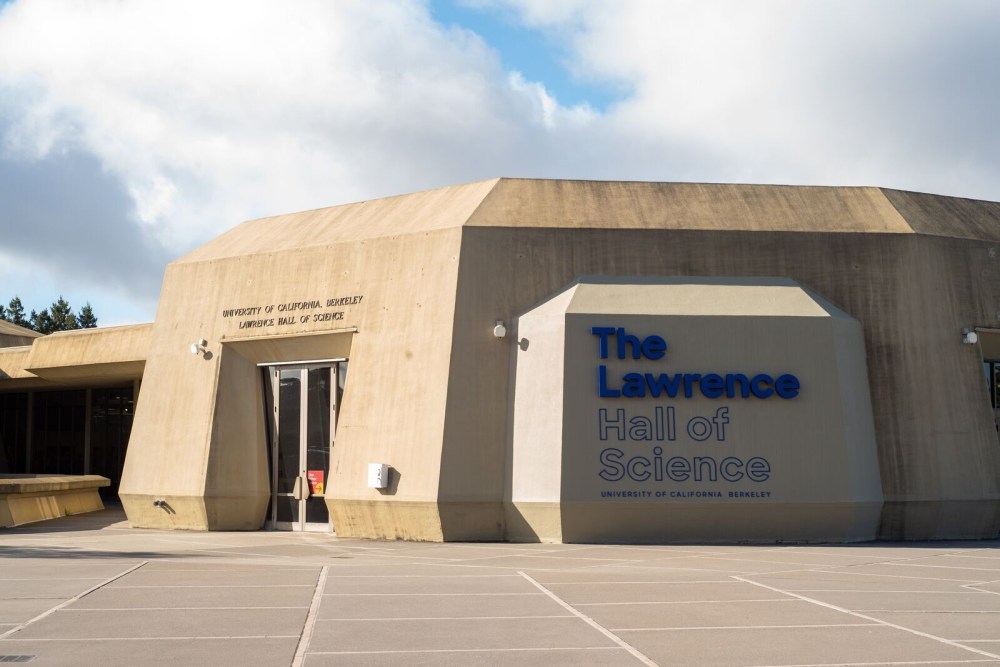
Foreman, an associate director at the Lawrence Hall of Science, said another researcher on her team received an email April 17 from UC Berkeley’s vice chancellor of research, Katherine Yelick, notifying them that the National Science Foundation had suspended the $1.4 million grant. Foreman said she viewed the email, which said the university had received a letter from the NSF raising concerns about “foreign funding.” The email did not provide a copy of the letter or explain further, she said.
Foreman said the Lawrence Hall of Science had not received any foreign funding for the project.
“The grantees were given near-zero information about what was problematic in the execution of their grant,” said Claudia Polsky, a professor at UC Berkeley School of Law who is representing Foreman and other researchers in a suit they filed last year contesting a previous round of grant cancellations by the Trump administration.
Polsky said her legal team was seeking more information about the 18 suspensions, but was concerned that the freezing of Foreman’s grant may violate a court order a federal judge issued in that case restoring the defunded projects.
UC Berkeley spokesperson Dan Mogulof said in a statement that the university “is engaged with the government on matters pertaining to research grants, and remains committed to compliance with all federal laws, rules and regulations.”
He declined to comment on the types of grants affected, the amount of funds at stake, or the potential impact on the campus.
One of the Lawrence Hall of Science exhibits, which were co-designed with Ohlone youth, is scheduled to open May 17, with another set for the fall of 2028. Researchers also are studying whether participating in creating exhibits sparks more interest in science among Indigenous young people and makes them more likely to pursue STEM careers.
“We’re doing a lot of hoping and finger-crossing that something works out,” Foreman said. “It was such a powerful project and we really want to be able to share what we’ve learned.”
Trump fired the board of scientists overseeing the National Science Foundation last month
The University of California received $525 million in National Science Foundation grants in the 2024-25 budget year. But that funding source has become increasingly volatile under the second Trump administration as the federal agency has terminated nearly 2,000 grants nationwide that it said did not align with its priorities — including those focusing on diversity, equity and inclusion — and has been slower to approve and disburse new awards.
In late April, President Trump fired all 22 members of the independent board of scientists that oversaw the National Science Foundation. He is also proposing to cut the agency’s budget by more than half in 2027 — though Congress rejected a similar plan last year.
Other federal agencies also terminated research grants en masse last year. Some of the cancellations have been reversed by the courts.
UC researchers are contesting grant reversals by the National Science Foundation, Department of Energy, National Institutes of Health, Department of Transportation, Department of Defense, Environmental Protection Agency and National Endowment for the Humanities in the class action lawsuit, filed last year. The University of California itself is not a party to the suit.
Last June, the researchers won a key legal victory when U.S. District Judge Rita Lin issued a preliminary injunction restoring grants canceled by the NSF, EPA and NEH — including for the Ohlone-focused exhibits co-led by Foreman, one of six named plaintiffs in the case. The judge barred the agencies from revoking funds using form letters that didn’t include an explanation specific to the grant at stake, or because of Trump’s anti-DEI executive orders.
Judge Lin stepped in again after the NSF froze hundreds of grants to UCLA in August, amid attempts by the Trump administration to secure a $1 billion settlement from the university over allegations of campus antisemitism. Indefinitely suspending a grant was the same as terminating it, Lin said in a ruling requiring the agency to reinstate the funds.
Polsky said last month’s suspension of Foreman’s grant raised concerns that the Trump administration was seeking a way around those orders. “It seems to us like something that should not have been canceled on the merits and raises suspicion that this was just a different way to cancel the grant,” she said.
University of California seeking $23 billion for scientific research from state
The University of California is ramping up efforts to find alternative funding for its multibillion-dollar research enterprise as federal support becomes less reliable. On Monday, UC President James Milliken spoke alongside state Sen. Scott Wiener and United Auto Workers president Shawn Fain at a Sacramento rally in support of state legislation to create a $23 billion fund for scientific research.
If successful, the bill will place a bond measure on the November ballot. Money from the bond would go toward research in wildfire and pandemic preparedness, new medical treatments and other areas, with revenue from inventions shared with the state. The state assembly’s appropriations committee is set to consider the bill May 14.
“If the federal government is going to continue to attempt to reduce funding for the research that has been so important to UC — that saves lives, that drives the economy — then the state of California, I hope, will be able to step up,” Milliken said at a meeting of the university’s board of regents Wednesday.
UC provost Katherine Newman told the regents she has been meeting with leaders of the Russell Group, a consortium of the United Kingdom’s top universities, to discuss collaborating on research in climate change, clean energy and public health — all areas that have seen federal funding threatened under the current administration.
___
This story was originally published by Berkeleyside and distributed through a partnership with The Associated Press.