

No turning back
Manitobans mostly optimistic about time change

Advertisement
Read this article for free:
or
Already have an account? Log in here »
To continue reading, please subscribe:

Digital Subscription
One year of digital access for only $205*
- Enjoy unlimited reading on winnipegfreepress.com
- Read the E-Edition, our digital replica newspaper
- Access News Break, our award-winning app
- Play interactive puzzles
*First annual payment billed as $205.00 + GST for one year. This annual subscription will automatically renew at $233.00 + GST every 52 weeks (10% off the regular annual price of $259.35). Offer available to new and qualified returning subscribers only. Cancel any time.
To continue reading, please subscribe:
Add Free Press access to your Brandon Sun subscription for only an additional
$1 for the first 4 weeks*
- Enjoy unlimited reading on winnipegfreepress.com
- Read the E-Edition, our digital replica newspaper
- Access News Break, our award-winning app
- Play interactive puzzles
*Your next Brandon Sun subscription payment will increase by $1.00 and you will be charged $17.95 plus GST for four weeks. After four weeks, your payment will increase to $24.95 plus GST every four weeks.
Read unlimited articles for free today:
or
Already have an account? Log in here »
Turning the page on turning back the clocks in Manitoba was met with enthusiasm — and some hesitation — Thursday.
Calling the move “perfect,” the general manager of Larters at St. Andrews Golf & Country Club said a switch to permanent standard time would have hurt men’s and women’s golf leagues.
The course could have tried to open an hour earlier, but some after-work leagues may have been forced to cancel owing to not enough daylight.
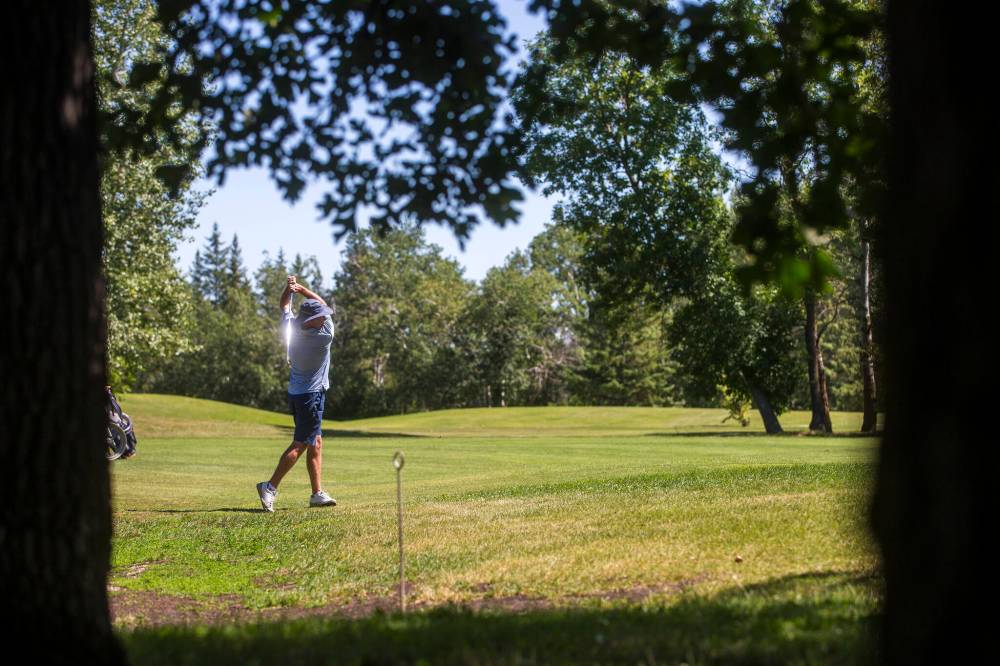
MIKAELA MACKENZIE / FREE PRESS FILES
Ending the autumnal ritual of turning back the clocks in Manitoba was met with enthusiasm by many in the province, including the general manager of Larters at St. Andrews Golf & Country Club, saying some after-work leagues may have been forced to cancel owing to not enough daylight.
“It would get dark too early and people can’t leave work early to go play an hour earlier,” said Geoff Kehler. “It would have been really bad for the business.”
Premier Wab Kinew announced Thursday the twice-yearly clock changes would end effective immediately — no setting clocks back an hour on Nov. 1 as has been the case for the past 63 years. He said a survey of Manitobans showed overwhelming support to lose the time changes.
“It will complicate some things,” said Aaron Dolyniuk, executive director of the Manitoba Trucking Association.
Truck drivers, who can cross multiple jurisdictions in one day, face an adjustment period, he said.

With no more falling back in November, time differences will shift — cities like Toronto will be in the same time zone as Winnipeg for five months of the year, but then move back to a one-hour difference when Ontario springs forward.
Keeping up on when border and major transport crossings are open will take some getting used to, Dolyniuk said.
“But this is obviously something a lot of people were supportive of,” he said.
Come Nov. 1, most most communities in Northwestern Ontario will be one hour behind of Manitoba. Ontario remains on daylight saving time and will continue to change its clocks, but the Lake of the Woods communities lie in the same time zone as Manitoba.
Kenora Mayor Andrew Poirier wishes his province would be doing the same, especially considering the city’s close ties with Manitoba.
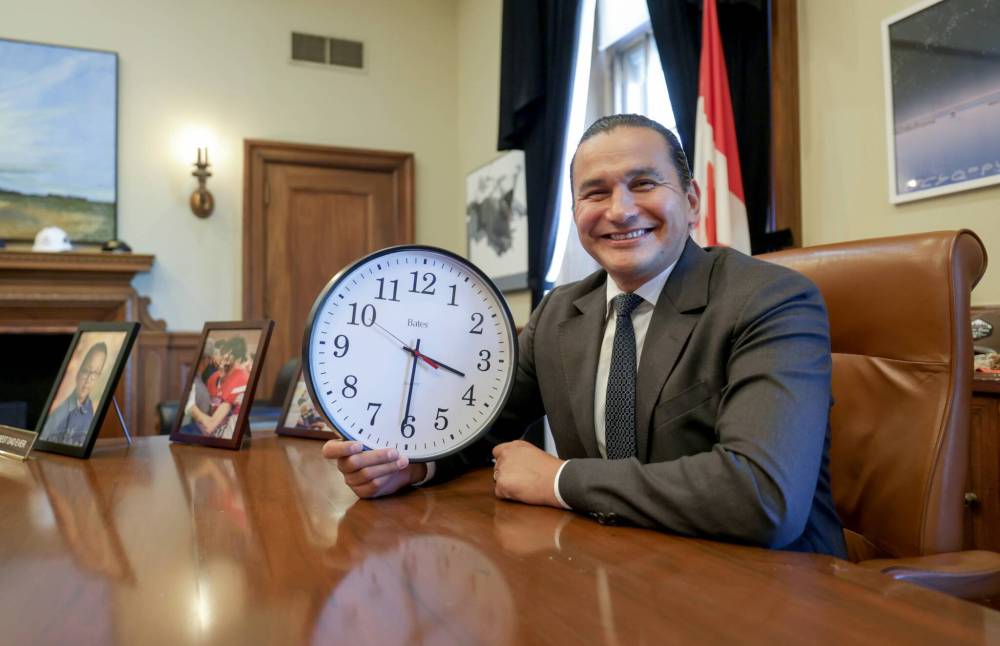
Ruth Bonneville / Free Press
Premier Wab Kinew says a survey of Manitobans showed overwhelming support to end the twice-yearly clock changes that have been the norm for the past 63 years.
“We’re so aligned and integrated with Manitoba with tourism, with economic reasons, I think it makes sense that we would follow something similar,” he said.
The communities of Pickle Lake, Atikokan and New Osnaburgh, which are scattered throughout Northwestern Ontario, do not observe daylight saving time. Poirier admits it would be a tough ask to convince Ontario to go the way of its western Canadian counterparts, but perhaps establishing a region where clocks don’t change could be more feasible.
Poirier plans to bring up the issue at next week’s Northwestern Ontario Municipal Association.
Ontario passed a law in 2020 to make daylight time permanent — but only if Quebec and New York do as well. Both jurisdictions still observe daylight saving time.
The Keystone Agricultural Producers said having a bit of extra sunlight in the fall was welcome news to farmers. The organization passed a motion in 2019 rejecting a move away from daylight saving time when discussions first began. It cited safety risks of operating farm equipment in the dark, president Jill Verwey said.
More winter daylight at The Forks mean guests have an extra hour to enjoy its outdoor amenities like skating trails and art installations. It sees the majority of its visitors during the winter months, spokesperson Tineke Buiskool-Leeuwma said.
“A lot of folks are commuting on the Nestaweya River Trail, whether that’s walking, skating, or biking, and so they’ll have a more lit commute on the way home if they’re using it for that, and just in general, I think there will be more enthusiasm for winter,” Buiskool-Leeuwma said.
It’s even possible the change opens doors for discussions about hosting more winter events at The Forks.
A later sunset in the winter also means a later sunrise, which some school-aged parents are concerned about.

Ruth Bonneville / Free Press
A later Manitoba sunset in winter also means a later sunrise, which some school-aged parents are concerned about.
Jani Sorensen, who has two elementary-aged children in the Pembina Trails School Division, said she worries about them walking or biking to school in the dark.
“Are we going to walk along with a flashlight? My children have friends who walk by themselves to bus stops. What’s that going to be like for them?” she said.
Sorensen was supportive of ridding the daylight saving ritual because of the disturbance to her children’s sleep schedules, but hoped the change would be to standard time.
She worries about less daylight for students and teachers, especially during cold snaps when recess is cancelled.
“I think this is going to be more challenging than people might fully realize,” Sorensen said.
nicole.buffie@freepress.mb.ca
Nicole Buffie
Multimedia producer
Nicole Buffie is a reporter for the Free Press city desk. Born and bred in Winnipeg, Nicole graduated from Red River College’s Creative Communications program in 2020 and worked as a reporter throughout Manitoba before joining the Free Press newsroom as a multimedia producer in 2023. Read more about Nicole.
Every piece of reporting Nicole produces is reviewed by an editing team before it is posted online or published in print — part of the Free Press‘s tradition, since 1872, of producing reliable independent journalism. Read more about Free Press’s history and mandate, and learn how our newsroom operates.
Our newsroom depends on a growing audience of readers to power our journalism. If you are not a paid reader, please consider becoming a subscriber.
Our newsroom depends on its audience of readers to power our journalism. Thank you for your support.
Nicole Buffie
Multimedia producer
Nicole Buffie is a reporter for the Free Press city desk. Born and bred in Winnipeg, Nicole graduated from Red River College’s Creative Communications program in 2020 and worked as a reporter throughout Manitoba before joining the Free Press newsroom as a multimedia producer in 2023. Read more about Nicole.
Every piece of reporting Nicole produces is reviewed by an editing team before it is posted online or published in print — part of the Free Press‘s tradition, since 1872, of producing reliable independent journalism. Read more about Free Press’s history and mandate, and learn how our newsroom operates.
Our newsroom depends on a growing audience of readers to power our journalism. If you are not a paid reader, please consider becoming a subscriber.
Our newsroom depends on its audience of readers to power our journalism. Thank you for your support.
Related Articles
Manitoba abandoning spring, fall clock changes

Advertisement Advertise With Us
Advertisement Advertise With Us