B.C. symposium puts spotlight on dangers associated with strangulation
Advertisement
Read this article for free:
or
Already have an account? Log in here »
To continue reading, please subscribe:

Digital Subscription
One year of digital access for only $205*
- Enjoy unlimited reading on winnipegfreepress.com
- Read the E-Edition, our digital replica newspaper
- Access News Break, our award-winning app
- Play interactive puzzles
*First annual payment billed as $205.00 + GST for one year. This annual subscription will automatically renew at $233.00 + GST every 52 weeks (10% off the regular annual price of $259.35). Offer available to new and qualified returning subscribers only. Cancel any time.
To continue reading, please subscribe:
Add Free Press access to your Brandon Sun subscription for only an additional
$1 for the first 4 weeks*
- Enjoy unlimited reading on winnipegfreepress.com
- Read the E-Edition, our digital replica newspaper
- Access News Break, our award-winning app
- Play interactive puzzles
*Your next Brandon Sun subscription payment will increase by $1.00 and you will be charged $17.95 plus GST for four weeks. After four weeks, your payment will increase to $24.95 plus GST every four weeks.
Read unlimited articles for free today:
or
Already have an account? Log in here »
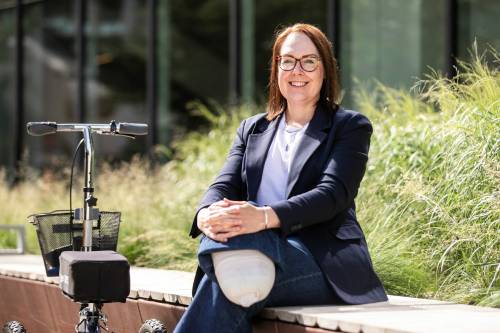
Charuka Maheswaran was 29 when she met the man she would later marry, have three children with, and who she said eventually beat and strangled her.
“He pushed me up against the counter and I could feel the counter in my back and the cold steel of the fridge on my right arm, and he just had his hands around my neck and he was just squeezing,” she said.
She said she was 34, and six months pregnant with her daughter. She said she remembered trying to push him away with her left hand, while her right immediately went to her belly.
“He just kept squeezing and I just went woozy and was blacking out, and my last thought was, ‘Well, I’m dead, (she’s) dead,'” Maheswaran said of her unborn child.
Then, suddenly, it was over.
“He just stopped and walked away. I recovered and we never spoke of it again, and I repressed the memory for a long time,” Maheswaran said.
The Canadian Press does not usually identify the victims of intimate partner violence but Maheswaran said she felt it important she be named.
“I wasn’t at fault. I didn’t ask to be strangled,” she said.
The issue of non-fatal strangulation is being addressed as part of a symposium hosted by the University of the Fraser Valley in Abbotsford, B.C., bringing together experts from across the country to address what it calls “a critical and often under-recognized form of violence.”
Health-care professionals, police and other front-line workers are aware of the dangers associated with strangulation in the context of intimate partner violence.
However, experts are also warning of risks from so-called consensual sexual strangulation.
“It happens in so-called consensual sexual relationships. It happens with sexual assault, but it also very commonly happens in abusive relationships,” said symposium organizer Amanda McCormick.
It is also “one of the strongest predictors of femicide,” she said.
McCormick, an associate professor in the School of Criminology and Criminal Justice at the University of the Fraser Valley, said it is “very hard” to detect strangulation if it’s not reported. It can cause serious and lasting harm, including brain injury and stroke.
But the signs are often invisible, she said.
“So they need to be trained to know where to look for these possible injuries, they might be hidden,” she said of front-line workers.
“We really need the community, the health-care system (and) the criminal justice system all to be working in collaboration in these very high-risk cases.”
The symposium runs until Friday and will highlight piloted policing models that help officers identify and address strangulation.
Among them is a model deployed by police in Montreal after an 18-month pilot project. It included giving information to victims about symptoms that can occur after strangulation and offering specialized training to police on how to collect better evidence in such cases.
The pilot project led to better-quality police incident reports on strangulation cases and more referrals of victims to medical services.
Montreal police Insp. Anouk St-Onge, who spearheaded the project, told the symposium on Thursday that it has been expanded across Quebec and focuses mainly on front-line officers.
“If the front-line officer doesn’t recognize strangulation, he doesn’t ask the question and he doesn’t know what he doesn’t know,” St-Onge said, noting that Montreal sees more than 10,000 intimate partner violence cases each year.
“It has to be the front-line police officers, investigators, the Crown, and everybody in the chain has to have the same knowledge.”
St-Onge said a checklist of questions completed by the officer after the victim’s statement has been a “game-changer.” It ensures the officer is not relying on memory and no question is missed, she said.
“It provides details about the act of strangulation that was almost never told by victim in (their) statement, and we ask questions about symptoms and note (the) signs,” she said. “We never did that before.”
Other aspects of the protocol include transporting consenting victims to hospital for medical assessment, providing symptoms brochure to the survivor, referral to victim services and providing an “information kit” to Crown counsel.
It also includes a mandate for investigators to follow up with victims, which St-Onge said should be a regular practice in all partner violence cases, but “essential” in instances of strangulation.
McCormick said Montreal is leading that work in the country, but noted the Abbotsford and Saanich police departments in B.C. are about six months into piloting a similar project using a “strangulation supplement tool” to guide officers.
“They ask a series of followup questions that we provided to them on what we call a resource card that they can carry around with them,” she explained.
She said the cards allow police to understand and make note of details around strangulation.
“They’re guided to evidence the file in a way that will give Crown prosecutors more information that they need to be able to demonstrate in court — that we can corroborate the victim’s statement that they were strangled by this person,” she said. “So it’s really a work in progress, but it’s something that we absolutely need to do.”
Abbotsford police Chief Const. Colin Watson told the conference Thursday that his department receives an average of more than 1,000 intimate partner violence reports annually, and that increased last year to about 1,500.
“Within that subset of (intimate partner violence-related) assaults where charges were pursued, strangulation appears sadly consistently year after year at a level that we simply cannot ignore,” he said.
“These are not rare events, and in fact, in Abbotsford, about 18 per cent of the charges involve strangulation.”
Angela Marie MacDougall, the executive director of Battered Women’s Support Services in Vancouver, said her organization had seen a “considerable increase” in reports of strangulation.
“It is more than maybe 75 per cent of survivors that access our services report experiencing strangulation,” she said. “But that can be either in the context of sexual intimacy or in the context of high risk or both.”
She said the blending of strangulation with sexual pleasure had obscured the potential harm it carries, especially among young people.
“As we normalize that, we are then normalizing extremely dangerous behaviour,” she said.
McCormick explained that putting pressure on the carotid artery cuts off oxygen to the brain, which can produce euphoric feelings.
“It’s got this sense of euphoria because (due to) the lack of oxygen, your brain is trying to kick in and it’s going into survival mode,” she said, while noting it can result in long-term structural and functional consequences on the brain.
“Consensual sexual strangulation, particularly if it’s repeated more than once, this is something that is actually starting to have effects on people’s brains,” she said.
That, she said, included impacts on memory and processing functions, but could also trigger mental health consequences such as depression, anxiety and post-traumatic stress.
McCormick highlighted the misconceptions around the associated risks.
“You cannot consent in Canada to bodily harm,” she said. “Even if you’ve had sort of a preliminary conversation about is it OK if I do this and here’s what the risks are, a person if they become harmed from this cannot consent to that, so that does present possible legal repercussions.”
Maheswaran said she was encouraged by the attention strangulation is getting at the symposium.
She is a physician, which is why she said she agreed to be a panellist who will speak to her experiences.
“Time and again in Canada I’ve been told that the violence shouldn’t have happened to me because I’m a doctor and I’m educated,” she said, noting that she wants to challenge societal beliefs around who this sort of abuse happens to.
“I think the first step in any culture change is to raise awareness.”

Looking back, Maheswaran said she believed the indicators of abuse began on the first date, with sexual aggression from her ex-husband.
“It was so incremental,” she said of the abuse.
Her ex-husband only strangled her the one time, Maheswaran said, adding that she has often thought about why.
“I think it’s because he didn’t need to again. Because he knew that was enough to keep me in line.”
This report by The Canadian Press was first published May 14, 2026.