The atomic bomb, a world-changing invention, inflicted suffering and launched the nuclear age

Advertisement

Advertise with us

Sometimes inventions save countless lives. Sometimes they end just as many. Sometimes, they do both.

Read this article for free:


or

Already have an account? Log in here »

To continue reading, please subscribe:

Subscribe and receive a limited-edition Free Press branded hat or tote.

Digital Subscription

One year of digital access for only $205*

  • Enjoy unlimited reading on winnipegfreepress.com
  • Read the E-Edition, our digital replica newspaper
  • Access News Break, our award-winning app
  • Play interactive puzzles

*First annual payment billed as $205.00 + GST for one year. This annual subscription will automatically renew at $233.00 + GST every 52 weeks (10% off the regular annual price of $259.35). Offer available to new and qualified returning subscribers only. Cancel any time.

To continue reading, please subscribe:

Add Free Press access to your Brandon Sun subscription for only an additional

$1 for the first 4 weeks*

  • Enjoy unlimited reading on winnipegfreepress.com
  • Read the E-Edition, our digital replica newspaper
  • Access News Break, our award-winning app
  • Play interactive puzzles
Start now

*Your next Brandon Sun subscription payment will increase by $1.00 and you will be charged $17.95 plus GST for four weeks. After four weeks, your payment will increase to $24.95 plus GST every four weeks.

Sometimes inventions save countless lives. Sometimes they end just as many. Sometimes, they do both.

The United States dropped the first atomic bomb ever used in warfare on Aug. 6, 1945. The olive-green steel cylinder called “Little Boy” exploded above Hiroshima, Japan, killing tens of thousands of people, sickening many more and reshaping global politics forever.

Three days later, the U.S. did it again. The second bomb, named “Fat Man,” went off over Nagasaki where another 70,000 people died and tens of thousands more were wounded.
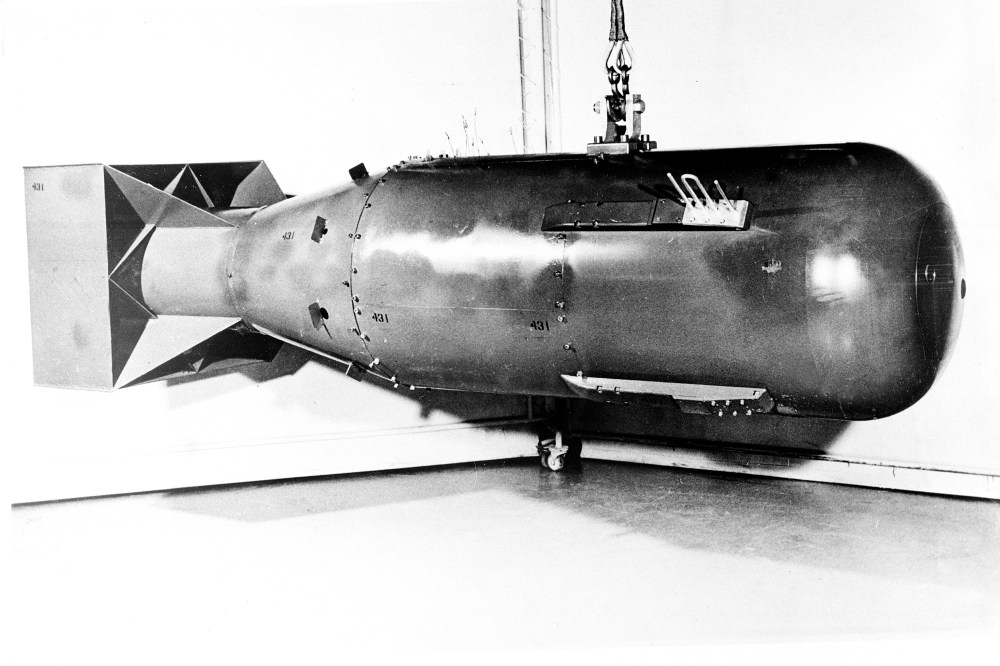
FILE - This is a 1960 photo of a U.S. nuclear weapon of the uranium bomb Little Boy type that was detonated over Hiroshima in World War II, the world's first atomic bomb used in combat. (AP Photo/U.S. Department of Defense via AP, File)

The airplane, the polio vaccine, the personal computer and other American inventions moved the world into a mostly better future. Though the atomic bomb hastened Japan’s surrender and the end of World War II, it ushered in world annihilation fears and decades of arms races.

Witnesses to a new nuclear era

Traveling to his family home in the days after the Hiroshima bombing, United Press International reporter Leslie Nakashima found his mother safe and his hometown of 300,000 people destroyed. In an Aug. 27 report, he described the bomb’s “stupendous destructive power.”

In Nagasaki about a mile (1.8 kilometers) from the epicenter, Sumiteru Taniguchi was a 16-year-old delivering mail when the explosion threw him from his bicycle. It left him with a web of wounds on his back and three damaged ribs that painfully pressed into his lungs until he died in 2017.

On his way home from discussing Germany’s defeat, President Harry S. Truman declared that “what has been done is the greatest achievement of organized science in history.” In America, jubilant crowds celebrated the war’s end.

The bombs and threats that followed

The Soviet Union went on to explode its own bomb in 1949, followed by British, French, Chinese, Indian, Pakistani and North Korean programs. In the Middle East, nuclear capabilities remain contentious.

Some analysts believe the risk of nuclear destruction has helped quash armed conflicts. But many point to the new and unknown risks created by the violent competition over becoming the next nuclear power.

Artificial intelligence has increased nations’ abilities to defend against terrorism, cyberattacks and drones. The biggest threat to modern civilization is a nuclear weapon in the hands of irresponsible populists, former British diplomat Tim Willasey-Wilsey wrote in a recent essay.

“The greatest danger of a massive global shock would come from the use of a nuclear weapon in anger for the first time since 1945,” he wrote. “A nuclear war will not be about an inability to join dots but another massive failure of human imagination.”

___

Part of a recurring series, “American Objects,” marking the 250th anniversary of the United States. For more American objects, click here. For more stories on the anniversary, click here.

Report Error Submit a Tip

More Stories

A 22-year-old man is dead and an 18-year-old is in hospital in critical condition after a two-vehicle crash on Highway 8 on Thursday evening.

A Gimli RCMP officer was driving north on the highway, near Riverton, when he witnessed the collision at about 6:45 p.m.

A vehicle headed north had passed the Mountie at a high speed before colliding with an SUV that was turning west onto Provincial Road 329 from Highway 8.

The driver of the first vehicle, an 18-year-old man from Arborg, was rushed to hospital by a helicopter ambulance with injuries RCMP describe as serious and life-threatening.

Letters, Oct. 3

7 minute read 2:01 AM CDT

A morning in the life …

My very first lesson does not start when I walk into that lecture hall, oh no — it starts long before. It begins when I walk to my car, check the estimated arrival time to the University of Manitoba and hope that Winnipeg traffic agrees with it.

A drive that appears completely manageable changes almost immediately when I’m greeted by a tsunami of orange pylons and a line of cars that appears to go on forever. Traffic moves by the inch, lanes magically disappear and the detour I took yesterday now has a detour of its own. These factors make me do a calculation that I have become all too familiar with. How late can I arrive and still find parking, run to my class across campus and get to class with enough time left to make it worth it?

I have grown used to people saying, “Why not just leave earlier?” I do. But when I’m already leaving for my 8:30 a.m. class at 7 a.m., there’s only so much I can do. This drive that some would think is relaxing is one that feels like an assignment that I didn’t know I had to complete and is due at 8:30 a.m.

Volunteer pop-up library axed from Manitoba Youth Centre

Matthew Frank 4 minute read Preview

Volunteer pop-up library axed from Manitoba Youth Centre

Matthew Frank 4 minute read 2:01 AM CDT

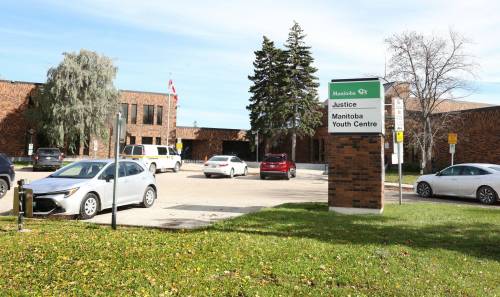
Manitoba Corrections has cancelled a pop-up library program at the Manitoba Youth Centre, leaving inmates without librarian services and fewer options to borrow certain books.

The Prison Libraries Committee, part of the non-profit Manitoba Library Association, operated and funded the volunteer program since 2024 before it was shut down by the province last month. The group previously partnered with the province to offer the service because the facility has no dedicated library of its own.

“It is concerning that community members who are incarcerated, especially youth, are losing out on meaningful programming, access to information and rehabilitation efforts, which are offered at no cost to (Manitoba) Corrections. We urge Manitoba Justice to promote more library services and programming, not less,” said a Sept. 24 letter from the non-profit addressed to the justice minister.

Ashley Huot, chair of the Prison Libraries Committee, said she was puzzled when she received an email last month from Manitoba Corrections stating that the pop-up library was no longer needed.

Read
2:01 AM CDT

A spiritual vision will help anchor a health civic outlook

John Longhurst 5 minute read 2:01 AM CDT

We have an election coming up. With that in mind, the Free Press asked some of their columnists to write about the challenges ahead and how the city can become better.

For Tom Brodbeck, the main challenge is finances — and how candidates will pay for their many promises for fixing roads, improving public safety and making transit better.

Rebecca Chambers said that the concerns of inner-city residents need to be taken seriously by those who aspire to work at city hall.

Niigaan Sinclair said the most pressing issue in Winnipeg isn’t construction projects, light-rail transit, public safety, taxes or social services. For him, it’s the city’s relationship with Indigenous people.

Nearly four in 10 Manitobans hope Canada restarts trade talks after U.S. midterm elections, poll reveals

Gabrielle Piché 4 minute read Preview

Nearly four in 10 Manitobans hope Canada restarts trade talks after U.S. midterm elections, poll reveals

Gabrielle Piché 4 minute read Yesterday at 7:00 AM CDT

Disorganized — that’s what Marcus Langlois calls recent United States tariffs.

He expects suppliers’ prices to increase — on mugs, pens, hoodies — for his employer, Dreamcatcher Promotions, if the United States–Canada trade war persists.

Still, he’s not pining for a quick trade deal.

“I think it should wait,” said Langlois, Dreamcatcher Promotions’ vice-president. “Let’s hope that it’s later on with proper negotiations happening.”

Read
Yesterday at 7:00 AM CDT

Retired guidance counsellor defends explicit 2025 sex-ed presentation to high school football team in disciplinary hearing

Maggie Macintosh 7 minute read Preview

Retired guidance counsellor defends explicit 2025 sex-ed presentation to high school football team in disciplinary hearing

Maggie Macintosh 7 minute read Updated: Yesterday at 12:26 PM CDT

Gus Watanabe, a former employee of Oak Park High School in Winnipeg, was the subject of a public disciplinary hearing on Thursday.

Read
Updated: Yesterday at 12:26 PM CDT