B.C. court strikes rule to force foreign-trained doctors to work in remote areas

Advertisement

Advertise with us

VANCOUVER - British Columbia's health minister says the province will tweak the system that attracts doctors to rural communities after a B.C. Supreme Court ruling that the government wasn't authorized to force medical graduates of programs outside Canada to work in "underserviced" areas. 

Read this article for free:


or

Already have an account? Log in here »

To continue reading, please subscribe:

Subscribe and receive a limited-edition Free Press branded hat or tote.

Digital Subscription

One year of digital access for only $205*

  • Enjoy unlimited reading on winnipegfreepress.com
  • Read the E-Edition, our digital replica newspaper
  • Access News Break, our award-winning app
  • Play interactive puzzles

*First annual payment billed as $205.00 + GST for one year. This annual subscription will automatically renew at $233.00 + GST every 52 weeks (10% off the regular annual price of $259.35). Offer available to new and qualified returning subscribers only. Cancel any time.

To continue reading, please subscribe:

Add Free Press access to your Brandon Sun subscription for only an additional

$1 for the first 4 weeks*

  • Enjoy unlimited reading on winnipegfreepress.com
  • Read the E-Edition, our digital replica newspaper
  • Access News Break, our award-winning app
  • Play interactive puzzles
Start now

*Your next Brandon Sun subscription payment will increase by $1.00 and you will be charged $17.95 plus GST for four weeks. After four weeks, your payment will increase to $24.95 plus GST every four weeks.

VANCOUVER – British Columbia’s health minister says the province will tweak the system that attracts doctors to rural communities after a B.C. Supreme Court ruling that the government wasn’t authorized to force medical graduates of programs outside Canada to work in “underserviced” areas. 

Ravi Kahlon says the program is “vitally important” and the province is reviewing the ruling. 

Justice Matthew Kirchner says in the decision posted Friday that the provincial government does not have the legal right to impose its “return to service” requirement on those seeking to apply for residency training from non-Canadian schools.
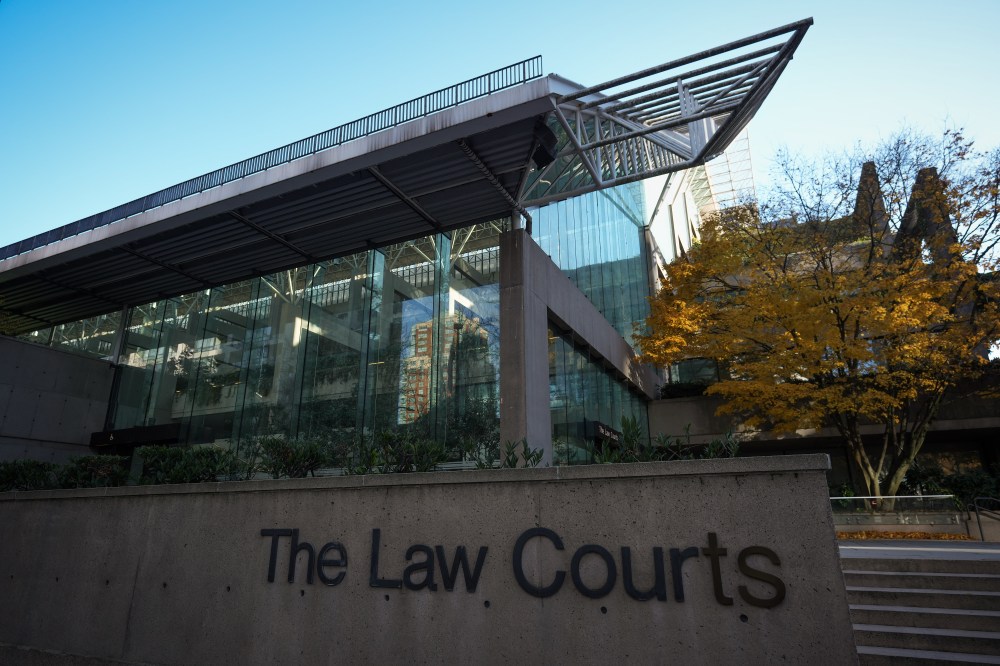
The Law Courts building, which is home to B.C. Supreme Court and the Court of Appeal, is seen in Vancouver, on Thursday, Nov. 23, 2023. THE CANADIAN PRESS/Darryl Dyck

Graduates of non-Canadian programs are required to sign an agreement to practise in rural or remote locations in B.C., something not required of Canadian medical school graduates. 

The decision stems from petitions by two Canadian citizens who received their medical education abroad and an advocacy group that challenged aspects of the service contracts and the “two-stream system,” where graduates of Canadian schools have more access to residency programs in B.C.

Brian Samuels, who represented the petitioners, said the ruling was a “mixed success,” because the court allowed the two-stream system to remain, but ruled against forcing physicians to work in “underserved remote communities.”

Samuels said if the doctors don’t agree to the contracts they can’t get a position and if they break the agreement, they faced “huge penalties.”

He said he’s still analyzing the judgment to consider if an appeal is warranted. 

The individual petitioners, Oliver Kostanski and Harris Falconer, are Canadian citizens who received their medical training outside of Canada. 

Samuels said the two-stream system being challenged sees nearly all Canadian-trained graduates get residency positions, while only around 20 per cent internationally trained graduates get placements. 

“Even though they’re fully competent and have passed everything and they’re Canadian citizens or permanent residents, they’ll never get to practice medicine in Canada,” he said in an interview on Tuesday. 

He said the return to service contracts forced physicians who studied abroad to practice in underserved communities. 

“If the government is really concerned about getting someone to work in a particular location, they can always give them an incentive. They don’t have to try to force them,” he said. 

The judge found that the requirement imposed by the B.C. Health Ministry to work in remote areas affects a Canadian citizen’s “liberty interest to decide where to live free from government interference.”

He referred the matter back to the ministry to make the changes but suspended the ruling for 60 days to give it time to address the issue, given the decision “may impact on physician availability in remote or underserviced areas of the province.”

“A person’s choice of where to live is a fundamentally personal decision which engages what it means to enjoy individual dignity and independence,” the ruling says.

The decision says penalties for breaching the agreements can reach close to $900,000 for a psychiatry practitioner and $480,000 for a family doctor.

“Through those obligations, the minister compels the (graduates) to practise medicine and live for two or three years in a location determined by the minister and imposes significant financial penalties for breach of that obligation,” the decision says. 

“International Medical Graduates who are fortunate enough to match to one of the available … residency positions have no real option but to accept that position with the accompanying requirement to commit to the return of service obligations.” 

Kahlon said at a news conference in Vancouver on Tuesday that most physicians recruited to work in rural communities have met the time commitments under the contracts. 

He said the province is reviewing the court’s ruling and “we will make adjustments if we need to, whether it’s legislation, whether that’s in rules.”

“This program is critically important for us to be able to continue to attract health care workers in rural communities,” he said. “We’re going to continue to move forward in that direction.” 

This report by The Canadian Press was first published Sept. 15, 2026.

Report Error Submit a Tip

More Stories

Clock ticks down on destruction of records documenting residential school abuses

Marsha McLeod 13 minute read Preview

Clock ticks down on destruction of records documenting residential school abuses

Marsha McLeod 13 minute read Yesterday at 12:49 PM CDT

In less than a year, a private company is set to destroy the largest cache of records detailing the widespread abuse of Indigenous children at residential schools in Canada.

The destruction, which was ordered by an Ontario court in 2014 and later upheld by the Supreme Court, is set to take place on Sept. 19, 2027.

This countdown is igniting emotional conversations that seek to balance the immense historical value of the records alongside the confidentiality survivors were promised as part of the process of providing detailed testimony about abuses they’d suffered.

The records were created as part of the Indian Residential Schools Settlement Agreement, a class-action settlement stemming from survivors who began suing the federal government in the late 1990s over the harm they’d been subjected to at residential schools.

Read
Yesterday at 12:49 PM CDT

Morning-show veteran swaps microphone for macchiatos at new Corydon café

David Sanderson 9 minute read Preview

Morning-show veteran swaps microphone for macchiatos at new Corydon café

David Sanderson 9 minute read 2:00 AM CDT

Good news if you were used to having your morning coffee with Terri Gale, who earlier this summer signed off from CTV Your Morning, after 15 years on the job.

Gale, the three-hour program’s longtime weather expert, and her husband Rob Gale, the ex-head soccer coach of Valour FC and co-founder of the Northern Super League’s new Winnipeg franchise, are the owners of Golden Hour Café and Bar at 775 Corydon Ave.

Gale (formerly Apostle) nods when she is asked who would know more about caffeinated beverages than a person who, for the last decade and a half, set her alarm to go off in the wee small hours.

“I do love coffee and take mine black. Except because I hate burning my tongue — not a good thing when you speak for a living — I got into the habit of throwing a couple of ice cubes in my cup, to be on the safe side,” Gale says, seated on the second level of their attractive, 2,100-square-foot premises, which officially opened in mid-September.

Read
2:00 AM CDT

Province looks to seize notorious drug den

Erik Pindera 5 minute read Preview

Province looks to seize notorious drug den

Erik Pindera 5 minute read 12:00 PM CDT

Provincial justice officials are trying to seize a Dominion Street drug den that has been the source of trouble in the West End for years.

The owner of 982 Dominion St., 45-year-old Robert Edward Johnson, was most recently arrested in June along with several others after a lengthy Winnipeg Police investigation into thefts and illicit drug sales connected to the house.

“The residence has a reputation within the neighbourhood as being a location where individuals habitually attend for the purpose of purchasing and/or consuming controlled substances,” reads a statement of claim filed by the province’s director of civil forfeiture in the Court of King’s Bench last week.

“For several years, the residence has been associated with criminal activity, violence, and disorder, resulting in numerous police attendances and complaints from members of the surrounding community.”

Read
12:00 PM CDT

’Disgusting’ posters being investigated by police

Morgan Modjeski 4 minute read 2:22 PM CDT

The Winnipeg Police Service major crimes unit is investigating what some have labelled offensive and hateful posters on full-display at a Winnipeg home.

One of the people irked by the display is Gracie Garrett. She’s has lived on Ashburn Street in Winnipeg’s Minto neighbourhood for almost ten years. She’s never felt unsafe in the neighbourhood before, but now, a set of posters plastered on a nearby house are making her feel uneasy.

The five signs, posted facing the street prominently on a front window, contain a slur, refer to Nazis as “heroes” and call Muslims, Christians and other groups “evil.”

Learning of the signs Friday, Garrett said she’ll be reporting the posters to police, as she worries they incite and promote violence.

Six high school hockey programs ceased operations following new Hockey Manitoba policy

Joshua Frey-Sam 7 minute read Preview

Six high school hockey programs ceased operations following new Hockey Manitoba policy

Joshua Frey-Sam 7 minute read Updated: Yesterday at 8:19 PM CDT

She lived the best of both worlds.

For the last three years, the 17-year-old wore a sweater for two different hockey programs — her high school team and AAA club in the Manitoba Female Hockey League — and was preparing to flourish in both colours again this winter.

Recently, however, the blue-liner was disappointed to learn she is no longer eligible to play her Grade 12 season with her school owing to a new policy imposed by Hockey Manitoba that bans players from participating in the Manitoba Women’s High School Hockey League if they are rostered on a U18 AAA team.

The rule applies to all athletes who play for both Winnipeg-based and rural AAA teams.

Read
Updated: Yesterday at 8:19 PM CDT

Broadening prediction-market gambling a bad idea

Editorial 4 minute read Preview

Broadening prediction-market gambling a bad idea

Editorial 4 minute read 2:01 AM CDT

Let’s make a prediction: sooner or later, when Canadian governments find a way to take their own cut of the action, prediction-contract gambling on everything from sports to entertainment to political decisions is going to come to Canada.

And that’s a horrible, dangerous, pernicious idea.

Unless you have particular access to information — either inside information or strategic information based on skills or education — you’re not likely to make money at it. In fact, structurally, you’re likely to lose. In prediction markets, you basically pay an amount, plus fees from the company involved, to bet on whether something will or will not happen within a certain time frame. The amount you pay for your contract depends on how other people are also betting.

As Wealthsimple describes it, “You buy whichever side you think is right. Prices move with demand, so if the market leans towards one outcome, the more that side costs. If a lot of people are backing the TSX to finish above 38,000, yes gets more expensive and no gets cheaper.”

Read
2:01 AM CDT