What to know about USAID and the deadly impacts of US foreign aid cuts

Advertisement

Advertise with us

KATHMANDU, Nepal (AP) — The foreign aid landscape has changed dramatically since U.S. President Donald Trump’s administration dissolved the United States Agency for International Development, once the world’s largest humanitarian donor.

Read this article for free:


or

Already have an account? Log in here »

To continue reading, please subscribe:

Subscribe and receive a limited-edition Free Press branded hat or tote.

Digital Subscription

One year of digital access for only $205*

  • Enjoy unlimited reading on winnipegfreepress.com
  • Read the E-Edition, our digital replica newspaper
  • Access News Break, our award-winning app
  • Play interactive puzzles

*First annual payment billed as $205.00 + GST for one year. This annual subscription will automatically renew at $233.00 + GST every 52 weeks (10% off the regular annual price of $259.35). Offer available to new and qualified returning subscribers only. Cancel any time.

To continue reading, please subscribe:

Add Free Press access to your Brandon Sun subscription for only an additional

$1 for the first 4 weeks*

  • Enjoy unlimited reading on winnipegfreepress.com
  • Read the E-Edition, our digital replica newspaper
  • Access News Break, our award-winning app
  • Play interactive puzzles
Start now

*Your next Brandon Sun subscription payment will increase by $1.00 and you will be charged $17.95 plus GST for four weeks. After four weeks, your payment will increase to $24.95 plus GST every four weeks.

KATHMANDU, Nepal (AP) — The foreign aid landscape has changed dramatically since U.S. President Donald Trump’s administration dissolved the United States Agency for International Development, once the world’s largest humanitarian donor.

Here’s a quick look at USAID, the impacts of its dissolution and what foreign aid looks like today:

USAID’s roots and purpose
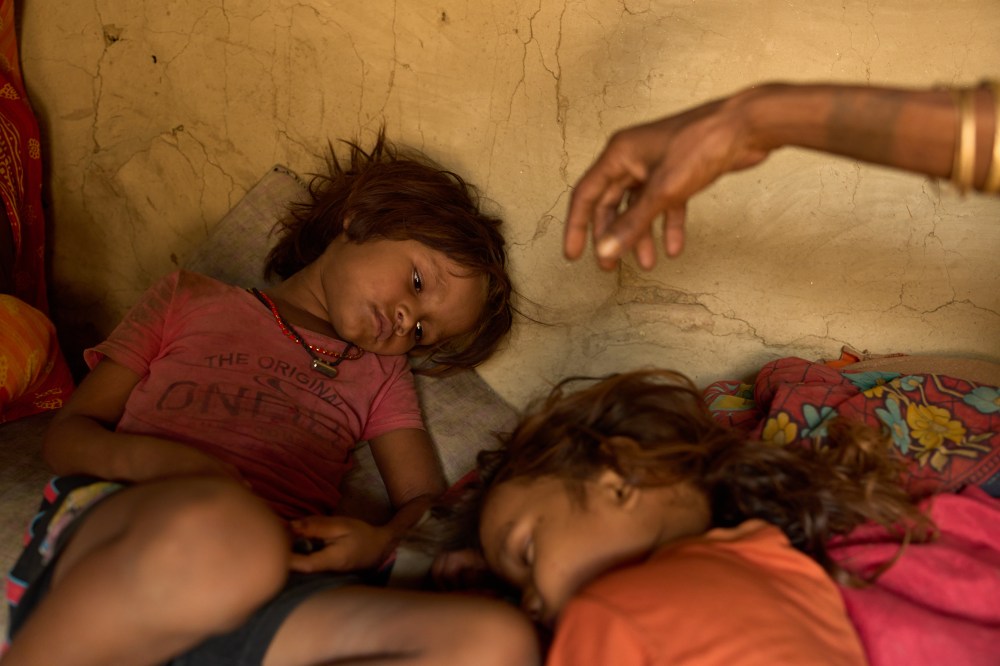
FILE - Sonam Mukhiya, left, lies next to her 3-year-old brother, Yubraj Mukhiya, and their grandmother in their home in Gaur, Nepal, on May 19, 2026. (AP Photo/Bram Janssen, File)

U.S. President John F. Kennedy and Congress started USAID in the early 1960s. Beyond the belief that the U.S. has a moral obligation to help the world’s most desperate, supporters of USAID say the agency was a crucial tool of soft power diplomacy. Supporters say USAID directly benefited the country by engendering immense global goodwill toward the U.S., helping prevent the spread of diseases that could threaten American lives and providing stability in foreign countries that could otherwise pose a threat to U.S. security. The U.S. typically spent around 1% of its federal budget on U.S. foreign assistance.

A study published in The Lancet credited USAID programs with preventing 91 million deaths — including 30 million deaths of children under age 5 — in the first two decades of this century alone.

Critics of the agency, including Trump, say it was wasteful and poorly run.

US foreign aid cuts affect communities worldwide

The U.S. foreign aid cuts have been devastating for millions of the world’s most vulnerable people. The Associated Press has documented widespread severe hunger, shortages of lifesaving medicine and spikes in child marriage, kidnapping and trafficking of children — consequences that are all linked to the funding cuts. Experts say the true impact won’t be measurable for years, because the repercussions of issues like malnutrition and untreated diseases take time to manifest. And the full extent of the damage may never be known, in part because the funding cuts eliminated the jobs of scores of front line workers who collected mortality data.

Deaths linked to US foreign aid cuts

Despite the U.S. government’s repeated insistence that no one has died as a result of its dissolution of USAID, the AP has documented deaths across the world linked to the funding cuts. In Nepal, the AP found that cuts to programs that ensured uneducated, impoverished pregnant women got proper nutrition and prenatal care have led to more babies and pregnant women dying. The AP also found that children in Myanmar, Nigeria and Somalia have died after cuts to food rations and nutrition programs.

Because of global cuts to foreign aid, the Gates Foundation has predicted that 2025 will be the first year this century where child deaths will increase.

US defends its decision

In a statement to the AP, the U.S. State Department said the Trump administration had reinvigorated its assistance programs to focus on efficiency, effectiveness and partnership. The department also said the U.S. spends more on health and humanitarian assistance than any other country.

“The rest of the world needs to contribute more and share the burden,” the department said.

US foreign aid today

The Trump administration’s new foreign aid strategy is more limited and is targeted toward initiatives that government officials say will further the United States’ interests. With health aid, for example, the U.S. is increasingly bypassing NGOs in favor of bilateral agreements with foreign countries. This means the money goes directly to foreign governments in exchange for concessions to the U.S., such as access to a country’s health data, which could be used to help detect outbreaks of infectious diseases. The U.S. says this model is more efficient. But some countries have pushed back, particularly over privacy concerns for their citizens’ medical records.
Report Error Submit a Tip

More Stories

What to know about USAID and the deadly impacts of US foreign aid cuts

Kristen Gelineau, The Associated Press 4 minute read Preview

What to know about USAID and the deadly impacts of US foreign aid cuts

Kristen Gelineau, The Associated Press 4 minute read Tuesday, Sep. 22, 2026

KATHMANDU, Nepal (AP) — The foreign aid landscape has changed dramatically since U.S. President Donald Trump’s administration dissolved the United States Agency for International Development, once the world’s largest humanitarian donor.

Here’s a quick look at USAID, the impacts of its dissolution and what foreign aid looks like today:

USAID's roots and purpose

U.S. President John F. Kennedy and Congress started USAID in the early 1960s. Beyond the belief that the U.S. has a moral obligation to help the world’s most desperate, supporters of USAID say the agency was a crucial tool of soft power diplomacy. Supporters say USAID directly benefited the country by engendering immense global goodwill toward the U.S., helping prevent the spread of diseases that could threaten American lives and providing stability in foreign countries that could otherwise pose a threat to U.S. security. The U.S. typically spent around 1% of its federal budget on U.S. foreign assistance.

Read
Tuesday, Sep. 22, 2026

The election of our discontent: City at a crumbling crossroads, grumbling residents say in poll

Matthew Frank 7 minute read Preview

The election of our discontent: City at a crumbling crossroads, grumbling residents say in poll

Matthew Frank 7 minute read Yesterday at 2:37 PM CDT

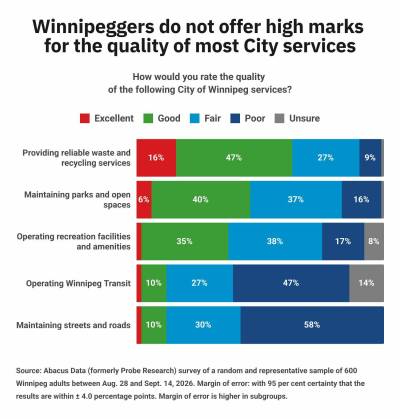
There’s an undercurrent of unhappiness running through the Winnipeg electorate as the municipal election day approaches.

One-half of Winnipeggers believe the city is heading in the wrong direction, according to a new Abacus Data poll, with nearly one-third unsure if Winnipeg is regressing or progressing.

Only 21 per cent of residents believe the city is on the right track, the Free Press-commissioned poll found.

That discontentment extends to how the city spends its tax dollars, with four in 10 Winnipeggers believing they receive poor value for what they pay in property taxes.

Read
Yesterday at 2:37 PM CDT

Bombers get ‘whopped’ in Montreal

Taylor Allen 5 minute read Preview

Bombers get ‘whopped’ in Montreal

Taylor Allen 5 minute read Saturday, Oct. 3, 2026

MONTREAL — It’s hard to fathom that the Winnipeg Blue Bombers smacked these Montreal Alouettes five weeks ago.

The team that pulled off that 44-28 upset at Princess Auto Stadium was nowhere to be found in La Belle Province on Saturday night.

You can, however, now find them in the basement of the West Division at 7-8 after getting completely outmatched and outclassed by the Als in a 37-10 beatdown.

“This was bad,” left tackle Stanley Bryant told the Free Press postgame. “They basically had their way all around. They whopped our ass.”

Read
Saturday, Oct. 3, 2026

Living the dream

Ken Wiebe 7 minute read Preview

Living the dream

Ken Wiebe 7 minute read Saturday, Oct. 3, 2026

DETROIT – As Tyrel Bauer took a left turn out of the tunnel from the Winnipeg Jets dressing room and into the stands, he was met with a hearty round of applause from the 25 friends and family members who had made the trek from various points around North America.

Bauer had just realized a childhood dream and the significance of the moment was not lost on some of his biggest supporters.

“It was a special walk, for sure. A special walk,” Bauer said on Saturday afternoon before the Jets departed for a two-game road trip that begins on Sunday in Detroit against the Red Wings. “Those people who came – and many more that weren’t there and were cheering on from afar – they’ve always been there.

“I wanted that for my family, maybe even more than I wanted it for me. They’ve been through thick and thin. I’ve stressed mom out quite a bit over the years doing my job. That meant a lot for them and I’m really happy they could be there for it.”

Read
Saturday, Oct. 3, 2026

Thank Manitoba’s teachers by investing in students

Lillian Klausen 5 minute read 2:00 AM CDT

Manitoba’s students are settling into a new school year. Whether you graduated in 1986 or 2006, today’s classrooms look very different from the ones you remember.

Students reflect the changing makeup of our communities — differences in social, emotional, physical and cognitive abilities and socioeconomic stresses are all increasingly present and adding to the complexity of our classrooms.

Meeting these differing individual needs is no easy feat. It requires manageable class sizes, school counsellors, social workers, specialized resource teachers and investment in the systems that can help students thrive. But when those supports aren’t available, students’ needs don’t disappear. Increasingly, it falls to classroom teachers to try to fill the gaps.

When I started working as a teacher more than 30 years ago, we had budgets for resources when we needed them. Today, the needs of students have diversified and increased, but the funding for our public schools is failing to meet them.

Stevenson set for first Jets start against Penguins

Ken Wiebe 5 minute read Preview

Stevenson set for first Jets start against Penguins

Ken Wiebe 5 minute read Yesterday at 6:55 PM CDT

DETROIT — Clay Stevenson, the stage is yours.

As the Winnipeg Jets wrap up a two-game road trip on Monday against the Pittsburgh Penguins, the newest member of the team will be between the pipes after Stuart Skinner got the call in the first two outings of the campaign.

There will be an element of familiarity for Stevenson, as PPG Paints Arena is where he made his first NHL appearance with the Washington Capitals on April 17, 2025.

“There is some comfortability in that building,” said Stevenson, who made 33 saves in a 5-2 loss to the Penguins in that NHL debut. “It’s always a great challenge to play against (Sidney) Crosby and (Evgeni) Malkin and those guys. It’s an honour to get into the crease anytime.”

Read
Yesterday at 6:55 PM CDT