CRA to send out new round of letters checking eligibility from CERB recipients
Advertisement
Read this article for free:
or
Already have an account? Log in here »
To continue reading, please subscribe:

Digital Subscription
One year of digital access for only $205*
- Enjoy unlimited reading on winnipegfreepress.com
- Read the E-Edition, our digital replica newspaper
- Access News Break, our award-winning app
- Play interactive puzzles
*First annual payment billed as $205.00 + GST for one year. This annual subscription will automatically renew at $233.00 + GST every 52 weeks (10% off the regular annual price of $259.35). Offer available to new and qualified returning subscribers only. Cancel any time.
To continue reading, please subscribe:
Add Free Press access to your Brandon Sun subscription for only an additional
$1 for the first 4 weeks*
- Enjoy unlimited reading on winnipegfreepress.com
- Read the E-Edition, our digital replica newspaper
- Access News Break, our award-winning app
- Play interactive puzzles
*Your next Brandon Sun subscription payment will increase by $1.00 and you will be charged $17.95 plus GST for four weeks. After four weeks, your payment will increase to $24.95 plus GST every four weeks.
Read unlimited articles for free today:
or
Already have an account? Log in here »
Hey there, time traveller!
This article was published 27/01/2022 (1714 days ago), so information in it may no longer be current.
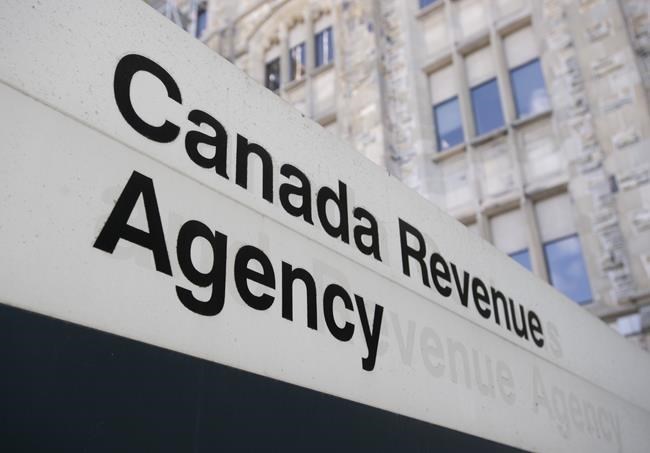
OTTAWA – The Canada Revenue Agency is sending out a new round of letters to pandemic aid recipients to verify they were eligible for the help, and warning of potential need for repayments.
It’s the second time the agency is mailing Canada Emergency Response Benefit recipients as part of a process to verify the eligibility of the millions of Canadians who received the $500-a-week benefit.
The CRA sent out more than 441,000 letters to CERB recipients near the end of 2020 asking them to verify they met eligibility rules for the payments.
Thousands more are going out beginning Thursday, this time targeting recipients who may have earned more than the $1,000 a month the Liberals allowed beginning in mid-April 2020.
The agency says the people who are receiving letters have tax information that suggest they earned too much income during periods when they received aid.
The letters say the CRA will work on flexible repayment plans for anyone who has to give back some of the money, without interest, but warns that won’t be the case for those who don’t respond to the government missive.
The federal government quickly rolled out the CERB at the onset of the pandemic, only asking applicants to attest they were eligible.
The government opted for few upfront validation checks to speed up payments during lockdowns over March and April 2020 when three million jobs were lost.
In the end, the CERB doled out $81.64 billion to 8.9 million recipients.
The government has long said that officials would review claims after the fact to claw back wrongful payments.
Following a critical review by auditor general Karen Hogan last March about missed opportunities to prevent fraud and wrongful payments, the government said it would spend four years tracking down every wrongful payment.
“The few letters that will go out this week, it’s the beginning. We’ll start with a few thousand,” said Marc Lemieux, the CRA’s assistant commissioner in charge of collections and verification. “Eventually, though, for a program of that size, I think it’s hundreds of thousands of letters that we’ll have to send and ask people to validate their eligibility.”
Letters sent in late 2020 asked some recipients to prove they met one criteria for the CERB: that they earned at least $5,000 in the preceding 12-month period.
The letters, however, caused concerns among low-income earners who feared not being able to repay, and interpreted the CRA’s message as setting a deadline for repayment by the end of that year.
The agency appears to have learned from that experience and has massaged the message this time around.

Lemieux said the letters this time say that the agency has some information as opposed to none, and wants extra details to validate someone’s CERB payment.
“People may have made mistakes, their situation may have changed during the period for which they were receiving the benefits,” he said.
No one at this point is being asked to repay. They’ll have 45 days to contact the CRA, after which the agency may decide that the person owes the money back. Lemieux said the agency plans to be flexible on repayment plans for any amounts owing.
“We may require some information about their financial situation, and then we’ll see with them what is possible, and we’ll see if we could accommodate them,” he said.
This report by The Canadian Press was first published Jan. 27, 2022.