Elections Canada probed how many Canadians have a ‘conspiracy mindset’
Advertisement
Read this article for free:
or
Already have an account? Log in here »
To continue reading, please subscribe:

Digital Subscription
One year of digital access for only $205*
- Enjoy unlimited reading on winnipegfreepress.com
- Read the E-Edition, our digital replica newspaper
- Access News Break, our award-winning app
- Play interactive puzzles
*First annual payment billed as $205.00 + GST for one year. This annual subscription will automatically renew at $233.00 + GST every 52 weeks (10% off the regular annual price of $259.35). Offer available to new and qualified returning subscribers only. Cancel any time.
To continue reading, please subscribe:
Add Free Press access to your Brandon Sun subscription for only an additional
$1 for the first 4 weeks*
- Enjoy unlimited reading on winnipegfreepress.com
- Read the E-Edition, our digital replica newspaper
- Access News Break, our award-winning app
- Play interactive puzzles
*Your next Brandon Sun subscription payment will increase by $1.00 and you will be charged $17.95 plus GST for four weeks. After four weeks, your payment will increase to $24.95 plus GST every four weeks.
Read unlimited articles for free today:
or
Already have an account? Log in here »
Hey there, time traveller!
This article was published 02/11/2021 (1755 days ago), so information in it may no longer be current.
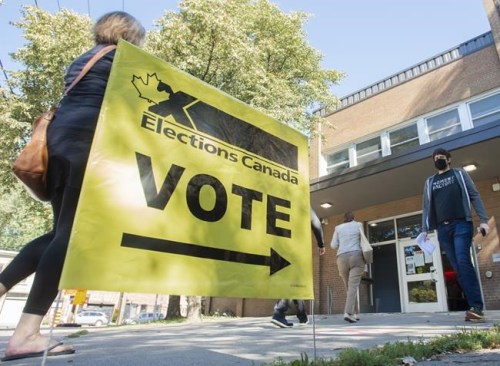
OTTAWA – Elections Canada was curious to know how many Canadians believed in conspiracy theories in the lead up to the recent federal vote.
Prime Minister Justin Trudeau had two years left in his minority mandate in August when he plunged the country into an election while a fourth wave of COVID-19 raged.
Protesters opposed to public health measures like masking and mandatory vaccinations staged demonstrations, some of them following Trudeau as he crisscrossed the country, hurling obscenities at him and, at one point, even gravel.
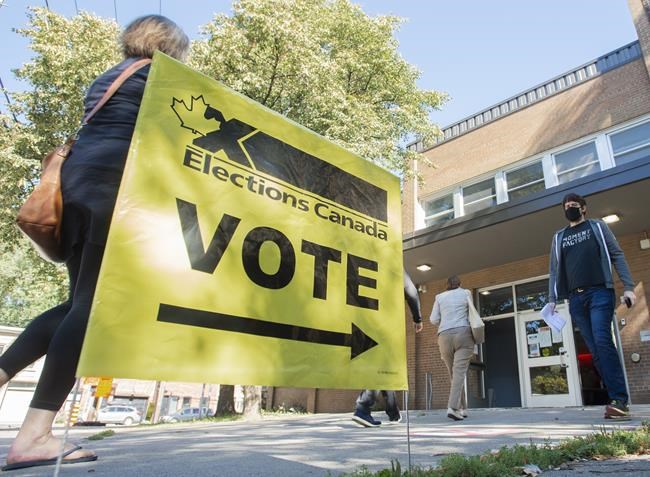
Months before triggering the vote, the federal agency in charge of running elections commissioned its first stand-alone survey into the level of trust Canadians had in the electoral process. That included finding out how many held a “conspiracy mindset.”
“Questions about conspiracies allow for a better understanding of what can trigger distrust toward electoral administration,” Elections Canada spokeswoman Natasha Gauthier said in a statement, adding the “COVID-19 pandemic has caused significant social and economic changes, including in the realm of election administration.”
“Looking at mistrust in general also helps us better understand what sorts of information and communication approaches can be effective in instilling trust in elections.”
Conducted by the firm Leger over 10 days in April, the poll surveyed 2,500 Canadians online and through computer assisted interviewing technology.
It found a majority of respondents trusted Elections Canada and believed the voting system was “safe and reliable.”
When it came to conspiracy beliefs, the study, recently posted to a government website, reported 17 per cent believed the government was trying to cover up the link between vaccines and autism, and 30 per cent thought new drugs or technologies were being tested on people without their knowledge.
The research also found 40 per cent of respondents subscribed to thinking that certain big events have been the product of a “small group who secretly manipulate world events.”
Aengus Bridgman, a lead researcher on a project which tracked the spread of false and misleading information during the campaign, said putting an exact number on how many Canadians believe in conspiracies is tough because it comes down to how that’s measured.
The McGill University PhD student in political science says the project, co-organized with the University of Toronto, has done its own surveys that suggest between 10 to 20 per cent of people held strong conspiracy beliefs.
Bridgman says false information about the novel coronavirus played a big role during the election. Social media also saw a “relentless group of individuals” making untrue claims about how mail-in votes would be counted, reflective of what unfolded during the 2020 U.S. presidential election, where former president Donald Trump pushed unsubstantiated concerns about fraudulent mail-in ballots.
As the Sept. 20 election day neared, Elections Canada countered with messages explaining the process for counting these ballots but Bridgman says that needs to happen faster.
“As soon as it starts circulating on a Telegram channel, you can be pretty sure within 24 hours, 36 hours, it’s going to be on some of the more mainstream platforms, and people are going to be being exposed to it.”
One of pandemic’s effects, he says, is that vaccinations have become a “flashpoint” where groups who hold different conspiracy-based beliefs, from the Earth being flat to the allegedly sinister agenda of large pharmaceutical companies, finding a home together.

Mainstream political parties are often referred to as “big tent parties,” Bridgman notes. “Well, now we have this big tent conspiracy party.”
He says one conspiracy theory that appeared during the campaign and also online was around so-called “climate lockdowns.”
That was spread by, among others, long-time Conservative MP Cheryl Gallant from Ontario. Leading up to the election, she circulated mailers to constituents warning that the Liberals wanted to impose a “climate lockdown” and made similar comments in a video posted to social media.
The video was removed after Conservative Leader Erin O’Toole received questions about it.
This report by The Canadian Press was first published Nov. 2, 2021