Genetic detectives begin work to trace spread of COVID-19 in Canada

Advertisement

Advertise with us

OTTAWA - For the last four months, Canada's public health experts have been racing to stop the spread of COVID-19 by trying to figure out how everyone is getting it, and whom they may have given it to.

Read this article for free:


or

Already have an account? Log in here »

To continue reading, please subscribe:

Subscribe and receive a limited-edition Free Press branded hat or tote.

Digital Subscription

One year of digital access for only $205*

  • Enjoy unlimited reading on winnipegfreepress.com
  • Read the E-Edition, our digital replica newspaper
  • Access News Break, our award-winning app
  • Play interactive puzzles

*First annual payment billed as $205.00 + GST for one year. This annual subscription will automatically renew at $233.00 + GST every 52 weeks (10% off the regular annual price of $259.35). Offer available to new and qualified returning subscribers only. Cancel any time.

To continue reading, please subscribe:

Add Free Press access to your Brandon Sun subscription for only an additional

$1 for the first 4 weeks*

  • Enjoy unlimited reading on winnipegfreepress.com
  • Read the E-Edition, our digital replica newspaper
  • Access News Break, our award-winning app
  • Play interactive puzzles
Start now

*Your next Brandon Sun subscription payment will increase by $1.00 and you will be charged $17.95 plus GST for four weeks. After four weeks, your payment will increase to $24.95 plus GST every four weeks.

Hey there, time traveller!
This article was published 12/07/2020 (2250 days ago), so information in it may no longer be current.

OTTAWA – For the last four months, Canada’s public health experts have been racing to stop the spread of COVID-19 by trying to figure out how everyone is getting it, and whom they may have given it to.

But even the best efforts have left doctors stymied about the source of more than one-third of this country’s known COVID-19 infections. Not knowing where cases come from makes outbreaks that much harder to stamp out.

Now medical researchers and supercomputers are turning genetics labs into virus detective agencies, looking first to find the novel coronavirus itself within blood samples from thousands of infected patients, and then comparing all of those isolated viruses to each other looking for places they differ.
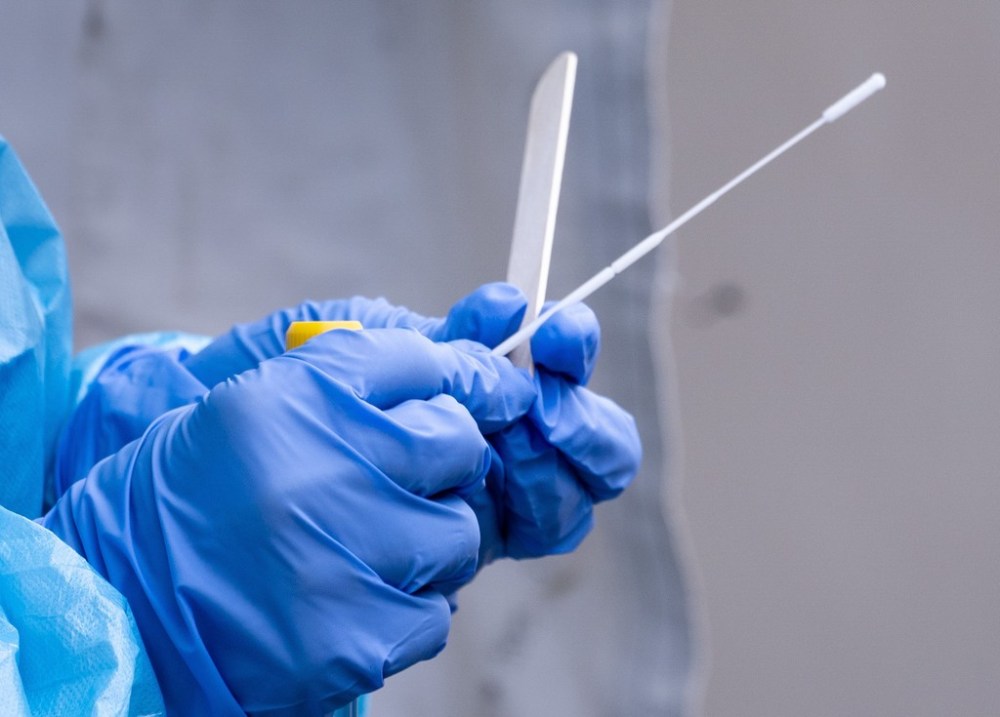
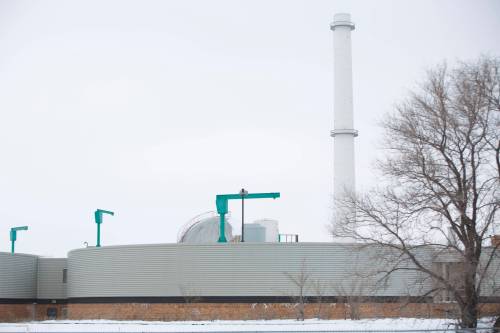
THE CANADIAN PRESS/Paul Chiasson

Every close match will draw a line from patient to patient, ultimately painting a picture of how the virus spread.

“This is the big effort over the next four weeks,” said Andrew McArthur, director of the biomedical discovery and commercialization program at McMaster University.

“What’s going to come out of there pretty soon is a glimpse of what just happened, how did it move around the province, how did it move between provinces or how big was Pearson (airport) in the early days of the airport being open.”

Knowing how the virus spread will show where there were weaknesses in public health measures early on, said McArthur. Being able to keep divining genetic codes from samples will mean when there are flare-ups of cases, they can be quickly compared to each other to see if they’re all related or are coming from multiple sources.

It means, for example, a long-term care centre should be able to quickly know if its 10 new cases are because one case spread widely or arose from multiple carriers coming into the facility.

“That’s a very different infection-control problem,” said McArthur.

It also means that maybe, just maybe, the second COVID-19 wave most think is coming won’t be as bad, or as hard to control, as the first, because the sources can be isolated very quickly.

“A second wave is likely,” McArthur said. “But we’ve never spent this kind of money and effort before, either, so maybe we’ll beat it.”

The kinds of genetic technology being used for this project did not exist when SARS hit Canada in 2003.

This genetic mapping is constantly on the look-out for mutations. Thus far, SARS-CoV-2, the official name for the virus that causes COVID-19, has not mutated as quickly as many others do. Influenza, for instance, changes so much over a year the vaccine has to be retooled every summer to keep up.

But there are enough subtle changes still happening among the 28,000 individual markers that make up a genome for SARS-CoV-2 that cases can be traced backward and linked to the ones that came before. McArthur said it takes a lot of data storage, a lot of high-capacity computer analysis, and a lot of money, to run the comparisons among them all.

The federal government put $40 million on the table in April for genetic research on COVID-19. Half is to keep tabs on the virus as it spreads, look for any changes it undergoes, and map its pathway across the country. The other half is to look at the genetic structures of the patients who get infected, trying to answer the puzzling question of why some people die and others have symptoms so mild they never even know they are sick.

Genome Canada is administering the project, with six regional genomics agencies overseeing the work locally and labs like McArthur’s doing the testing and analysis. The funding is intended to create genetic maps from 150,000 patients. Canada thus far has had about 108,000 positive cases, and the expectation is that almost every one of them will be gene-mapped.

The results will be loaded into a global site comparing all known infections of COVID-19, but also be analyzed for national and regional reports.

In New York, genetic sequencing was used to figure out that COVID-19 in Manhattan wasn’t coming from China and Iran as imagined, but from Europe. In Canada, it is suspected that much of the virus came into this country from travellers returning from the United States in early March. But the work is only now beginning to confirm that belief.

McArthur estimates the first data will be available for Ontario in about four weeks, but warns it will take many more months to complete all of the tests. His lab sequenced 600 samples on Wednesday alone.

Overall, McArthur expects the genetics project to last for two years.

This report by The Canadian Press was first published July 12, 2020.

Report Error Submit a Tip

More Stories

Grieving families, local leaders want review of Interlake intersection after teens die in crash

Chris Kitching 8 minute read Preview

Grieving families, local leaders want review of Interlake intersection after teens die in crash

Chris Kitching 8 minute read Updated: Yesterday at 6:34 PM CDT

A two-vehicle crash that killed four teenage friends in the Interlake Sunday night prompted outpourings of grief in several communities and calls for safety improvements at the intersection, which was also the site of a death in July.

Recent high school graduates Maya Borsa and Chloe Vermette, both 18, were identified by their families as victims of the collision at Highway 8 and Provincial Road 229, just west of Winnipeg Beach.

“(Chloe) was a very bubbly, loving personality. Always giving, always caring. Her friends meant the world to her,” said her mother, Veronique Vermette, who struggled to comprehend the tragedy when she went to the scene Monday. “We sat in the rain for hours, and it blew my mind that four lives were taken.”

The teens’ parents are waiting for RCMP to provide more information about the cause of the crash. Chloe, who graduated from Windsor Park Collegiate in Winnipeg in July, was driving one of the vehicles, her mother said.

Read
Updated: Yesterday at 6:34 PM CDT

Pointing fingers at Tories three years after election tiresome, accomplishes nothing

Tom Brodbeck 5 minute read Preview

Pointing fingers at Tories three years after election tiresome, accomplishes nothing

Tom Brodbeck 5 minute read Yesterday at 1:08 PM CDT

There is a point in every government’s life when blaming the previous government stops being an explanation and starts becoming an excuse.

For Manitoba’s NDP government, that point has arrived.

Justice Minister Matt Wiebe was asked last week about a grievance filed by Crown attorneys over excessive workloads and a government attempt to keep a report documenting those workloads out of an upcoming arbitration hearing.

Wiebe said he couldn’t discuss the arbitration case.

Read
Yesterday at 1:08 PM CDT

Parts of River Heights hammered by storm

Melissa Martin 5 minute read Preview

Parts of River Heights hammered by storm

Melissa Martin 5 minute read Monday, Sep. 7, 2026

A powerful storm cut a swath of destruction through River Heights on Sunday, leaving much of the area without power.

Nobody was hurt in the storm.

By the time it subsided, parts of the quiet neighbourhood, especially Borebank and Lindsay streets between Grant and Taylor, had been ravaged: power lines downed, Manitoba Hydro poles toppled, trees splintered and crashed down on vehicles and homes.

In one case, a vehicle was flipped into a yard and sat under a partially downed tree. Shingles were stripped from roofs. Some residents described looking out during the storm and seeing power lines ablaze and the blue glow of electricity arcing over their backyards.

Read
Monday, Sep. 7, 2026

‘Dynacare sucks:’ premier muses about bringing lab services back into public system after strike halted

Free Press staff 4 minute read Preview

‘Dynacare sucks:’ premier muses about bringing lab services back into public system after strike halted

Free Press staff 4 minute read Updated: 11:49 AM CDT

Manitoba’s premier said the province is looking at bringing diagnostic lab services back into the public system rather than continuing to contract Dynacare, declaring the for-profit company “sucks.”

“Maybe we’ll take over the whole system… we’re working on it, we’re looking at it, the situation is not great, this company’s making a mess — I think it’s pretty clear I’m not happy with them,” Premier Wab Kinew told CBC Radio Wednesday morning. “At the same time, nobody should be trying to use people’s health care as leverage.”

Kinew made the comments the day after the Manitoba Labour Board cut short a strike by 350 lab technicians and technologists employed by Dynacare, which administers blood, urine and other medical tests for patients in Winnipeg, Brandon and surrounding communities.

Dynacare, which is contracted by the provincial government, performs the majority of non-emergency blood and urine tests in the province.

Read
Updated: 11:49 AM CDT

Council to consider moving ahead with final phase of sewage plant upgrade before securing expected federal cash

Joyanne Pursaga 5 minute read Preview

Council to consider moving ahead with final phase of sewage plant upgrade before securing expected federal cash

Joyanne Pursaga 5 minute read 6:00 PM CDT

City council will consider approving $115 million toward the final phase of the North End sewage treatment plant upgrade, while civic staff warn sewer rates would soar $200 higher per year if more federal funding isn’t provided.

However, several politicians say a response from Ottawa to the city’s request for more money is expected soon.

A water and waste report asks council to waive a condition that the city finalize funding agreements with the provincial and federal governments for the mega-project before awarding the money for a contractor to complete the $115-million development phase agreement for the final project.

The third and final nutrient removal facilities phase is expected to cost $1.57 billion, bringing the total cost of the entire upgrade to $3.1 billion.

Read
6:00 PM CDT

Genetic detectives get to work in Canada

Mia Rabson, The Canadian Press 5 minute read Preview

Genetic detectives get to work in Canada

Mia Rabson, The Canadian Press 5 minute read Sunday, Jul. 12, 2020

OTTAWA - For the last four months, Canada's public health experts have been racing to stop the spread of COVID-19 by trying to figure out how everyone is getting it, and whom they may have given it to.

But even the best efforts have left doctors stymied about the source of more than one-third of this country's known COVID-19 infections. Not knowing where cases come from makes outbreaks that much harder to stamp out.

Now medical researchers and supercomputers are turning genetics labs into virus detective agencies, looking first to find the novel coronavirus itself within blood samples from thousands of infected patients, and then comparing all of those isolated viruses to each other looking for places they differ.

Every close match will draw a line from patient to patient, ultimately painting a picture of how the virus spread.

Read
Sunday, Jul. 12, 2020