Biden blasts high court failure to block Texas abortion curb
Advertisement
Read this article for free:
or
Already have an account? Log in here »
To continue reading, please subscribe:

Digital Subscription
One year of digital access for only $205*
- Enjoy unlimited reading on winnipegfreepress.com
- Read the E-Edition, our digital replica newspaper
- Access News Break, our award-winning app
- Play interactive puzzles
*First annual payment billed as $205.00 + GST for one year. This annual subscription will automatically renew at $233.00 + GST every 52 weeks (10% off the regular annual price of $259.35). Offer available to new and qualified returning subscribers only. Cancel any time.
To continue reading, please subscribe:
Add Free Press access to your Brandon Sun subscription for only an additional
$1 for the first 4 weeks*
- Enjoy unlimited reading on winnipegfreepress.com
- Read the E-Edition, our digital replica newspaper
- Access News Break, our award-winning app
- Play interactive puzzles
*Your next Brandon Sun subscription payment will increase by $1.00 and you will be charged $17.95 plus GST for four weeks. After four weeks, your payment will increase to $24.95 plus GST every four weeks.
Read unlimited articles for free today:
or
Already have an account? Log in here »
Hey there, time traveller!
This article was published 02/09/2021 (1865 days ago), so information in it may no longer be current.
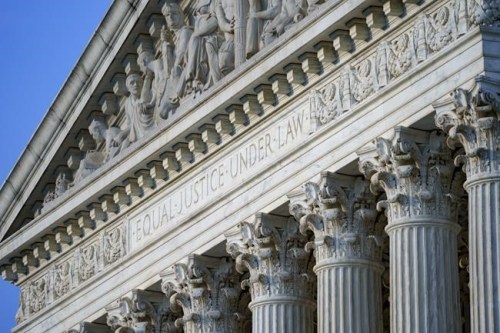
WASHINGTON (AP) — President Joe Biden on Thursday blasted the Supreme Court’s decision not to block a new Texas law banning most abortions in the state and directed federal agencies to do what they can to “insulate women and providers” from the impact.
Hours earlier, in the middle of the night, a deeply divided high court allowed the law to remain in force. It is the nation’s biggest curb to abortion rights since the court announced in its landmark 1973 Roe v. Wade decision that women have a constitutional right to abortion.
The court voted 5-4 to deny an emergency appeal from abortion providers and others but also suggested that their order likely wasn’t the last word and other challenges can be brought.

Biden said in a statement that his administration will launch a “whole-of-government effort to respond to this decision” and look at “what steps the federal government can take to ensure that women in Texas have access to safe and legal abortions as protected by Roe.”
Attorney General Merrick Garland said in a statement that the Justice Department was “deeply concerned” about the Texas law and “evaluating all options to protect the constitutional rights of women, including access to an abortion.”
Biden, who has come under pressure from Democrats to expand the size of the Supreme Court, has ordered a review of the court that is due next month.
The Texas law, signed by Republican Gov. Greg Abbott in May, prohibits abortions once medical professionals can detect cardiac activity, usually around six weeks and before many women know they’re pregnant.
The law is part of a broader push by Republicans nationwide to impose new restrictions on abortion. At least 12 other states have enacted bans early in pregnancy, but all have been blocked from going into effect.
The high court’s order declining to halt the Texas law came just before midnight Wednesday. The majority said those bringing the case had not met the high burden required for a stay of the law.
“In reaching this conclusion, we stress that we do not purport to resolve definitively any jurisdictional or substantive claim in the applicants’ lawsuit. In particular, this order is not based on any conclusion about the constitutionality of Texas’s law, and in no way limits other procedurally proper challenges to the Texas law, including in Texas state courts,” the unsigned order said.
Chief Justice John Roberts dissented along with the court’s three liberal justices. Each of the four wrote a statement expressing disagreement with the majority.
Roberts noted that while the majority denied the request for emergency relief “the court’s order is emphatic in making clear that it cannot be understood as sustaining the constitutionality of the law at issue.”
Separately, the justices are planning to tackle the issue in a major case when they begin hearing arguments again in the fall. That case involves the state of Mississippi, which is asking to be allowed to enforce an abortion ban after 15 weeks of pregnancy.
The vote in the Texas case underscores the impact of the death of the liberal Justice Ruth Bader Ginsburg last year and then-president Donald Trump’s replacement of her with conservative Justice Amy Coney Barrett. Had Ginsburg remained on the court there would have been five votes to halt the Texas law.
Justice Sonia Sotomayor called her conservative colleagues’ decision “stunning.”
“Presented with an application to enjoin a flagrantly unconstitutional law engineered to prohibit women from exercising their constitutional rights and evade judicial scrutiny, a majority of Justices have opted to bury their heads in the sand,” she wrote.
Texas lawmakers wrote the law to evade federal court review by allowing private citizens to bring lawsuits in state court against anyone involved in an abortion, other than the patient. Other abortion laws are enforced by state and local officials, with criminal sanctions possible.
In contrast, Texas’ law allows private citizens to sue abortion providers and anyone involved in facilitating abortions. Among other situations, that could include anyone who drives a woman to a clinic to get an abortion. Under the law, anyone who successfully sues another person would be entitled to at least $10,000.
Justice Elena Kagan wrote that the law was “patently unconstitutional,” and Justice Stephen Breyer said a “woman has a federal constitutional right to obtain an abortion during” the first stage of pregnancy.
However, anti-abortion groups cheered the court’s action.
“This is the most significant accomplishment for the pro-life movement in Texas since Roe v. Wade,” said John Seago, legislative director for Texas Right to Life, the state’s largest anti-abortion group. “We had the Supreme Court that is allowing the strongest bill we’ve ever passed to go into effect. And that is unheard of.”
Kristan Hawkins, the president of Students for Life of America, said in a statement that her group was “celebrating this decision for what it is, baby steps in the right direction toward the obvious conclusion that Roe is fatally flawed and must go.”

But Nancy Northup, the head of the Center for Reproductive Rights, which represents abortion providers challenging the law, vowed to keep fighting it.
“Right now, people seeking abortion across Texas are panicking — they have no idea where or when they will be able to get an abortion, if ever,” she said.
Texas has long had some of the nation’s toughest abortion restrictions, including a sweeping law passed in 2013. The Supreme Court eventually struck down that law, but not before more than half of the state’s 40-plus clinics closed.
___
Associated Press writer Paul J. Weber in Austin, Texas, contributed to this report.
Related Articles
Banning abortion is not supported by the Bible







Advertisement Advertise With Us
Advertisement Advertise With Us