Palestinians go on strike as Israel-Hamas fighting rages
Advertisement
Read this article for free:
or
Already have an account? Log in here »
To continue reading, please subscribe:

Digital Subscription
One year of digital access for only $205*
- Enjoy unlimited reading on winnipegfreepress.com
- Read the E-Edition, our digital replica newspaper
- Access News Break, our award-winning app
- Play interactive puzzles
*First annual payment billed as $205.00 + GST for one year. This annual subscription will automatically renew at $233.00 + GST every 52 weeks (10% off the regular annual price of $259.35). Offer available to new and qualified returning subscribers only. Cancel any time.
To continue reading, please subscribe:
Add Free Press access to your Brandon Sun subscription for only an additional
$1 for the first 4 weeks*
- Enjoy unlimited reading on winnipegfreepress.com
- Read the E-Edition, our digital replica newspaper
- Access News Break, our award-winning app
- Play interactive puzzles
*Your next Brandon Sun subscription payment will increase by $1.00 and you will be charged $17.95 plus GST for four weeks. After four weeks, your payment will increase to $24.95 plus GST every four weeks.
Read unlimited articles for free today:
or
Already have an account? Log in here »
Hey there, time traveller!
This article was published 18/05/2021 (1957 days ago), so information in it may no longer be current.
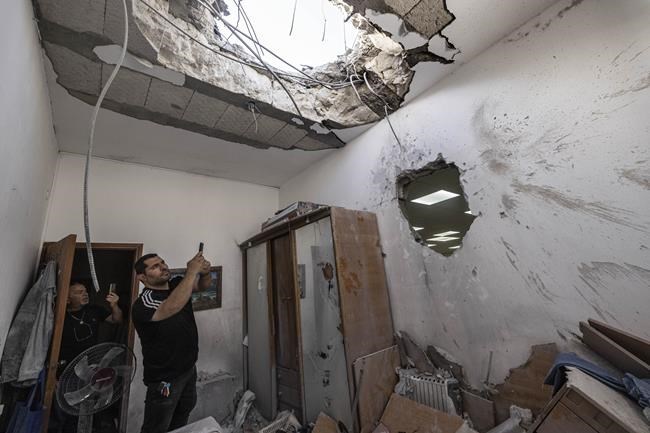
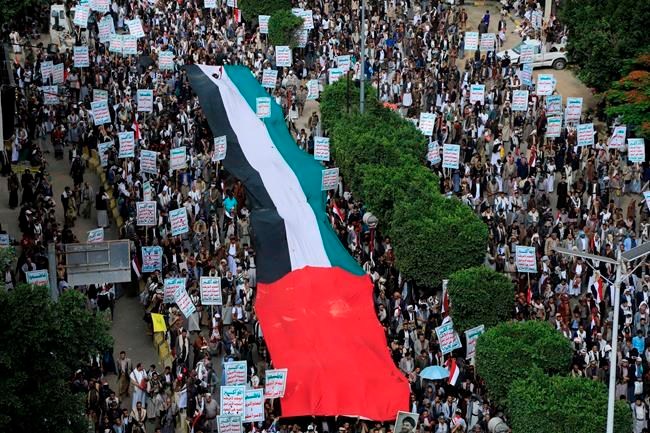
GAZA CITY, Gaza Strip (AP) — Palestinians across Israel and the occupied territories went on strike in a rare collective protest Tuesday as Israeli missiles toppled a building in Gaza and militants in the Hamas-ruled territory fired dozens of rockets that killed two people.
The demonstrations and ongoing violence came as moves toward a cease-fire appeared to be gaining more traction.
U.S. officials said the Biden administration was privately encouraging Israel to wind down its bombardment of Gaza. Egyptian negotiators also were working to halt the fighting, and while they have not made progress with Israel, they were optimistic international pressure would force it to the table, according to an Egyptian diplomat who spoke on condition of anonymity because he was discussing diplomatic efforts.
The general strike was a sign that the war could widen again after a spasm of communal violence in Israel and protests across the occupied West Bank last week.
Although the strike was peaceful in many places, with shops in Jerusalem’s usually bustling Old City markets shuttered, violence erupted in cities in the West Bank.
Hundreds of Palestinians burned tires in Ramallah and hurled stones at an Israeli military checkpoint. Troops fired tear gas, and protesters picked up some of the canisters and threw them back. Three protesters were killed and more than 140 wounded in clashes with Israeli troops in Ramallah, Bethlehem, Hebron and other cities, according to the Palestinian Health Ministry. The Israeli army said two soldiers were wounded by gunshots to the leg.
The general strike was an uncommon show of unity by Palestinian citizens of Israel, who make up 20% of its population, and those in the territories Israel seized in 1967 that the Palestinians have long sought for a future state.
The strike was intended to protest the war and Israeli policies that many activists and some rights groups say constitute an overarching system of apartheid that denies Palestinians rights afforded to Jews. Israel rejects that characterization, saying its citizens have equal rights. It blames the war on Hamas, the Islamic militant group that controls Gaza, and accuses it of inciting violence.
Leaders of the Palestinian community in Israel called the strike, which was embraced by the internationally backed Palestinian Authority in the West Bank, where ministries and schools were closed. Most businesses appeared to be observing the strike.
Strike organizer Muhammad Barakeh said Palestinians are standing against Israeli “aggression” in Gaza and Jerusalem, as well as “brutal repression” by police.
The war has also seen an unusual outbreak of violence in Israel, with groups of Jewish and Palestinian citizens fighting in the streets and torching vehicles and buildings. In both Israel and the West Bank, Palestinian protesters have clashed with Israeli forces. Scores have been injured, including a Jewish man who died Monday after being attacked last week by a group of Arabs in the central city of Lod.
The fighting began May 10 when Hamas fired long-range rockets toward Jerusalem in support of Palestinian protests against Israel’s heavy-handed policing of the Al-Aqsa Mosque compound, a flashpoint site sacred to Jews and Muslims, and the threatened eviction of dozens of Palestinian families by Jewish settlers.
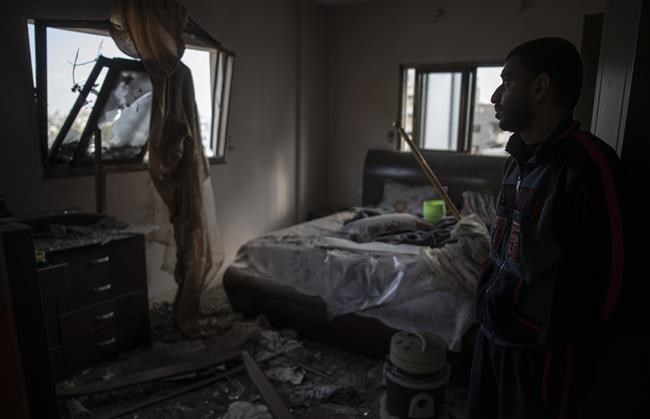
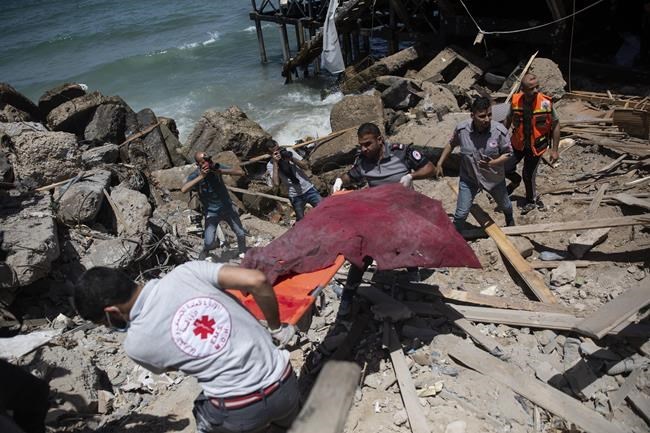
At least 217 Palestinians have been killed in airstrikes, including 63 children, with more than 1,500 people wounded, according to the Gaza Health Ministry, which does not break the numbers down into fighters and civilians. Hamas and Islamic Jihad say at least 20 of their fighters have been killed, while Israel says the number is at least 130.
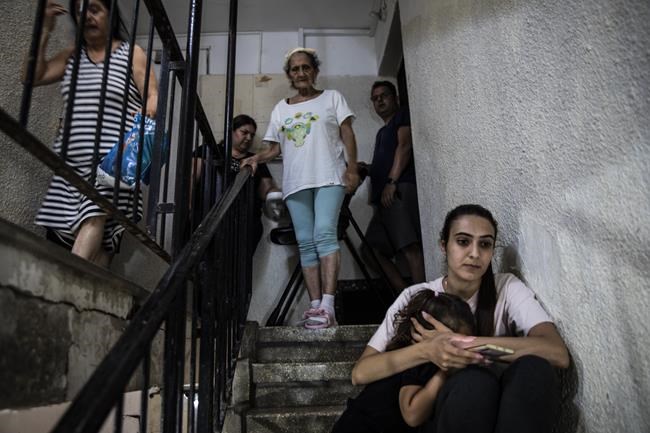
Twelve people in Israel, including a 5-year-old boy, have been killed in rocket attacks.
Tuesday’s rocket attack from Gaza hit a packaging plant in a region bordering the territory, killing two Thai workers. Israel’s Magen David Adom rescue service said it took another seven to the hospital. Thai Foreign Ministry spokesman Tanee Sangrat said the wounded were also Thai.
The Israeli military said rockets also were fired at the Erez pedestrian crossing and at the Kerem Shalom crossing, where humanitarian aid was being brought into Gaza, forcing both to close. It said a soldier was slightly wounded at Erez.
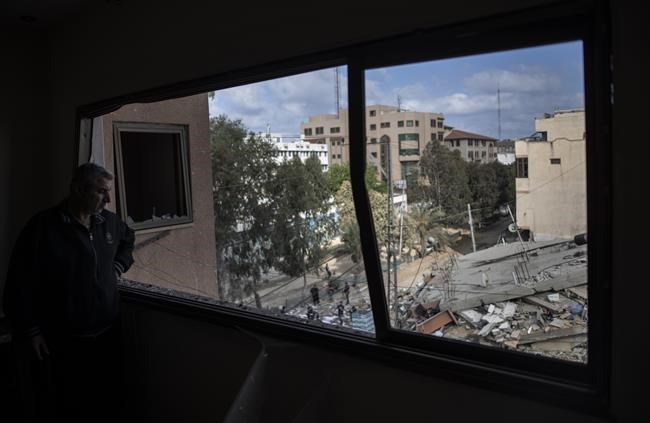
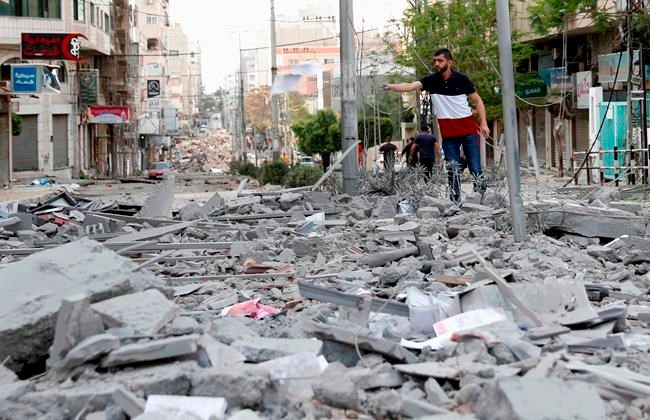
Israeli airstrikes into Gaza demolished a six-story building housing bookstores and educational centers used by the Islamic University and other colleges. Desks, office chairs, books and wires could be seen in the debris. Israel warned its occupants beforehand, sending them fleeing before dawn. There were no reports of casualties.
The Israeli military has launched hundreds of airstrikes it says are targeting Hamas’ militant infrastructure, while Palestinian militants have fired more than 3,400 rockets from civilian areas in Gaza at civilian targets in Israel.
Israeli military spokesman Lt. Col. Jonathan Conricus said the military was focusing on destroying the tunnels where Hamas fighters hide, move between locations and resupply launchers with rockets to fire at Israel.
The tunnels run under civilian neighborhoods, and Israeli airstrikes have been trying to target roads above them to minimize damage to buildings, Conricus said. One weekend airstrike that Israel said targeted a tunnel caused several buildings to collapse and killed 42 people in the deadliest single attack of the conflict.
The attacks on the tunnels continue, “and the assessment is that that effort will be expanded to areas that we so far have not conducted this effort in, and that is to be expected over the coming days,” he said.
Medical supplies, fuel and water are running low in Gaza, which is home to more than 2 million Palestinians and under an Israeli-Egyptian blockade since Hamas seized power from rival Palestinian forces in 2007. Nearly 47,000 Palestinians have fled their homes.
Israeli attacks have damaged at least 18 hospitals and clinics and destroyed one health facility, the World Health Organization said. Nearly half of all essential drugs in the territory have run out.

The WHO said the bombing of key roads, including those leading to the main Shifa Hospital, has hindered ambulances and supply vehicles in Gaza, which was already struggling to cope with a coronavirus outbreak.
Among the buildings leveled by Israeli airstrikes was one housing The Associated Press Gaza office and those of other media outlets.
Israeli Prime Minister Benjamin Netanyahu alleged that Hamas military intelligence was operating in the building. U.S. Secretary of State Antony Blinken said Tuesday in Iceland that Israel had given the U.S. information about the bombing. Blinken declined to characterize the material, and Israel has not publicly provided evidence of its claim.

AP President Gary Pruitt reiterated calls for an independent investigation of the attack.
___
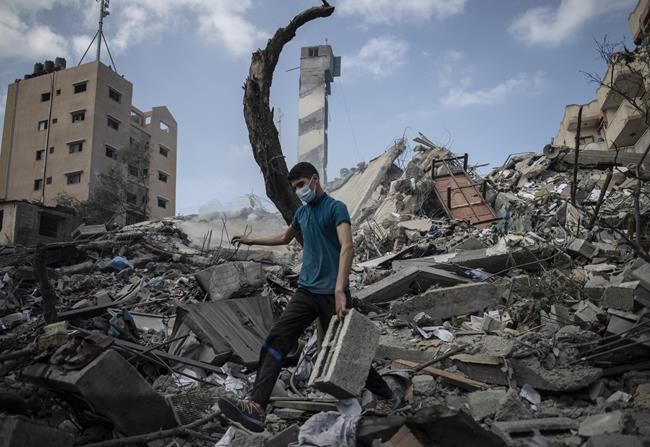
This story has been updated to correct that the toppled six-story building housed bookstores, not libraries, and educational centers used by the Islamic University, not belonging to it.
___
Nessman reported from Atlanta. Associated Press writers Joseph Krauss and Josef Federman in Jerusalem, Isabel DeBre in Dubai, United Arab Emirates, Grant Peck in Bangkok and Ilan Ben Zion in Jerusalem contributed.