Life on Corona Island far from stress-free
We're in a pandemic bubble, but we can't break out the bubbly just yet

Advertisement
Read this article for free:
or
Already have an account? Log in here »
To continue reading, please subscribe:

Digital Subscription
One year of digital access for only $205*
- Enjoy unlimited reading on winnipegfreepress.com
- Read the E-Edition, our digital replica newspaper
- Access News Break, our award-winning app
- Play interactive puzzles
*First annual payment billed as $205.00 + GST for one year. This annual subscription will automatically renew at $233.00 + GST every 52 weeks (10% off the regular annual price of $259.35). Offer available to new and qualified returning subscribers only. Cancel any time.
To continue reading, please subscribe:
Add Free Press access to your Brandon Sun subscription for only an additional
$1 for the first 4 weeks*
- Enjoy unlimited reading on winnipegfreepress.com
- Read the E-Edition, our digital replica newspaper
- Access News Break, our award-winning app
- Play interactive puzzles
*Your next Brandon Sun subscription payment will increase by $1.00 and you will be charged $17.95 plus GST for four weeks. After four weeks, your payment will increase to $24.95 plus GST every four weeks.
Read unlimited articles for free today:
or
Already have an account? Log in here »
Hey there, time traveller!
This article was published 21/07/2020 (2248 days ago), so information in it may no longer be current.
COVID-19 to the west of us, COVID-19 to the east. COVID-19 to the south, definitely. And here we are, stuck in the middle.
As case counts tick upward in Saskatchewan, which saw a record single-day rise last week, and explode in North Dakota, which has seen 89 deaths and nearly 5,000 cases, Manitoba remains in its coronavirus bubble. July saw a near two-week stretch of zero new cases in this province.
To live in Winnipeg right now is to feel as though we’re living in an alternate dimension, or a different timeline. The future, perhaps. An island. Or maybe just the eye of the storm.
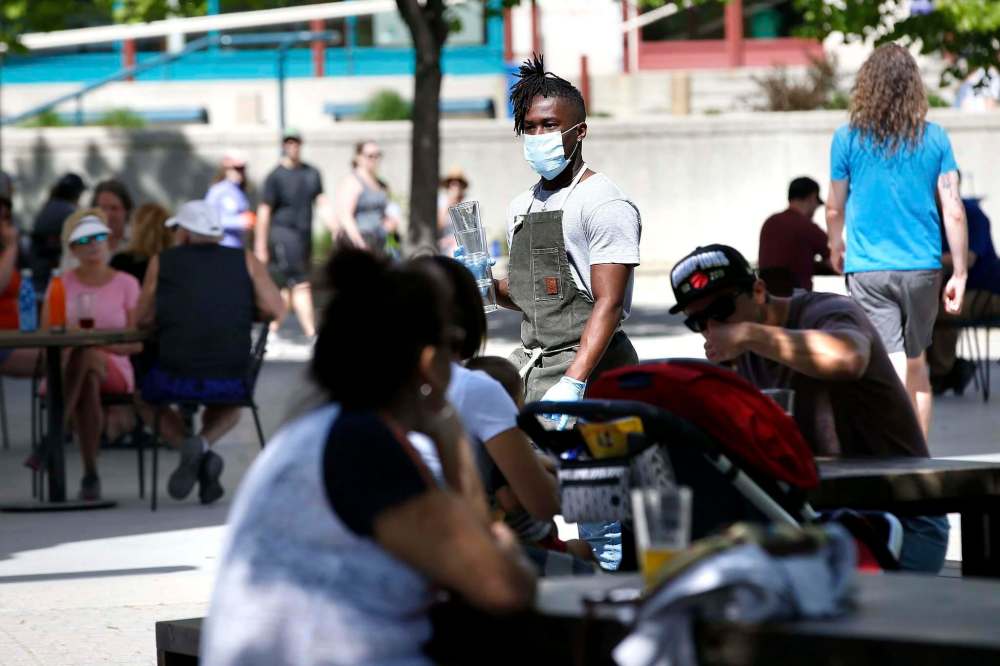
For many people, our low numbers and open businesses are a source of calm and relief. But I feel like I am absolutely losing my mind.
I feel like I’m losing my mind when I go into a grocery store and I am the only one in a mask. I feel like I’m losing my mind when Air Canada sends me promotional emails about flights to Paris. I feel like I’m losing my mind when I scroll through Instagram and see groups of friends, smiling for selfies, cheek to cheek, or groups of kids playing outside. I feel like I’m losing my mind when Manitoba is being marketed as a tourism destination for western Canadians. But… the pandemic…
There’s a viral meme of a dog in a hat, drinking coffee at a table, surrounded by flames. “This is fine,” the dog says.
It’s hard not to feel like the dog in the hat.
And I feel relatively safe in the world. I haven’t been confined to my house. I have eaten at restaurants (indoor and outdoor). I have been to friends’ backyards. I’m masking and handwashing, but running everyday errands doesn’t fill me with dread.
It’s just hard to square what’s happening globally, where the coronavirus picture looks a lot different, especially to our immediate south, with what’s happening locally, where I can drink a glass of rosé on a patio with my friends with few worries. So is the topsy-turvy world of a pandemic, especially when you live in a place where things seem, well, normal. The sun is still shining. Rainbows are still doing backbends over pavement made slick from a passing thunderstorm. We’re allowed to enjoy summer with relatively few constraints, which is so much more than other places. Meanwhile, people elsewhere are still sharing quarantine memes like it’s March.
Our reality — underpinned with jingoistic messaging about Manitoba returning, reopening and restarting — can make it easy to forget that large swaths of the world are still down in the muck.
But then you hear about Florida and Disney World reopening (why?). You hear about stadiums piping in canned crowd noises because teams are playing for nobody. You hear about Crayola launching a five-pack of face masks for kids, a back-to-school item no one could have fathomed this time last year. You see tweets from people who live in other cities, expressing righteous fury over the fact that figuring out how to open bars and nail salons seems to be more of a priority for elected officials than figuring out how to open schools. It’s hard to reconcile “out there” with “in here,” where we’ve been so good, and so very lucky.

It’s also hard to reconcile fear (a new virus that is still killing people) and the facts of where we live (no mass community transmission, low active cases). When you live on Corona Island, it’s hard to know how to be. What’s being cautious, and what’s being too cautious? What’s being relaxed? Too relaxed? Stay vigilant, we’re told, but remaining in a state of constant vigilance is literally anxiety. No wonder so many people are exhausted.
We must learn to live with this virus, a virus that, to quote Dr. Brent Roussin, is not done with us and we’re not done with it. Living with a virus does not have to mean living in a constant state of fear. But it does mean navigating a tangle of emotions as we navigate the “new normal” everyone else is rushing to will into existence.
The “new normal” feels a lot like the skin under a freshly pulled scab: tender and vulnerable. Let’s protect it, ourselves and each other.
jen.zoratti@freepress.mb.ca
Twitter: @JenZoratti
Jen Zoratti is a columnist and feature writer working in the Arts & Life department, as well as the author of the weekly newsletter NEXT. A National Newspaper Award finalist for arts and entertainment writing, Jen is a graduate of the Creative Communications program at RRC Polytech and was a music writer before joining the Free Press in 2013. Read more about Jen.
Every piece of reporting Jen produces is reviewed by an editing team before it is posted online or published in print – part of the Free Press‘s tradition, since 1872, of producing reliable independent journalism. Read more about Free Press’s history and mandate, and learn how our newsroom operates.
Our newsroom depends on a growing audience of readers to power our journalism. If you are not a paid reader, please consider becoming a subscriber.
Our newsroom depends on its audience of readers to power our journalism. Thank you for your support.
Jen Zoratti is a columnist and feature writer working in the Arts & Life department, as well as the author of the weekly newsletter NEXT. A National Newspaper Award finalist for arts and entertainment writing, Jen is a graduate of the Creative Communications program at RRC Polytech and was a music writer before joining the Free Press in 2013. Read more about Jen.
Every piece of reporting Jen produces is reviewed by an editing team before it is posted online or published in print – part of the Free Press‘s tradition, since 1872, of producing reliable independent journalism. Read more about Free Press’s history and mandate, and learn how our newsroom operates.
Our newsroom depends on a growing audience of readers to power our journalism. If you are not a paid reader, please consider becoming a subscriber.
Our newsroom depends on its audience of readers to power our journalism. Thank you for your support.
Advertisement Advertise With Us
Advertisement Advertise With Us