Meaningful mindfulness
Social work dean promotes technique for positive impact, both individually and collectively

Advertisement
Read this article for free:
or
Already have an account? Log in here »
To continue reading, please subscribe:
Digital Subscription
One year of digital access for only $1.44 a week*
- Enjoy unlimited reading on winnipegfreepress.com
- Read the E-Edition, our digital replica newspaper
- Access News Break, our award-winning app
- Play interactive puzzles
*Billed as $5.77 plus GST every four weeks. After 52 weeks, price increases to the regular rate of $19.95 plus GST every four weeks. Offer available to new and qualified returning subscribers only. Cancel any time.
To continue reading, please subscribe:
Add Free Press access to your Brandon Sun subscription for only an additional
$1 for the first 4 weeks*
- Enjoy unlimited reading on winnipegfreepress.com
- Read the E-Edition, our digital replica newspaper
- Access News Break, our award-winning app
- Play interactive puzzles
*Your next Brandon Sun subscription payment will increase by $1.00 and you will be charged $17.95 plus GST for four weeks. After four weeks, your payment will increase to $24.95 plus GST every four weeks.
Read unlimited articles for free today:
or
Already have an account? Log in here »
Hey there, time traveller!
This article was published 17/01/2022 (1742 days ago), so information in it may no longer be current.
Many people practise mindfulness with the hopes of becoming more present, more focused and less judgmental. Research shows that mindfulness practices give us greater control over our emotions, and help regulate emotional responses and reduce anxiety, which can increase our capacity to be empathetic, think clearly and act with purpose.
In essence, mindfulness is any exercise that encourages you to focus on your sensations and thoughts in the present moment. It was popularized and became more mainstream in the West in the 1970s and ’80s.
Studies show mindfulness and related practices can also help with raising awareness and even assist in minimizing bias. While research is ongoing, this all suggests mindfulness and compassion practices can serve as important resources in addressing systemic change.

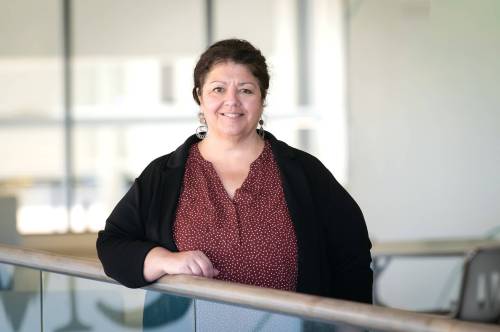
Michael Yellow Bird, dean of the faculty of social work at the University of Manitoba, has worked extensively in mindfulness, introducing it to Indigenous programs and teaching it to Indigenous communities and organizations.
He has been practising mindfulness and meditation since the ’70s when he was an undergraduate student in North Dakota.
“I first started doing a more Western form of mindfulness meditation as an undergrad in school. One of the first benefits of mindfulness is to stop what you’re doing and let everything go for a few minutes, focus on how you’re feeling and check in with yourself,” he says. “Once you stop and begin to assess what’s going on, you get an idea of how you’re feeling.”
Now, Yellow Bird’s research focuses on the effects of colonization and methods of ancestral health, Indigenous mindfulness and decolonization. Decolonization, Yellow Bird says, involves “activities that weaken the effects of colonialism and create opportunities to promote traditional practices.” The approach is used to restore balance, harmony and resilience to the mind, with hopes of healthy outcomes.
“We can decolonize our brain by going into traditional practices and stripping away the harmful and invasive thoughts, practices, beliefs, values and traditions.”– Michael Yellow Bird
“Decolonization and mindfulness are an important aspect of the work I do with Indigenous communities. In particular, I share the science of how healing from trauma is possible using contemplative practices such as mindfulness,” he says.
“We can decolonize our brain by going into traditional practices and stripping away the harmful and invasive thoughts, practices, beliefs, values and traditions.”
Yellow Bird is a member of the Mandan, Hidatsa and Arikara nations in North Dakota and, prior to his most recent academic appointment in Manitoba, Yellow Bird was a professor of sociology and director of Indigenous tribal studies at North Dakota State University.
“I grew up in a contemplative Indigenous community and mindfulness was a big part of a lot of spiritual ceremonies, spiritual rituals and our daily life, learning how to focus, be aware and have compassion for the world around you,” he says.
Yellow Bird is known for his work in “neurodecolonization,” which he describes as “decolonizing the mind and body.” Neurodecolonization focuses on understanding what happens to both the brain and body from a colonial context as well as the traumatic effects colonialism has on both the brain’s structure and function. It involves combining mindfulness approaches with traditional and contemporary practices to remould neural pathways in our brain, replacing pathways laid by trauma with ones of healing.
Neural pathways are created in the brain based on our habits and behaviours. When you participate in new activities, you’re training your brain to create new neural pathways — these pathways can get stronger with repetition until the behaviour is the new normal.
Mindfulness, Yellow Bird says, can help people remove the constraints of residual colonialism — such as racism, hate and fear — from the brain.
He uses neuroscience research to examine how mindfulness approaches and traditional Indigenous practices can positively impact both the brain’s structure and function.
Yellow Bird serves as a consultant to several BIPOC (Black, Indigenous and People of Colour) mindfulness groups and organizations who are looking to incorporate decolonized mindfulness practices in order to address systemic racism and engage in structural change.
Traditionally, he says, mainstream (Western) mindfulness has been much more about healing the individual rather than healing society as a whole. And while traditional mindfulness serves a purpose, it also has limitations.
“Mindfulness has been colonized by the corporate world and marketed heavily. Don’t get me wrong, that’s good stuff for a lot of people, but it doesn’t get people to the next level of changing these structural or systemic problems that bring on anxiety or depression.”– Michael Yellow Bird
“When we live in uncertainty or depression for long periods of time, it begins to take hold biologically in the body. That’s one of the drawbacks of mindfulness. While it helps treat anxiety and depression, it doesn’t address the root cause of the problem,” he says. “Mindfulness has been colonized by the corporate world and marketed heavily. Don’t get me wrong, that’s good stuff for a lot of people, but it doesn’t get people to the next level of changing these structural or systemic problems that bring on anxiety or depression.”
Teaching mindfulness with a focus on supporting individual well-being is meaningful but Yellow Bird says it can go farther — it’s also important to teach decolonizing mindfulness practices that can lead to collective actions to bring structural change.
“(Western) mindfulness can make you feel better but people stop there, basically,” he says. “These further practices help people understand the colonization of the world and the situation of systemic issues. They can then begin to recognize the root causes, sensations and feelings.”
One of the problems with western mindfulness, he says, is that many mindfulness teachers — not all — come from privileged backgrounds and don’t have an understanding of people from communities or situations that are challenged.
“It’s privilege that’s been taught from people that have economic and social class privilege, that live in communities where they have demanding jobs but they don’t live in poverty,” he says, “They’re not racially profiled every day, they’re not incarcerated in disproportionate numbers, they’re not looking for their next dollar to pay for their next meal. It’s very different in that sense.”
Mindfulness has several benefits and could be an important public health initiative but there are some drawbacks in the way it’s taught.
One of the criticisms is that western mindfulness is a colonized practice, he says.
“It doesn’t really induce change and it gets people to cope better with hardship. That’s one of the issues of teaching mindfulness in communities where there’s a lot of oppression,” he says. “And people are doing a good job of helping people gain a sense of balance but it’s not doing anything to change the situation. The criticism is it’s just getting them to cope with the oppression better.”
Yellow Bird has spent years working in social work, examining health and well-being among Indigenous people, particularly through the lens of colonization and decolonization. He focuses on practising mindfulness to engage in reflection while exploring how to heal from trauma and contribute to systemic change. Yellow Bird has taught mindfulness practices to Indigenous students, teachers, health professionals, incarcerated populations, homeless youth and is helping introduce it to Manitoba communities.
“Compassion is something you learn. It can be taught and has to be integrated into not only your neural networks but also your behaviour and biology.”– Michael Yellow Bird
“I’m involved with a team from the Faculty of Social Work who are helping to introduce mindfulness at Brokenhead,” he says. “I’ve (also) had conversations with some tribal health care and social service providers and leadership from Island Lake to introduce the concept and practices of mindfulness.”
Typically, mainstream mindfulness is a very individualized approach. Yellow Bird stresses that decolonized mindfulness is about spreading the work and practices to other people and communities.
“(Western) mindfulness is used to lower your stress and anxiety and make you feel happy. That’s good stuff — but that’s where it ends,” Yellow Bird says. “These (decolonized mindfulness) practices get people more deeply into it, extending beyond yourself with the purpose to go out and do your part to make a change.”
He’s also working on a Centre for Mindful Decolonization and Reconciliation at the University of Manitoba, which will bring together Indigenous and settler populations.

“That’s where I’ll be working on some of these practices as well as the healing and reconciliation between settlers and Indigenous people to create (alliances) through mindfulness approaches, which I think is unique,” he says.
By creating a better understanding and awareness of decolonization, Yellow Bird is helping people recognize it’s a healing journey. He stresses the importance of compassion and how the use of decolonized mindfulness practices to engage in reflection can help both heal and contribute to systemic change and facilitate growth, learning and action.
“Compassion is something you learn. It can be taught and has to be integrated into not only your neural networks but also your behaviour and biology.”
sabrinacarnevale@gmail.com
@SabrinaCsays
Sabrina Carnevale is a freelance writer and communications specialist, and former reporter and broadcaster who is a health enthusiast. She writes a twice-monthly column focusing on wellness and fitness.
Our newsroom depends on a growing audience of readers to power our journalism. If you are not a paid reader, please consider becoming a subscriber.
Our newsroom depends on its audience of readers to power our journalism. Thank you for your support.
Sabrina Carnevale is a freelance writer and communications specialist, and former reporter and broadcaster who is a health enthusiast. She writes a twice-monthly column focusing on wellness and fitness.
Our newsroom depends on a growing audience of readers to power our journalism. If you are not a paid reader, please consider becoming a subscriber.
Our newsroom depends on its audience of readers to power our journalism. Thank you for your support.
Advertisement Advertise With Us
Advertisement Advertise With Us